

Sick Home Syndrome: Everything You Need to Know
Is Your Home Making You Sick? What You Need to Know

Sick home syndrome describes a condition where people experience recurring health symptoms — headaches, fatigue, respiratory irritation, and more — that are directly linked to time spent inside their home, and that improve once they leave.
Quick answer:
| Question | Answer |
|---|---|
| What is it? | A pattern of health symptoms caused by indoor air quality problems in your home |
| Key symptoms | Headaches, fatigue, congestion, skin irritation, dizziness, brain fog |
| Main causes | Poor ventilation, mold, VOCs from building materials, biological contaminants |
| How to tell | Symptoms improve when you leave home and return when you come back |
| What to do | Improve ventilation, test for mold/radon, consult an indoor air quality professional |
Here’s the thing most people miss: the EPA estimates that up to 30% of new and remodeled buildings worldwide have indoor air quality problems serious enough to generate health complaints. Your home could be one of them — and you might not even realize it.
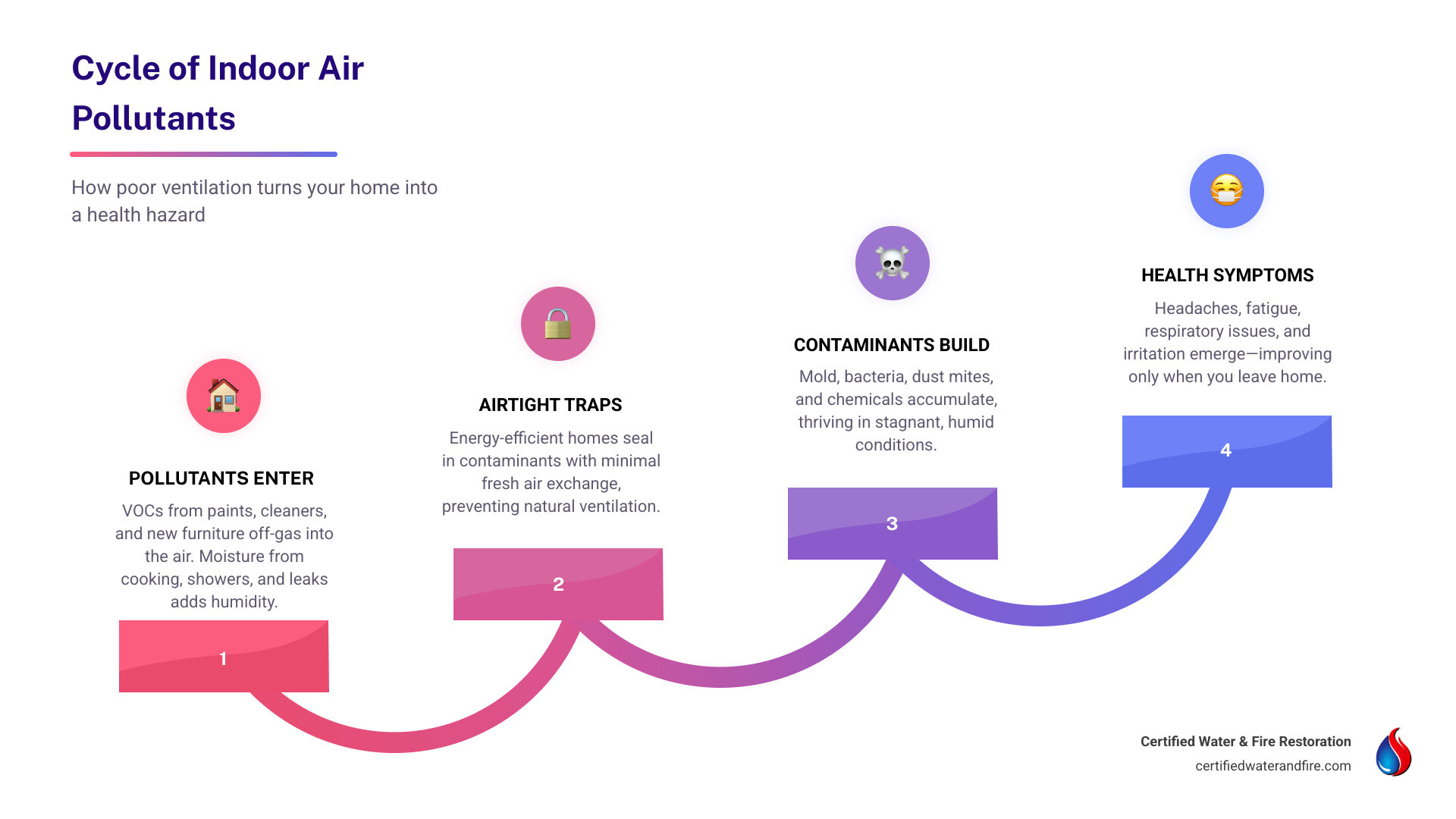
Modern homes are built tight. That’s great for your energy bill. But it also means pollutants, moisture, and biological contaminants can build up with nowhere to go. Over time, that invisible buildup can start to affect how you feel every single day.
If you’ve been feeling run-down at home but can’t quite explain why, this guide is for you.
Key Takeaways: Sick Home Syndrome
- Your home itself can cause ongoing health symptoms. If you notice headaches, fatigue, or respiratory issues that improve when you leave, poor indoor air quality may be the root cause.
- Poor ventilation is the main driver of the problem. Modern homes trap moisture, chemicals (VOCs), and biological contaminants like mold, allowing pollutants to build up over time.
- Moisture and mold are the most common hidden triggers. Even small leaks can create high-humidity pockets that lead to mold growth, which spreads through the air and affects the entire home.
- Symptoms are easy to misdiagnose but follow a clear pattern. Unlike illness, symptoms start quickly indoors and improve when you leave, making location the key diagnostic clue.
- Action step: fix the source, not just the symptoms. Improve airflow, control humidity (40–60%), and test for mold or air quality issues early—addressing the root cause prevents long-term health and property damage.
I’m Ryan Majewski, General Manager of Certified Water & Fire Restoration, with over a decade of hands-on experience helping homeowners recover from water damage, mold, and the kinds of hidden structural problems that are at the root of sick home syndrome. Through that work — across hundreds of residential projects — I’ve seen how quickly a moisture event or hidden mold problem can turn a healthy home into one that quietly makes its occupants ill.
Understanding the Basics of a “Sick” House
The term “sick building syndrome” was first coined by the World Health Organization (WHO) back in the 1980s. It originally described office workers who got sick at their desks but felt fine by the time they hit the driveway. However, as we spend more time at home—especially with the rise of remote work in Dallas and Houston—this issue has moved from the skyscraper to the suburban living room.
The roots of the problem actually go back to the 1970s energy crisis. Back then, builders started making homes incredibly “tight” to save on heating and cooling costs. While this was great for the wallet, it essentially turned our houses into airtight Tupperware containers. Without enough fresh air coming in, the stuff inside—chemicals, moisture, and microbes—just sits there and stews.
Sick building syndrome occurs when occupants experience acute health effects that seem linked to time spent in a building, but no specific illness or cause can be easily identified. It’s a bit like a ghost in the machine; you know something is wrong, but the doctor can’t find a “virus” to blame.

How Sick Home Syndrome Differs from Sick Building Syndrome
While they share a name, there’s a nuance here. Sick building syndrome is a broad term often applied to commercial offices. Sick home syndrome, on the other hand, is the residential version.
In an office, you might deal with industrial cleaners or poorly maintained skyscraper HVAC systems. At home, the triggers are more personal: the new carpet you just laid, the dampness in your crawlspace, or even the chemicals in your favorite scented candles. According to Sick House Syndrome—Is Your Home Making You Sick?, the biggest differentiator is the “vacation test.” If you feel like a million bucks after three days at the beach but start sneezing the minute you walk through your front door in Irving, your home is likely the culprit.
The Role of Indoor Air Quality (IAQ)
Indoor air quality is the heart of the matter. We often worry about smog in downtown Houston, but the air inside your home can actually be two to five times more polluted than the air outside.
When air becomes stagnant, pollutant concentrations skyrocket. This is where Moisture Mapping becomes vital. In our humid Texas climate, even a tiny, pinhole leak behind a wall can create a localized “micro-climate” of high humidity. Without proper air exchange, that moisture leads to biological growth that circulates through your vents, affecting everyone in the house.
If we had to pick a “Public Enemy Number One” for sick home syndrome, it would be inadequate ventilation. When a house doesn’t “breathe,” it traps everything we do inside it. Cooking fumes, pet dander, and even the CO2 we exhale can build up to uncomfortable levels.
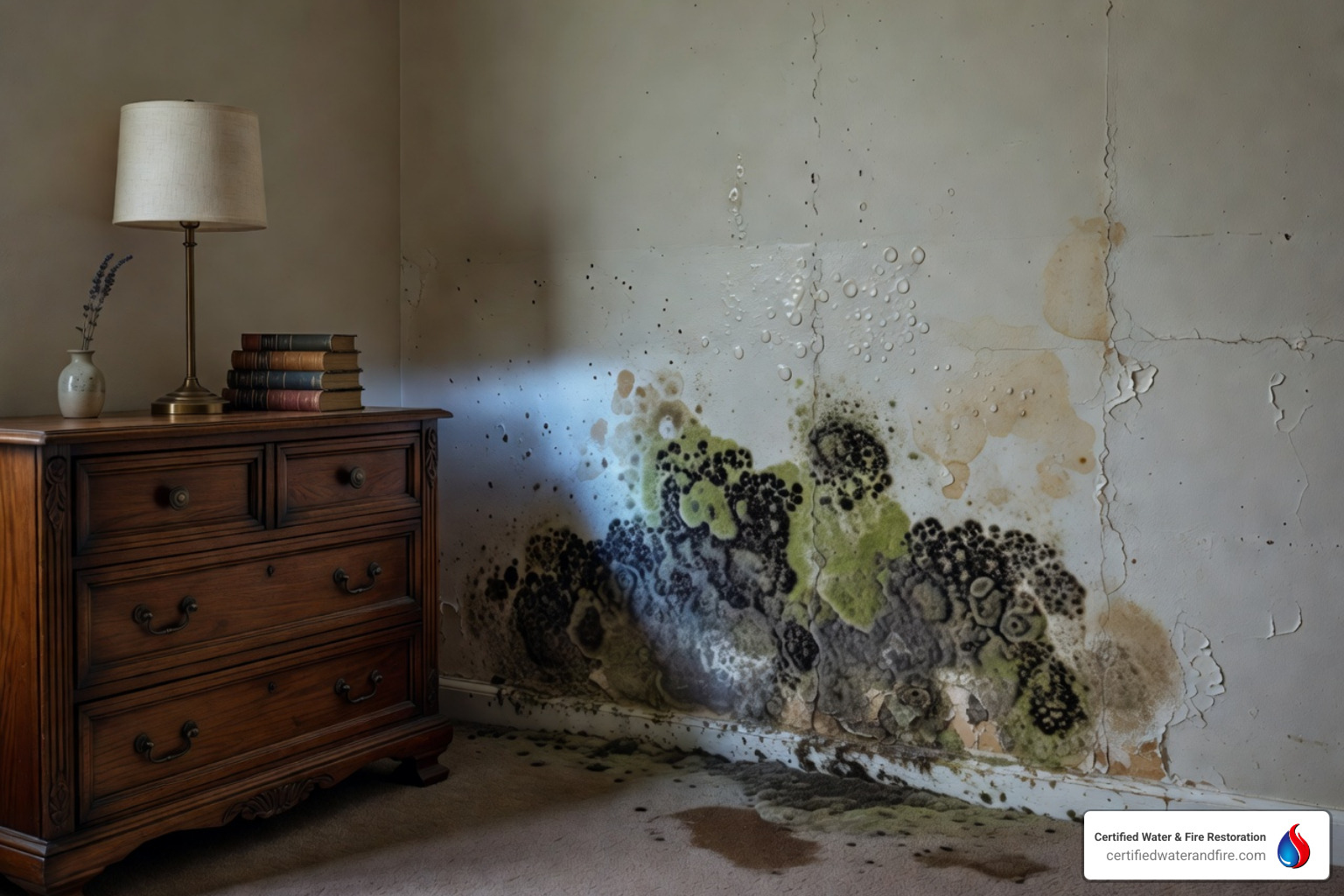
But the most frequent call we get involves Black Mold Houston. Mold doesn’t need much to thrive—just a little water and some organic material like drywall or wood. Often, the problem is tucked away where you’d never look. Attic Mold Removal For A Healthy Home is a common necessity because roof leaks or poor attic venting allow moisture to accumulate right above your head, slowly raining down spores into your living space.
Chemical Contaminants and Modern Materials
It’s not just “natural” things like mold making us sick. Our homes are filled with Volatile Organic Compounds (VOCs). These are gases emitted from certain solids or liquids. Think of that “new car smell”—that’s actually off-gassing.
Common sources include:
- Formaldehyde: Found in pressed-wood products (like that flat-pack bookshelf) and some fabrics.
- Cleaning Agents: Harsh chemicals can linger in the air long after the floors are shiny.
- Paints and Adhesives: Older paints or cheap solvents can off-gas for months.
Interestingly, even past events can haunt your air. If a previous owner was a heavy smoker or if there was a small kitchen fire, you might need to know How To Clean Smoke Off Walls to remove the microscopic soot particles that continue to irritate your lungs. You might wonder, Is Mildew Dangerous? While often seen as just a “smell,” it’s a sign of a larger moisture problem that usually involves chemical-emitting bacteria.
Biological Hazards and Dampness
Beyond mold, a “sick” house often plays host to a variety of biological uninvited guests. Dust mites love high humidity, and pollen can get trapped in carpets and never leave.
Knowing What Does Black Mold Look Like is helpful, but mold comes in many colors—white, gray, green, and even pink. If you have a leak in your kitchen, Hardwood Floor Mold Removal is critical because moisture gets trapped between the wood and the subfloor, creating a perfect, dark breeding ground for bacteria and fungi.
Recognizing the Symptoms and Health Impacts
The tricky part about sick home syndrome is that the symptoms look like… well, everything else. You might think you have a lingering cold or that you’re just “getting older.” However, the hallmark of this syndrome is that symptoms are acute—they happen now—and they are tied to the building.
Common signs include:
- Dry or itchy skin and rashes.
- Headaches and dizziness.
- Nausea or “brain fog” (difficulty concentrating).
- Irritated eyes, nose, or throat.
- Coughing or wheezing.
If you are dealing with All About Mold Toxicity, these symptoms can become chronic, leading to extreme fatigue or even neurological issues.
SHS Symptoms vs. The Common Cold
| Feature | Sick Home Syndrome | Common Cold |
|---|---|---|
| Onset | Rapidly starts when entering the home | Gradual onset over days |
| Duration | Lasts as long as you are in the building | Usually clears up in 7-10 days |
| Fever | Rarely present | Often present |
| Recovery | Improves quickly when away (vacation/work) | Stays the same regardless of location |
| Pattern | Affects multiple people in the same house | Spreads through physical contact/germs |
Who is Most at Risk for Sick Home Syndrome?
While a “sick” house can affect anyone, certain groups are the “canaries in the coal mine.” Children are particularly vulnerable because they breathe more air per pound of body weight than adults and spend more time playing on the floor where dust and heavy VOCs settle.
The elderly and the immunocompromised also see faster declines in health when air quality drops. For those with existing respiratory issues, the environment can be a constant trigger. While many ask, Do Air Purifiers Help With Mold A Detailed Guide, the truth is they are a secondary defense. They help catch spores, but they don’t fix the leak that’s causing the mold in the first place.
Psychological Factors and Stress
We can’t ignore the mental side of things. Living in a home that feels “off” is stressful. Whether it’s a faint, musty odor that you can’t find—which might require Fresh Floors Again Your Guide To Water Damage Smell Removal—or poor lighting that messes with your circadian rhythm, your environment dictates your mood.
High CO2 levels (common in rooms with poor airflow) are scientifically linked to increased stress and decreased cognitive function. If you find yourself snapping at your spouse or struggling to finish a work report in your home office, it might not be the workload—it might be the air.
Practical Steps to Heal Your Home Environment
The good news? Sick home syndrome isn’t a life sentence for your house. The most effective strategy is “Source Control.” This means finding the thing that’s polluting the air and getting rid of it.
If you’ve had a leak, you need Mold Prevention Houston strategies like professional drying and dehumidification. It’s also about looking at your HVAC system. Your air conditioner is the “lungs” of your home; if those lungs are full of dust and mold, the whole body suffers.
Improving Ventilation and Airflow
The industry standard for healthy air is about 15 cubic feet per minute (cfm) of fresh air per person. Most modern homes fall way short of this.
To fix this:
- Use Exhaust Fans: Always run the fan in the bathroom when showering and the vent hood when cooking.
- Cross-Ventilate: When the Texas weather actually cooperates (those rare two weeks in spring and fall), open windows on opposite sides of the house to create a breeze.
- Check Your Vents: Ensure no furniture is blocking return air vents.
And a word of caution: many people try to “clean” their way out of a mold problem using harsh chemicals. But Can Bleach Clean Kill Mold Effectively? Usually, no. Bleach is mostly water; on porous surfaces like drywall, the chlorine stays on top while the water soaks in, actually feeding the mold roots.
Maintenance Habits for Long-Term Health
Consistency is key. Here are the “Golden Rules” we recommend to our clients in Dallas and Plano:
- HEPA Everything: Use a vacuum with a HEPA filter. Standard vacuums often just suck up small allergens and blow them right back out the exhaust.
- The 40-60 Rule: Keep your relative humidity between 40% and 60%. Anything higher invites mold; anything lower can irritate your skin and respiratory tract.
- Temperature Control: Aim for a steady 66-73°F (19-23°C).
- Don’t Guess: If you smell something weird or feel sick, mold inspection services can give you hard data on what’s actually in your air.
Frequently Asked Questions about Sick Home Syndrome
How can I test my home for potential triggers?
You can start with DIY kits for things like radon (a colorless, odorless gas that seeps from the soil) or basic VOC monitors. However, these often lack the sensitivity to find hidden problems. A professional IAQ (Indoor Air Quality) assessment is the gold standard. We often see homeowners spend hundreds on “test kits” that give vague results, when they could have put that money toward a professional Mold Removal Cost Houston estimate that includes a definitive plan of action.
Do houseplants actually help mitigate symptoms?
Yes, but they aren’t a miracle cure. NASA studies have shown that plants like snake plants, peace lilies, and spider plants can filter out small amounts of formaldehyde and benzene. Plus, they help reduce CO2. Just be careful not to overwater them—damp soil can become a source of mold and gnats, which adds to the problem!
What should I do if I suspect my home is making me ill?
First, start a symptom diary. Note when you feel bad and when you feel better. Try the “vacation test”—spend a few nights away and see if your symptoms vanish. If they do, it’s time to call in the experts. Whether you need Houston Mold Damage Remediation or Dallas Mold Remediation, getting a professional eye on the situation is the only way to ensure the root cause is handled correctly.
A Healthier Home Starts Here
Living with sick home syndrome is exhausting, but you don’t have to do it alone. Your home should be your sanctuary, not a source of headaches and fatigue. At Certified Water & Fire Restoration, we specialize in identifying those hidden moisture pockets and air quality killers that DIY methods simply miss.
We provide 24/7 emergency property restoration services across Houston, Dallas, Irving, and Plano. We know that when your health is on the line, you can’t wait weeks for an appointment. That’s why we offer a rapid 60-minute response and work directly with your insurance company so there are no upfront costs for you. Plus, we stand by our work with a 2-year warranty.
If you’re ready to stop guessing and start breathing clearly again, check out our Mold Remediation page or give us a call. Let’s get your home back to being healthy.
