

How to Clean Hardwood Floors in 5 Simple Steps
Your Hardwood Floors Are a Long-Term Investment — Treat Them Like One

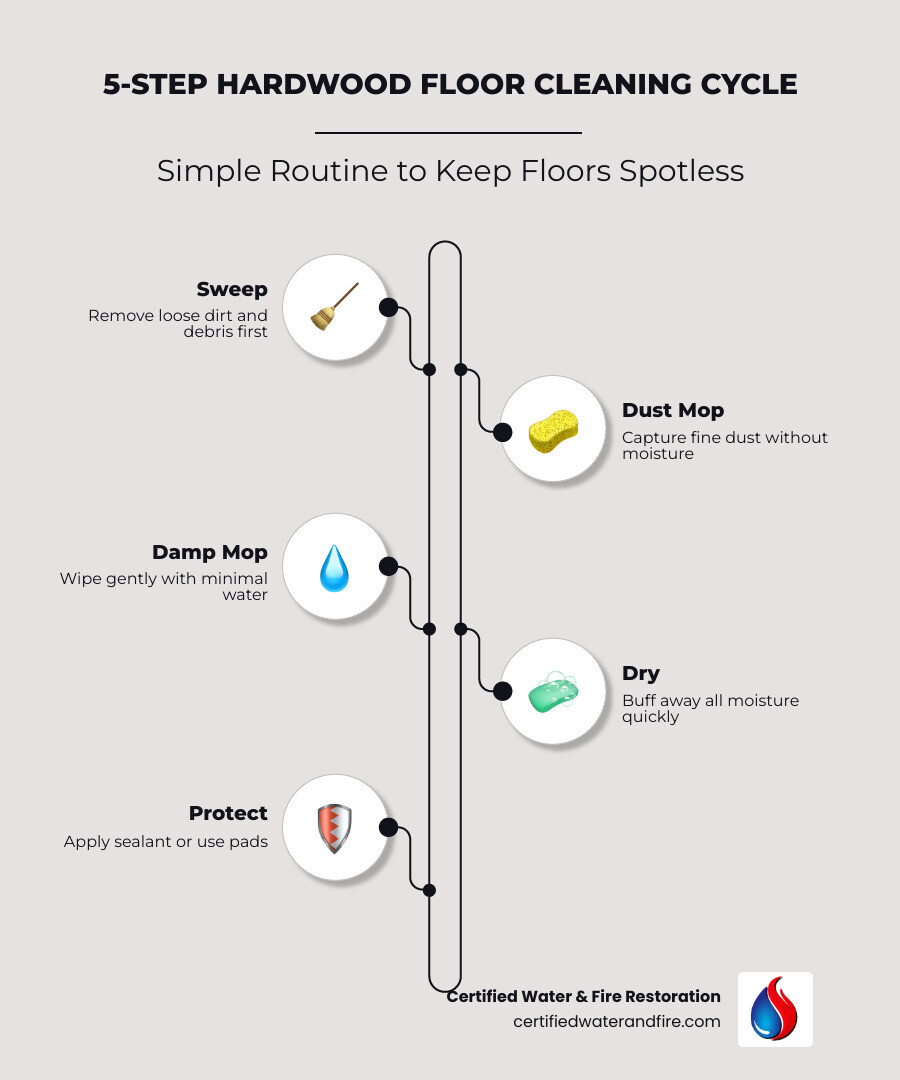
How to clean hardwood floors the right way comes down to five straightforward steps:
- Sweep or dry dust to remove loose dirt and grit
- Dust mop with a microfiber mop to catch fine particles
- Damp mop using a wood-safe cleaner and a well-wrung mop
- Dry immediately to prevent moisture from warping the wood
- Protect with rugs, furniture pads, and occasional polish
Hardwood floors are one of the most durable — and most expensive — features in a home. With proper care, they can last a lifetime. But the wrong cleaning habits can dull the finish, cause warping, or create damage that’s costly to repair.
The good news? A simple routine is all it takes. Most problems come from using too much water, the wrong products, or skipping regular maintenance altogether.
Key Takeaways
- Proper cleaning protects your investment long-term. Hardwood floors can last decades, but only with consistent care that avoids excess moisture and surface damage.
- Follow a simple 5-step routine. Sweep, dust mop, damp mop with a wood-safe cleaner, dry immediately, and protect with rugs and pads to prevent wear and damage.
- Water is the biggest risk to hardwood floors. Too much moisture can cause warping, cupping, and mold—always use a damp (not wet) mop and dry surfaces right away.
- Avoid common cleaning mistakes. Skip steam mops, vinegar, and harsh chemicals, as they can damage the finish and shorten the floor’s lifespan.
- Prevent damage before it starts. Regular maintenance, quick spill cleanup, and protective measures reduce costly repairs and keep floors looking new.
I’m Ryan Majewski, General Manager of Certified Water & Fire Restoration, where I’ve spent over a decade helping homeowners recover from the kind of water and moisture damage that improper hardwood floor cleaning — or unexpected flooding — can cause. That hands-on restoration experience gives me a real-world perspective on exactly what harms these floors and how to keep them clean without risking damage.
The Best Way to Clean Hardwood Floors in 5 Simple Steps
When we talk about the “best” way to handle your floors, we aren’t just talking about making them look shiny for a Saturday afternoon. We’re talking about preservation. In our work across Houston and Dallas, we see floors that have survived for nearly a century and others that are ruined in five years. The difference is almost always the method.
The primary enemy of your floor isn’t actually the occasional spill; it’s the invisible grit that acts like sandpaper every time you walk across the room. According to experts on The Best Way to Clean Hardwood Floors, maintaining a regular routine is the absolute most important factor. If you let debris sit, it gets ground into the finish. Once the finish is gone, the wood is vulnerable to everything from humidity to pet accidents.
Step 1: Clear the Dust
Before you even think about bringing moisture into the equation, you have to get rid of the “abrasives.” These are the tiny pebbles, crumbs, and dust bunnies that cause micro-scratches. Use a broom with soft bristles. Stiff, plastic bristles can actually be too harsh for some softer wood species like pine or walnut.
If you prefer a vacuum, make sure you are using the “hard floor” setting. This is critical because it turns off the beater bar (the rotating brush). Beater bars are designed to dig dirt out of carpet fibers, but on hardwood, they can leave permanent swirl marks or dents. A daily sweep in high-traffic areas like the kitchen or entryway is your best defense.
Step 2: Dust Mopping
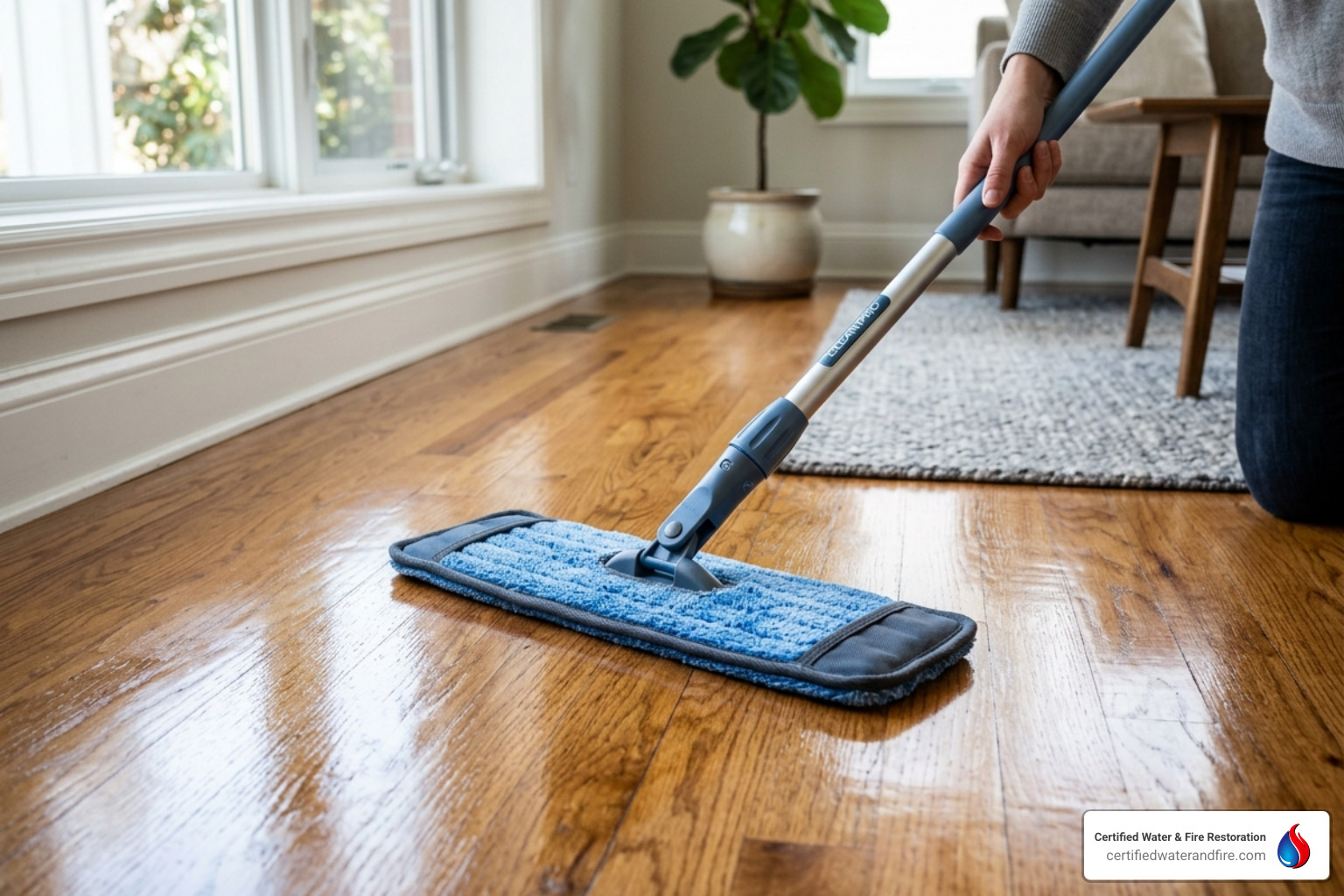
Once the big stuff is gone, it’s time for the “static” phase. A microfiber dust mop is a hardwood floors’ best friend. Unlike a broom, which can sometimes just kick dust into the air, microfiber uses a static charge to grab onto fine particles and pet hair.
Don’t forget the baseboards and the gaps under the refrigerator. Dust loves to hide there, and as soon as a breeze hits, it’s back on your clean floor. Many pros recommend a pre-treated dusting agent on the mop to help it glide and pick up even more, though a clean, dry microfiber pad usually does the trick for daily maintenance.
Step 3: How to clean hardwood floors with a damp mop
This is where most people get nervous, and for good reason. Water and wood are natural enemies. When you reach this stage, the golden rule is “damp, not wet.” You should never see standing water on your floor.
Use a wood-safe cleaner — something pH-neutral. Many homeowners in North Texas swear by products like Bona or even a very diluted mild dish soap. Saturate your mop, then wring it out until it feels barely moist to the touch. Mop in the direction of the wood grain. This helps prevent streaks and ensures the cleaner gets into the natural texture of the wood. Work in small sections, roughly 3 feet by 3 feet, so you can keep an eye on how the wood is reacting.
Step 4: Immediate Drying
In our experience at Certified Water & Fire Restoration, “air drying” is a gamble you don’t want to take. If the water sits too long, it can seep between the boards. This leads to cupping — where the edges of the boards rise up higher than the center.
As soon as you finish a section with the damp mop, go over it with a clean, dry microfiber cloth or a dry mop. This buffs away any remaining cleaning solution and ensures no moisture is left behind to soak into the grain. If you have ceiling fans, turn them on high to get the air circulating. It’s a small extra step that saves you from a lot of heartache (and expensive repairs) later.
Step 5: Long-term Protection
Cleaning is only half the battle; protection is the other half. Think of rugs as a “cozy coat of armor” for your floors. Place them in high-traffic zones and at every entrance to catch grit before it ever touches the wood.
Use felt furniture pads under every chair leg and table. If you have pets, keep their nails trimmed to prevent deep scratches. Every few months, you might consider a hardwood floor polish to revitalize the shine and fill in microscopic scratches. However, if you notice any fuzzy black spots or a musty smell, stop cleaning and look into Hardwood Floor Mold Removal immediately. Mold can grow under the boards if moisture has been trapped there for too long.
Understanding Your Finish: Sealed vs. Oiled Floors
Not all hardwood floors are created equal. How you clean depends entirely on the finish, not necessarily the type of wood. If you treat an oiled floor like a polyurethane-sealed floor, you’re going to have a bad time.
| Feature | Surface-Sealed (Polyurethane) | Oiled or Waxed Finishes |
|---|---|---|
| Appearance | Shiny or satin “plastic” coating | Matte, natural wood look |
| Water Resistance | High (water beads on top) | Low (water soaks in) |
| Cleaning Method | Damp mop with mild cleaner | Specialized oil-soap or dry buffing |
| Durability | Very durable, easy to clean | Needs frequent re-oiling |
Most modern homes built after 1970 have surface-sealed floors. These are the easiest to maintain because the finish sits on top of the wood like a protective shield. If you aren’t sure what you have, try the “water test.” Drop a tiny bead of water in an inconspicuous corner. If it stays as a bead, your floor is sealed. If it soaks in and darkens the wood, you likely have an oiled or unfinished floor that requires much more care. If the water leaves a dark stain, you may already be looking at Repairing Water Damaged Hardwood Floors.
Common Mistakes: What to Avoid at All Costs
We’ve seen some “DIY miracles” on the internet that are actually floor-killers. Let’s set the record straight on what should never touch your hardwood.
- Vinegar and Lemon Juice: People love “natural” cleaners, but these are highly acidic. Over time, the acid eats away at the chemical bonds in your floor’s finish, leaving it dull and cloudy. You might not see it after one wash, but after a year, your floors will look ten years older.
- Steam Mops: This is a big one. Steam mops are marketed as great for sanitizing, but they force hot moisture deep into the wood fibers and under the finish. This can cause the wood to swell, warp, and even peel. Unless the manufacturer specifically says your floor is steam-safe (most aren’t), keep the steamer for the tile.
- Ammonia or Harsh Detergents: These can strip the finish entirely. Avoid anything with “wax” or “silicone” unless it’s specifically made for wood, as these create a greasy buildup that is nearly impossible to remove without professional sanding.
- Standing Water: Never, ever use a soaking wet mop and bucket. If you see puddles, you are doing it wrong. Standing water is the fastest way to trigger a call to a restoration company for How to Clean Hardwood Floors advice turned into a salvage mission.
Removing Stains and Scuff Marks
Life happens. Kids drag furniture, pets have accidents, and wine gets spilled. The key to stain removal is speed.
- Water Spots: If you have white rings from a wet glass or a spill, it usually means the moisture is trapped in the finish. You can often buff these out with a soft cloth and a tiny bit of floor polish. For tougher spots, a paste of baking soda and a few drops of water can gently lift the stain — just be sure to wipe it clean and dry it immediately.
- Scuff Marks: Those black rubber marks from shoes are annoying but easy to fix. Use a clean, dry tennis ball. Rub it over the scuff, and the friction will lift the rubber right off the wood. For heavier scuffs, a damp sponge with a sprinkle of baking soda works wonders.
- Oil Stains: If you drop something greasy in the kitchen, use a drop of grease-cutting dish soap on a damp cloth. Rub gently, then “rinse” with a clean damp cloth and dry.
- Pet Urine: This is an emergency. Urine is acidic and can permanently discolor wood if it sits. Blot it up immediately. If a stain remains, you may need a specialized enzymatic cleaner designed for wood, or you might need to consult a pro for deep-penetrating odors.
Frequently Asked Questions
How to clean hardwood floors without leaving streaks?
Streaks usually happen for two reasons: too much cleaning solution or a dirty mop pad. Use the “mist” method rather than pouring cleaner on the floor. If you use a concentrated cleaner, make sure you’re diluting it exactly as the bottle says. Also, always finish by buffing the floor dry with a fresh, clean microfiber cloth. If your mop pad is gray and dirty, you’re just moving mud around — swap it out mid-clean!
Is steam cleaning safe for wood?
Generally, no. We recommend against it. Even if your floors are “sealed,” the steam can find its way into the tiny cracks between boards or into microscopic scratches in the finish. Once that heat and moisture get under the surface, they can cause the wood to expand and the finish to delaminate. It’s much safer to stick with a damp microfiber mop and a little elbow grease.
Can I use vinegar and water?
It’s a common old-school tip, but we don’t advise it for modern finishes. Vinegar is an acid (acetic acid), and while it’s great for windows, it’s too harsh for polyurethane. It will eventually dull the shine and make the floor look “hazy.” Stick to a pH-neutral cleaner specifically formulated for wood to keep that factory-fresh glow for as long as possible.
Keep Your Hardwood Floors Looking Their Best
Keeping your floors beautiful doesn’t have to be a full-time job. By following these five steps — sweeping daily, dust mopping, damp mopping carefully, drying immediately, and using protective rugs — you can ensure your hardwood stays the highlight of your home for decades.
However, we know that sometimes things go wrong. A pipe bursts in the middle of the night, or a heavy Houston rainstorm leads to unexpected flooding. When “damp mopping” isn’t enough and you’re facing standing water, you need professional help fast.
Certified Water & Fire Restoration is here for you 24/7. We serve Houston, Dallas, Irving, and Plano with a rapid 60-minute response time. We handle the insurance companies directly so there are no upfront costs for you, and we back our work with a 2-year warranty. Whether you need Hardwood Floor Drying or help with fire and mold restoration, our team is ready to bring your home back to life.
Don’t let a spill or a flood ruin your investment. Give us a call, and let’s get those floors dry and beautiful again.
