

How Do Hurricanes Form? The Ultimate Guide
The World’s Most Violent Storms — Explained Simply
How do hurricanes form is one of those questions that sounds simple but opens up a genuinely fascinating chain of events — warm ocean water, rising air, Earth’s own spin, and a perfect set of atmospheric conditions all colliding at once.
Here’s the short answer:
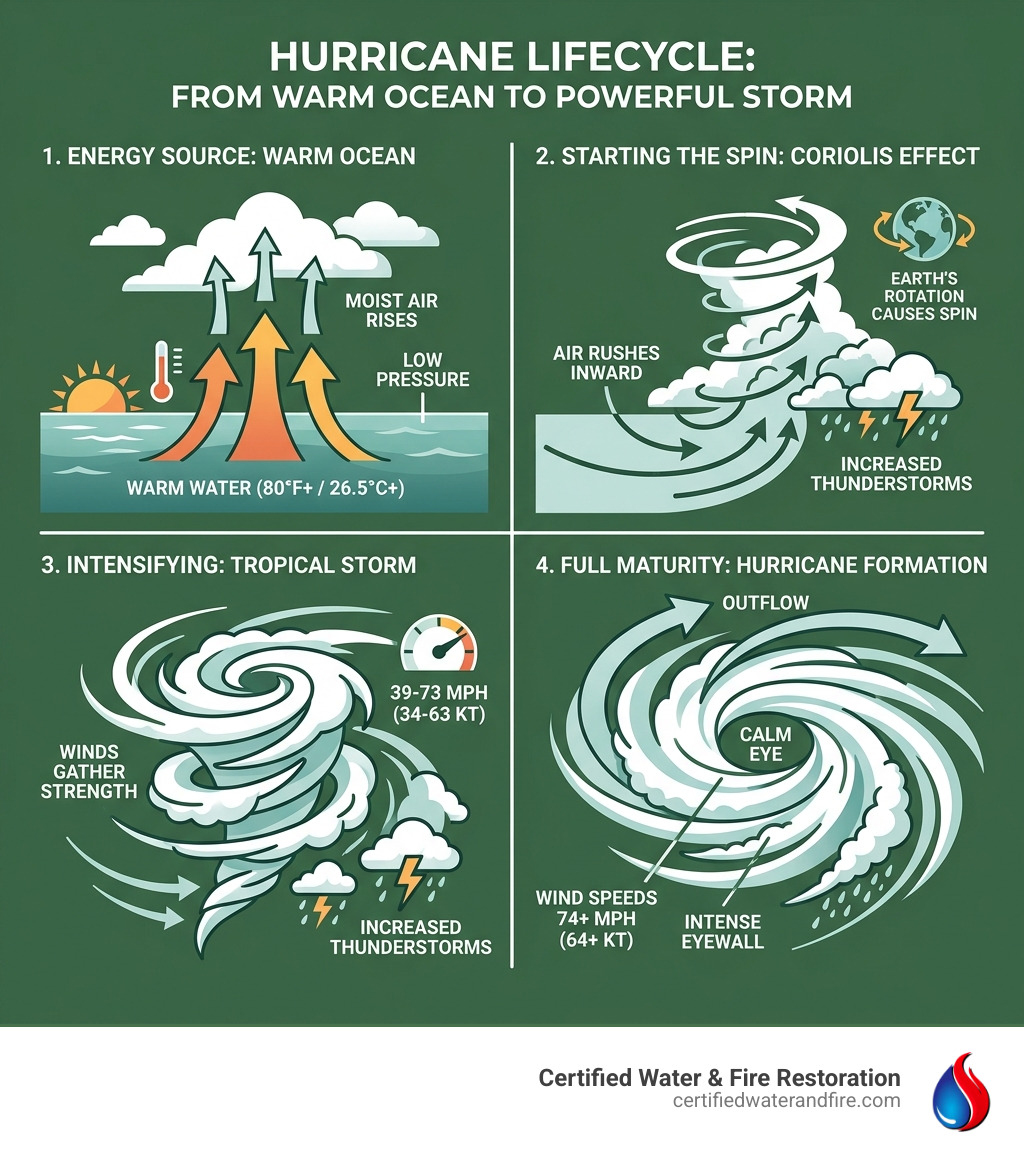
- Warm ocean water (at least 80°F / 26.5°C) heats the air above it
- That warm, moist air rises, leaving low pressure at the surface
- Surrounding air rushes in to fill the gap, then warms and rises too
- Earth’s rotation (the Coriolis effect) causes the whole system to spin
- Clouds and thunderstorms build, releasing heat that powers the cycle further
- Winds strengthen — reaching 39 mph for tropical storm status, then 74 mph to officially become a hurricane
That’s the core of it. Everything else — the eyewall, the storm surge, the categories — builds from those six steps.
What makes hurricanes rare, even with all that warm tropical water around, is that every single ingredient has to line up at the same time and place. Most storms never make it. Only about 10 tropical storms form in the Atlantic each year, and just a handful reach true hurricane strength.
These storms are, in a very real sense, engines — giant thermodynamic machines that pull heat out of the ocean and convert it into wind and rain on a scale that’s hard to wrap your head around. A single hurricane releases energy roughly equivalent to 400 times the world’s total electrical generating capacity. That’s not a typo.
Key Takeaways: How Hurricanes Form
- Hurricanes need specific conditions to form. They require warm ocean water (80°F+), moist air, low wind shear, and a pre-existing disturbance—if one element is missing, the storm will not develop.
- They function as powerful heat engines. Hurricanes pull energy from warm water and convert it into wind and rain, creating a self-sustaining cycle that strengthens as long as heat and moisture remain available.
- Wind speed defines storm intensity and classification. Storms evolve from tropical disturbances → tropical storms (39+ mph) → hurricanes (74+ mph), with damage increasing rapidly at higher categories.
- Most hurricane damage comes from water, not wind. Storm surge and flooding often cause the most destruction, pushing water inland and damaging homes far beyond the coastline.
- Action step: prepare before storms form, not after. Monitor hurricane season, secure property, and have a response plan ready—early preparation reduces damage, cost, and recovery time significantly.
I’m Ryan Majewski, General Manager of Certified Water & Fire Restoration, and while my expertise is in what happens after these storms make landfall — the water damage, the mold, the structural repairs — understanding how do hurricanes form is something I’ve found essential to helping Texas homeowners and business owners truly grasp the risks they face each season. Let’s break it all down.
The Essential Ingredients: How Do Hurricanes Form?
Think of a hurricane like a master-chef’s recipe. If you’re missing the salt or the heat, the dish just doesn’t come together. For a hurricane, the “kitchen” is the tropical ocean, and the ingredients are strictly non-negotiable.
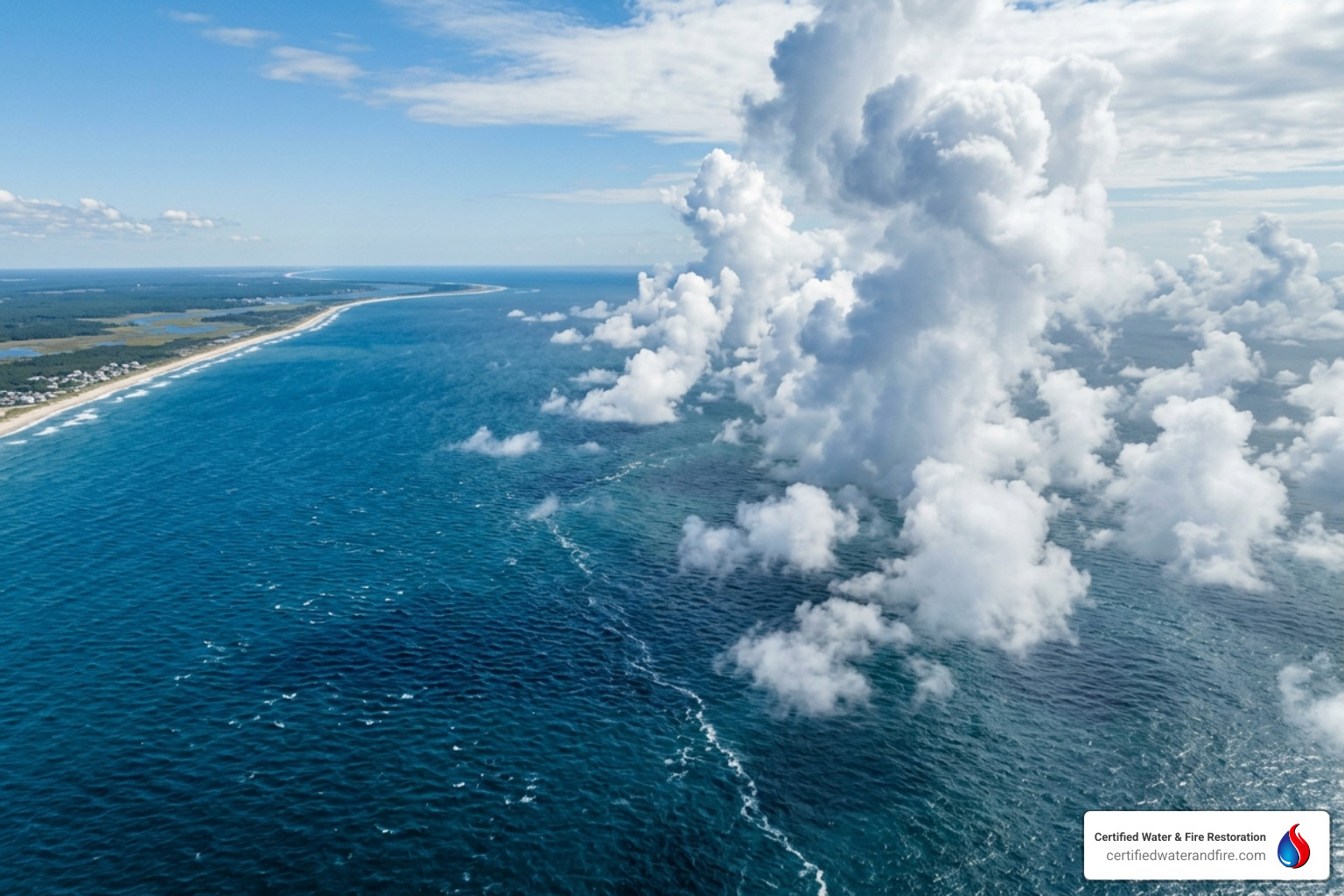
First and foremost, you need warm ocean water. We aren’t just talking “pleasant for a swim” warm; we’re talking at least 80°F (26.5°C). But here’s the kicker: it can’t just be a thin layer on the surface. That warmth needs to extend down at least 50 meters (about 165 feet). Why? Because as the storm churns the sea, it brings up deeper water. If that deeper water is cold, it’ll “snuff out” the storm’s pilot light.
Next, you need moist air. Dry air is the enemy of a growing storm. When warm water evaporates, it turns into water vapor. As this vapor rises and cools, it condenses into clouds, releasing “latent heat.” This heat is the actual fuel that keeps the engine running.
You also need a pre-existing disturbance. Hurricanes don’t just pop up out of a clear blue sky. In the Atlantic, these often start as “African easterly waves”—clusters of thunderstorms that move off the west coast of Africa.
Finally, you need low wind shear. Wind shear is the change in wind speed or direction at different altitudes. If the winds at the top of the atmosphere are blowing much faster or in a different direction than the winds at the surface, they’ll literally tip the storm over or rip the top off the developing clouds. To learn more about these fascinating weather patterns, check out these Best Facts About Hurricanes.
The Role of the Coriolis Effect in How Hurricanes Form
Even if you have the heat and the moisture, you won’t get a hurricane without a little “twist.” This is where the Coriolis effect comes in. Because the Earth is a sphere spinning on its axis, objects moving across its surface are deflected.
In the Northern Hemisphere, this deflection is to the right, which causes storms to spin counterclockwise. In the Southern Hemisphere, it’s the opposite—they spin clockwise.
This is also why hurricanes have a “no-fly zone” near the equator. Within about 300 miles (500 km) of the equator, the Coriolis effect is essentially zero. There’s simply no “spin” to get the air rotating. Without that rotation, you just have a big cluster of thunderstorms that eventually rains itself out. This is a key part of the scientific definition of a Tropical cyclone.
Why Warm Ocean Waters are Vital to How Hurricanes Form
We often call hurricanes “heat engines.” In physics, a heat engine takes heat from a warm source (the ocean) and converts some of it into work (wind).
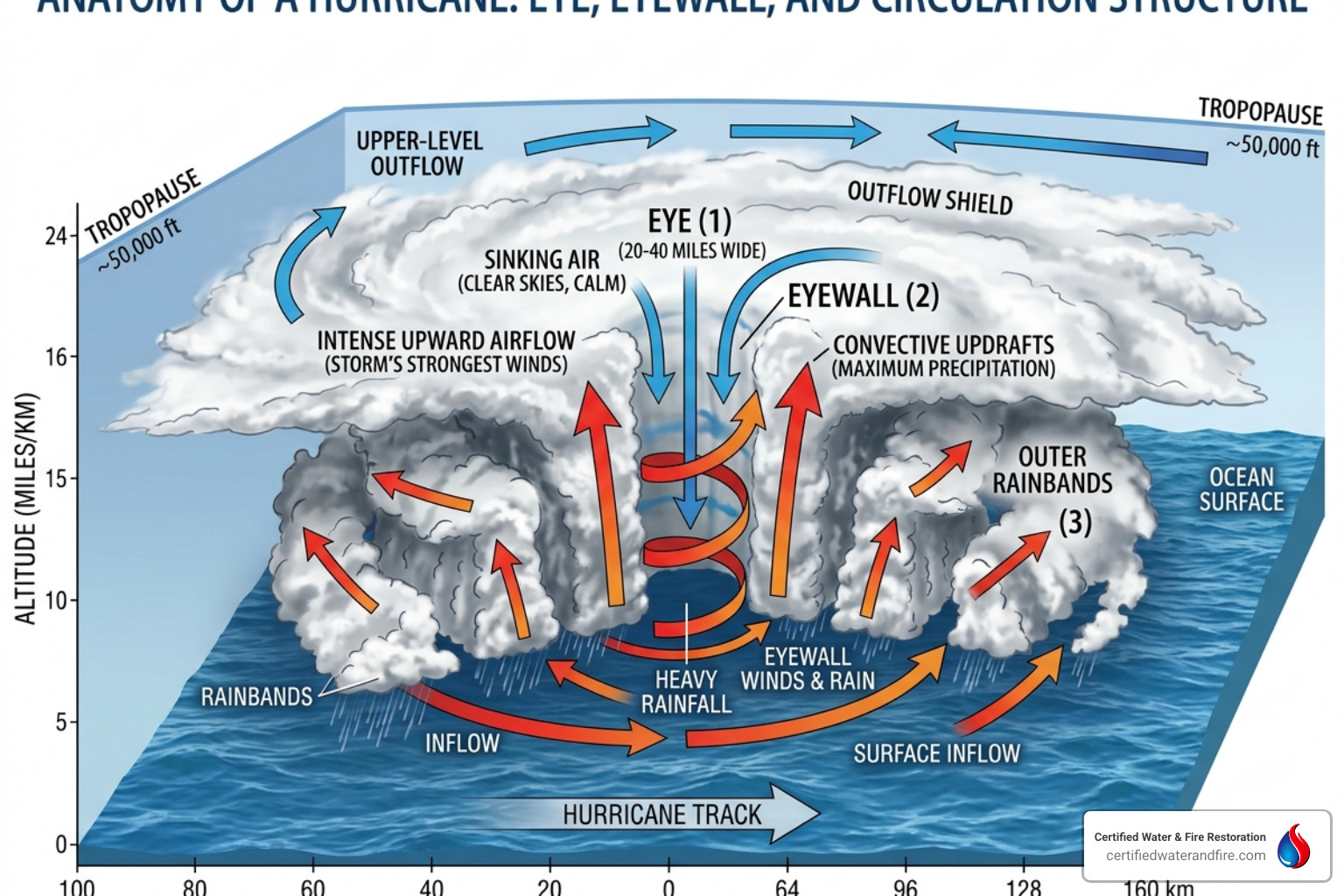
When that 80°F water evaporates, it carries a massive amount of energy upward. As the air rises, it creates a “hole” of low pressure at the surface. Nature hates a vacuum, so surrounding air rushes in to fill that hole. As that new air passes over the warm water, it also picks up moisture and heat, rises, and the cycle accelerates.
It’s a feedback loop. The more heat the storm can pull from the water, the faster the winds blow. The faster the winds blow, the more evaporation occurs. This thermodynamic process is beautifully explained by the Precipitation Education team at NASA.
From Disturbance to Disaster: The Four Stages of Development
A hurricane doesn’t just wake up as a Category 5. It goes through a very specific “puberty” of sorts, measured by its wind speed and organization.
- Tropical Disturbance: This is the “baby” stage. It’s just a cluster of thunderstorms with very little organization and no real “spin” yet.
- Tropical Depression: The storm starts to look a bit more circular on satellite. Winds are below 39 mph, but a low-pressure center has formed.
- Tropical Storm: This is when things get serious. Winds reach 39 mph, and the storm gets an official human name. The organization becomes much clearer, with distinct rainbands.
- Hurricane: Once sustained winds hit 74 mph, the storm is officially a hurricane. This is usually when the “eye” appears—that eerily calm, clear center surrounded by the most violent winds of the eyewall.
While we use the word “hurricane” here in Texas, it’s the same physical phenomenon as a typhoon in the Pacific. For a deeper dive into these naming quirks, see our guide on Cyclone Vs Hurricane.
Measuring the Fury: The Saffir-Simpson Scale and Storm Surges
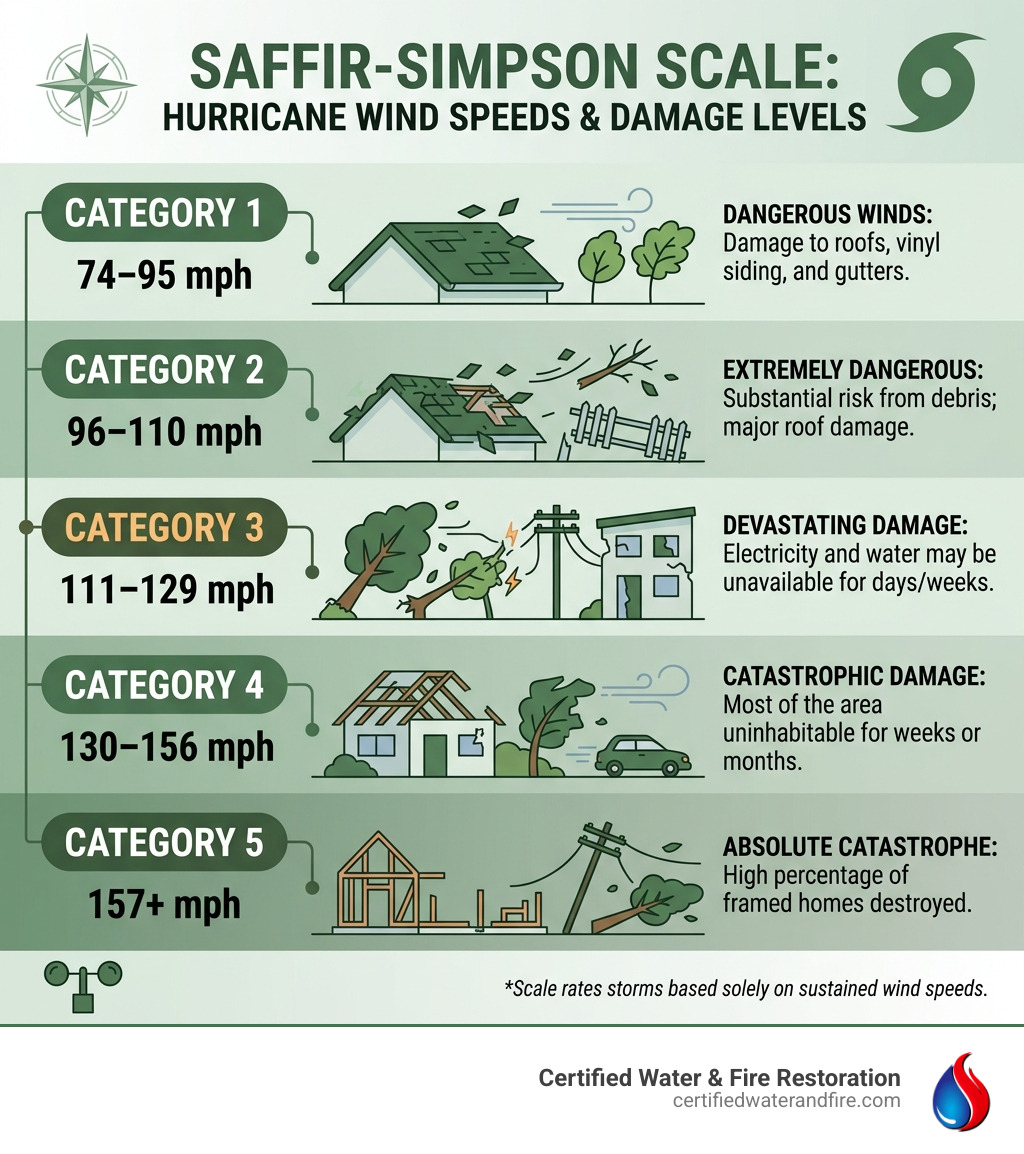
When we talk about how “big” a hurricane is, we’re usually talking about the Saffir-Simpson Hurricane Wind Scale. This scale rates storms from 1 to 5 based solely on their sustained wind speeds.
| Category | Wind Speed (mph) | Potential Damage |
|---|---|---|
| Category 1 | 74–95 | Dangerous winds; damage to roof shingles, vinyl siding, and gutters. |
| Category 2 | 96–110 | Extremely dangerous; substantial risk of injury from debris; major roof damage. |
| Category 3 | 111–129 | Devastating damage; electricity and water may be unavailable for days/weeks. |
| Category 4 | 130–156 | Catastrophic damage; most of the area will be uninhabitable for weeks or months. |
| Category 5 | 157+ | Absolute catastrophe; a high percentage of framed homes will be destroyed. |
However, wind isn’t the only killer. Storm surge is often the most dangerous part of a hurricane making landfall. As the low pressure and high winds push on the ocean, they literally “pile up” water ahead of the storm. When this wall of water hits the coast, it can rise 20 feet or more, flooding miles inland. This causes the kind of severe Hurricane Damage that requires professional restoration.
What Causes a Hurricane to Lose Its Power?
If hurricanes are so powerful, why don’t they just keep going forever? As it turns out, they are incredibly fragile.
The moment a hurricane makes landfall, it begins to die. Land provides friction that slows the winds, but more importantly, it cuts the storm off from its fuel: warm ocean water. Without that constant supply of moisture and heat, the “engine” stalls.
A hurricane will also weaken if it moves over cool water (dropping below 80°F) or if it encounters dry air that gets sucked into the core. Think of dry air like throwing sand into a car engine—it disrupts the condensation process and causes the storm to collapse. Knowing when these storms are most likely to strike is vital, so keep an eye on When Is Hurricane Season In Texas.
Climate Change and the Future of Tropical Cyclones
By May 2026, the data on climate change and hurricanes has become even clearer. While we aren’t necessarily seeing more hurricanes each year, the ones that do form are becoming more intense.
Warmer oceans mean more “fuel” is available. This leads to rapid intensification, where a storm jumps from a Category 1 to a Category 4 in less than 24 hours. Additionally, warmer air holds more moisture—about 7% more for every 1°C of warming. This is why storms like Harvey produced such record-breaking rainfall.
Interestingly, research suggests that the “translation speed” (how fast the storm moves geographically) is slowing down. A storm that “stalls” over a city like Houston or Dallas is far more dangerous than one that passes through quickly. You can explore more about these high-tech observations at the NASA Space Place.
Frequently Asked Questions about Hurricane Formation
Why don’t hurricanes form in places like Kansas or Oregon?
Kansas is “Landlocked 101.” Without a massive, warm ocean to provide moisture and heat energy, a hurricane simply cannot exist. Oregon, while on the coast, has ocean waters that are far too cold to fuel a tropical engine.
What is the difference between a hurricane, a typhoon, and a cyclone?
Location, location, location! They are all “tropical cyclones.” If it’s in the Atlantic or Northeast Pacific, it’s a hurricane. In the Northwest Pacific, it’s a typhoon. In the South Pacific or Indian Ocean, it’s a cyclone.
Can a hurricane form directly on the equator?
No. Because the Coriolis effect is non-existent at 0 degrees latitude, the air won’t start spinning. Without that “vortex” action, a hurricane cannot form.
Why Understanding Hurricanes Matters in Texas
Understanding how do hurricanes form is the first step in respecting their power. For those of us living in Houston, Dallas, Irving, or Plano, these storms aren’t just scientific curiosities—they are a seasonal reality.
At Certified Water & Fire Restoration, we’ve seen the devastation a major storm can leave behind. Whether it’s a Category 1 that knocks a tree through a roof in Plano or a major surge that floods a home in Houston, the aftermath is overwhelming.
That’s why we offer a 60-minute emergency response across the Dallas and Houston metros. We work directly with your insurance company so there are no upfront costs for you, and we back our restoration work with a 2-year warranty. We want you to have peace of mind that your home is being restored to the highest standards.
Don’t wait for the next storm to have a plan. Check out our guide on Hurricane Season Prep For Houston Homeowners and save our number. If the worst happens, our Professional Storm Damage Recovery team is ready to help you rebuild, 24/7. Stay safe, Texas!
