

Hurricane Damage: Essential Guide 2025
Understanding the True Cost and Scope of Hurricane Damage
Hurricane damage is one of the most devastating and costly natural disasters in the U.S. Since 1980, these tropical cyclones have caused over $1.5 trillion in damage and claimed more than 7,200 lives, making them the deadliest weather-related disaster. The costs continue to rise, with recent seasons like 2017’s Harvey, Irma, and Maria causing a record-breaking $339.2 billion in damage.
Hurricane damage encompasses a wide range of hazards, including:
- Water Damage: Storm surge and inland flooding are the leading causes of fatalities.
- Wind Damage: High winds destroy roofs, shatter windows, and create dangerous projectiles.
- Structural Damage: Foundations, walls, and the overall integrity of buildings are compromised.
- Secondary Hazards: Tornadoes, power outages, and contamination pose additional risks.
- Long-Term Effects: Mold, economic disruption, and environmental harm persist long after the storm.
If you’re facing hurricane damage right now: Prioritize safety, document all damage with photos, and call a professional restoration company immediately. Water damage worsens by the hour, and mold can grow within 24-48 hours.
This guide covers how hurricane damage happens, what to expect, and how to recover. I’m Ryan Majewski, General Manager of Certified Water & Fire Restoration. My experience helping Texas families recover from these storms has shown me the challenges they face and the importance of a swift, professional response.
Key Takeaways
- Water causes the most danger and damage: Storm surge and flooding lead to most fatalities and major property loss, not wind alone.
- Wind damage creates chain reactions: High winds can tear roofs and break windows, allowing water to enter and worsen damage.
- Preparation reduces losses: A plan, supplies, and home reinforcements can limit damage and protect lives before a storm hits.
- Fast action after the storm is critical: Quick documentation and water removal help prevent mold and costly secondary damage.
- Recovery takes time and planning: Insurance gaps, structural damage, and long-term effects mean professional help is often needed.
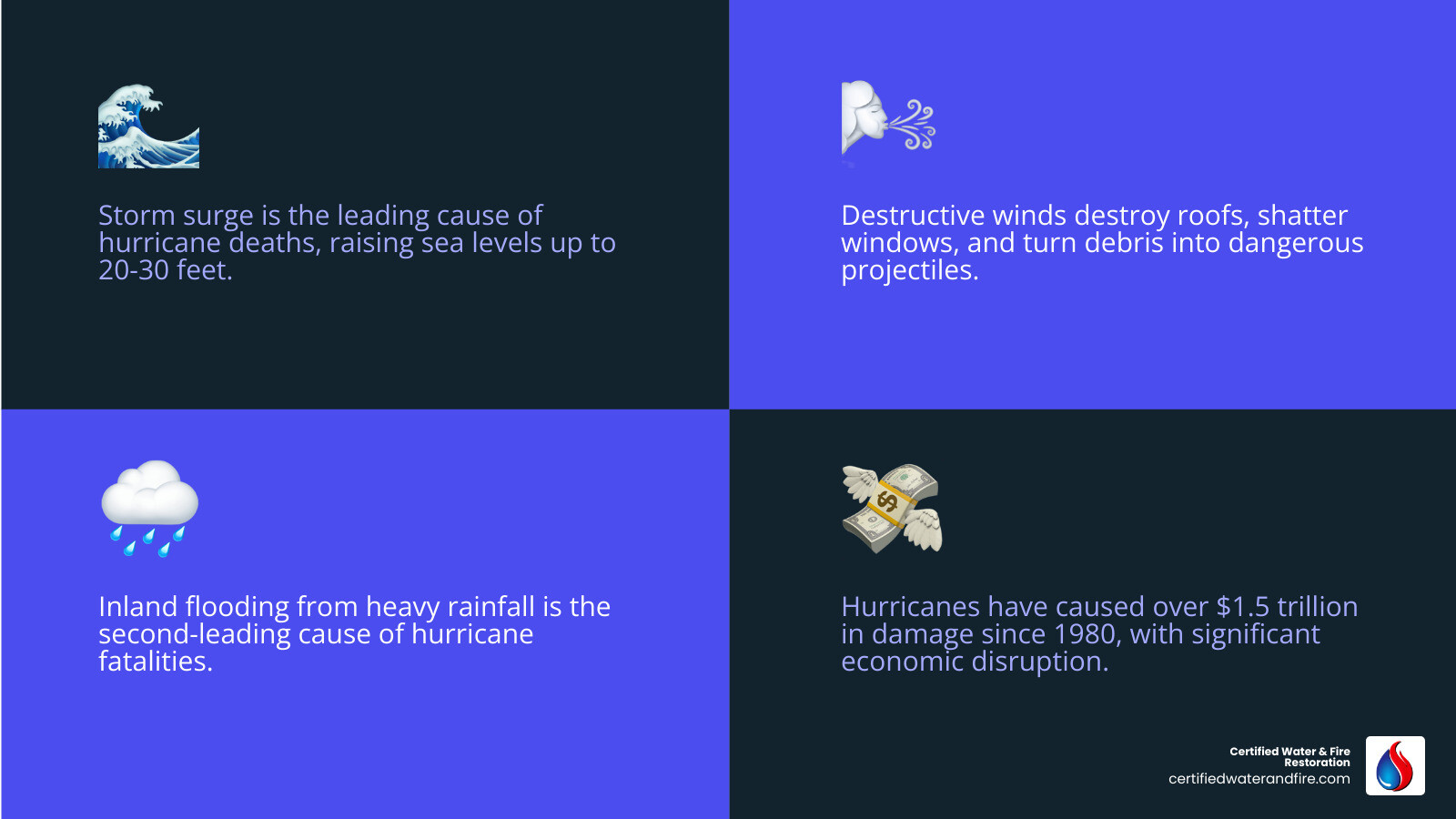
Hurricane damage terms to know:
The Anatomy of a Hurricane: Primary & Secondary Hazards
While powerful winds are the most famous feature of a hurricane, hurricane damage from water is far deadlier. More than half of all hurricane-related deaths are caused by water, not wind. The Saffir-Simpson Hurricane Wind Scale is useful, but it doesn’t capture the full threat. A slow-moving Category 2 storm with heavy rain can be more destructive than a fast-moving Category 4.
The Power of Water: Storm Surge and Inland Flooding
Storm surge is the leading cause of hurricane fatalities. It occurs when hurricane winds push a massive wall of ocean water ashore, raising sea levels by 20 to 30 feet. This is not just a high tide; it’s a powerful, fast-moving flood that can demolish buildings and erode coastlines.
Even far from the coast, inland flooding from torrential rain is the second leading cause of death. Hurricanes can dump feet of rain as they move over areas like Houston or Dallas, causing rivers to overflow and flash floods to appear with little warning. Never drive into flooded roadways, as it only takes 12 inches of moving water to sweep a vehicle away.
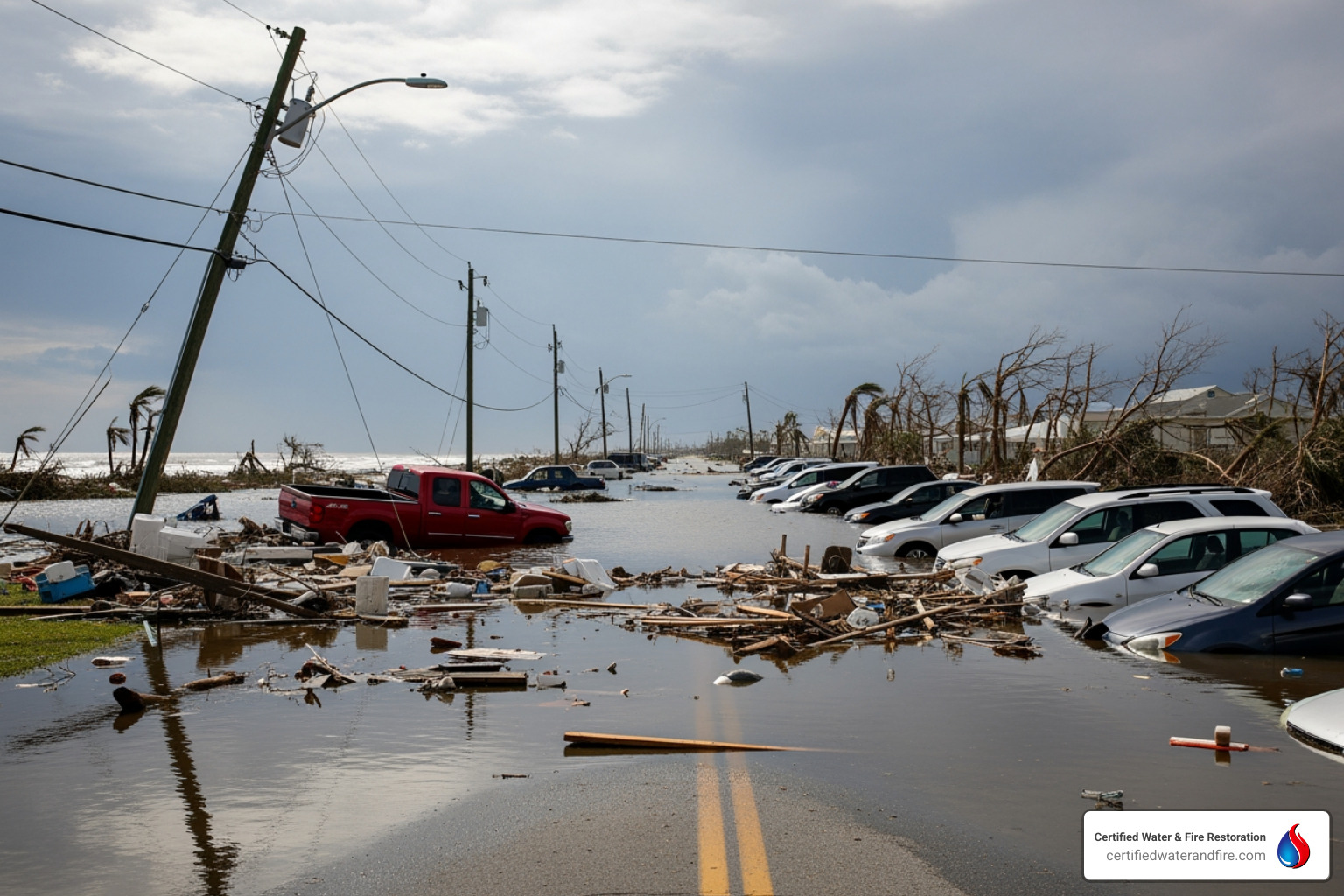
To see how storm surge could affect your area, use the interactive maps from the National Hurricane Center to learn about storm surge hazards.
Destructive Winds and Their Impact
While water is deadlier, wind causes the most widespread property destruction. The Saffir-Simpson Scale categorizes storms from Category 1 (74-95 mph) to Category 5 (157+ mph). Even a Category 1 can rip off shingles and siding. The damage potential increases exponentially with each category.
- Category 1-2 (74-110 mph): Causes roof, siding, and gutter damage. Unsecured items become projectiles.
- Category 3 (111-129 mph): Can tear entire roofs off well-built homes and cause extended power outages.
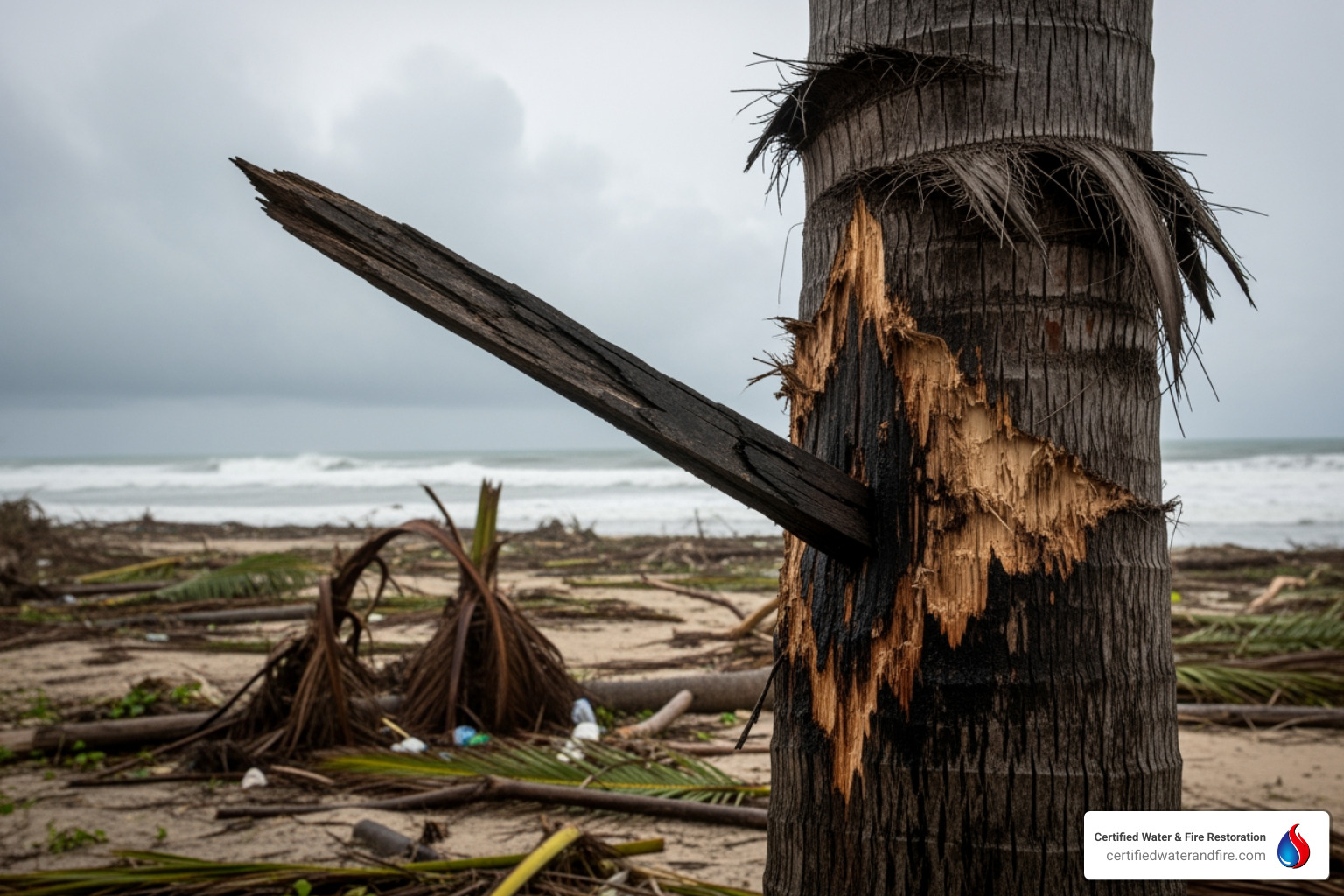
- Category 4-5 (130+ mph): Catastrophic damage. Homes can be leveled, and areas may be uninhabitable for months. Debris becomes lethal, capable of piercing walls.
Wind damage is a cascading failure: it strips roofing, allowing rain to pour in, and shatters windows, leading to structural collapse from internal pressure.
Secondary threats often catch people off guard. Tornadoes can form in a hurricane’s outer rain bands, hundreds of miles from the center, causing intense localized damage. Additionally, rip currents and dangerous surf pose a serious threat even if the hurricane is far offshore, and these conditions can persist for days after the storm passes.
The danger doesn’t end when the storm stops. The aftermath includes downed power lines, unstable structures, and contaminated floodwaters. Understanding all these hazards is the first step toward safety.
The Widespread Impact of Hurricane Damage
The true scope of hurricane damage unfolds in the weeks and months after a storm, affecting every aspect of community life.
Economic and Community Devastation
Beyond the visible destruction, hurricanes cripple local economies. Businesses close, leading to lost income for families. Damaged infrastructure—impassable roads, downed power lines, and failed communication systems—paralyzes a community’s ability to function and recover.
The financial toll is immense. Tropical cyclones have caused over $1.5 trillion in damage since 1980. The 2017 season alone, with Hurricanes Harvey, Irma, and Maria, cost the nation $339.2 billion. These figures represent lost homes, destroyed businesses, and communities struggling to rebuild. You can explore this data further via NOAA’s U.S. Billion-Dollar Weather and Climate Disasters.
Environmental Consequences
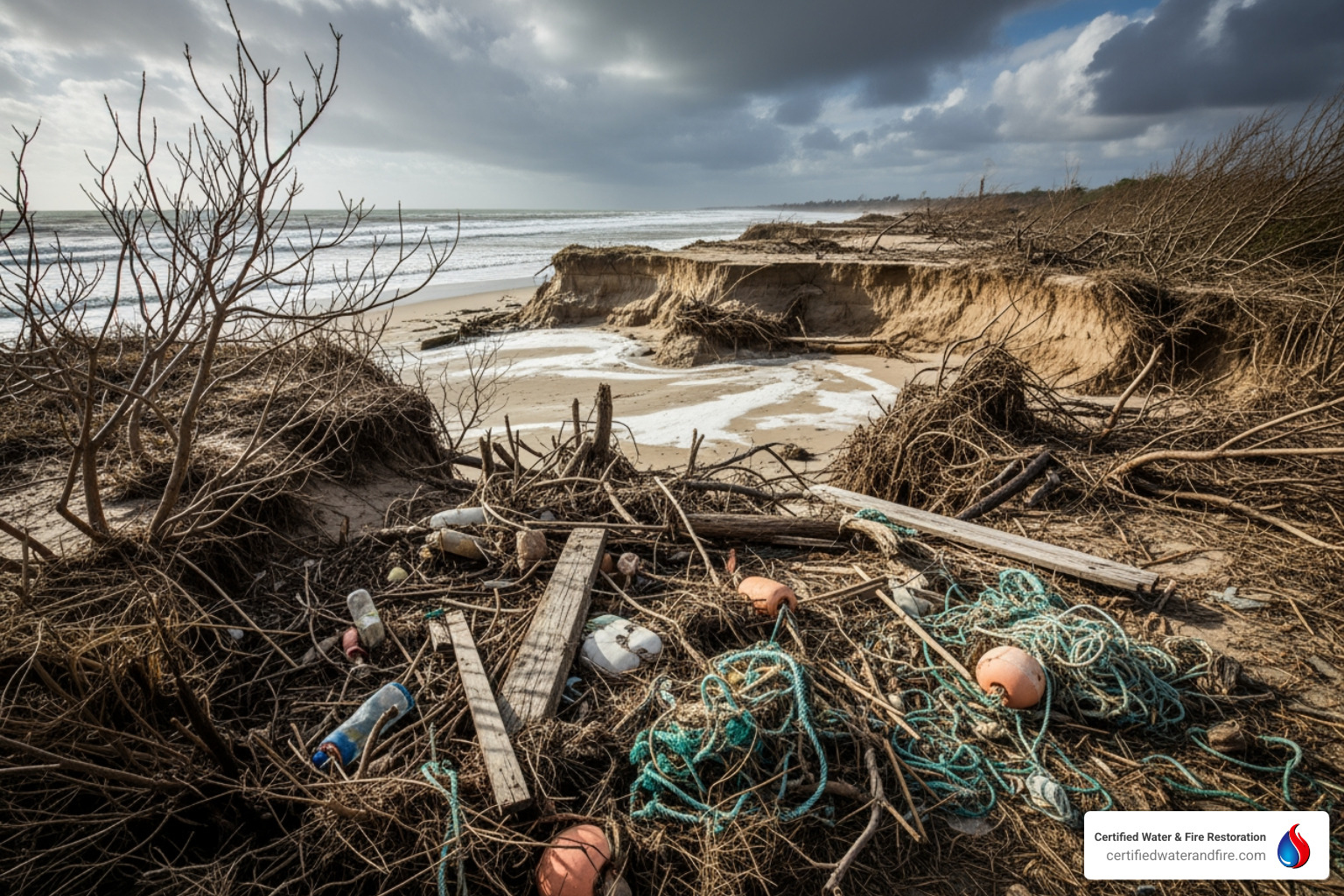
Hurricanes also wreak havoc on the natural world. Storm surge erodes beaches and destroys coastal habitats. Saltwater intrusion contaminates freshwater sources and kills vegetation. Hurricane-force winds can devastate forests, while contaminant spills from damaged industrial sites and fuel tanks create long-lasting environmental hazards in floodwaters.
Understanding the Long-Term Effects of Hurricane Damage
The aftermath of hurricane damage creates challenges that last for years. These long-term effects often prove more difficult to overcome than the immediate destruction.
- Population Displacement: When homes are destroyed, families are forced to relocate, sometimes permanently, fracturing community social networks.
- Mental Health Impacts: The trauma of the storm and the stress of recovery can lead to anxiety, depression, and PTSD.
- Financial Burdens: Insurance premiums often skyrocket in affected areas, adding to the financial strain of recovery.
- Persistent Mold Growth: If water damage isn’t addressed within 24-48 hours, mold can spread throughout a structure, posing serious health risks.
- Compromised Structural Integrity: Hidden damage to a home’s foundation or framing can cause problems years later.
Understanding these long-term effects, which share traits with other issues like common causes of spring water damage in Dallas and Houston, helps you prepare more effectively.
Preparing For and Mitigating Hurricane Damage
We can’t stop hurricanes, but we can prepare our homes and families to withstand their impact. Proactive measures are the most effective way to reduce hurricane damage and protect what matters most. A prepared home often sustains minimal damage, while an unprepared one can face total loss.
Creating a Hurricane Action Plan
Every household in areas like Houston and Dallas needs a hurricane action plan. This is your roadmap for staying safe.
- Know Your Risk: Determine if you are in a storm surge or flood-prone evacuation zone. Check your local emergency management website and be ready to follow evacuation orders.
- Develop a Family Plan: Decide on an evacuation destination and route (with a backup). Establish a meeting place and a communication plan in case you get separated and cell service is down.
- Assemble a Disaster Kit: Prepare a kit with enough supplies to last at least 72 hours without power or clean water. This should include water, non-perishable food, medications, a first-aid kit, flashlights, batteries, cash, and copies of important documents.
For a complete checklist, the National Weather Service’s Hurricane Safety Tips is an excellent resource.
Essential items for your hurricane safety kit include: water and non-perishable food for at least three days, battery-powered or hand-crank radio (preferably a NOAA Weather Radio), flashlights and extra batteries, first aid kit, prescription medications, copies of important documents (insurance policies, IDs, bank records), cell phone chargers and backup batteries, cash, whistle to signal for help, dust masks, plastic sheeting and duct tape, basic tools like a wrench or pliers, manual can opener, personal hygiene items, blankets or sleeping bags, complete change of clothing and sturdy shoes, and supplies for infants, elderly family members, or pets.
Protecting Your Property
Strengthening your home against high winds and water can dramatically reduce damage.
- Roof: Your roof is the first line of defense. Reinforce it with hurricane clips or straps and replace any loose or damaged shingles.
- Windows and Doors: Install storm shutters or have pre-cut plywood panels ready. Impact-resistant windows and doors are a worthwhile investment for major renovations.
- Garage Door: This is often a weak point. A reinforcement kit can prevent it from failing and allowing high winds to enter your home.
- Landscaping: Trim trees and shrubs regularly to remove dead or weak branches that could become dangerous projectiles.
We offer detailed guides to help you protect your property from storm, wind, and flood damage and specific advice for hurricane prep for Houston homeowners. The time to prepare is now, not when a storm is approaching.
The Road to Recovery: Responding to and Repairing Damage
After the storm passes, the real work of recovery begins. The aftermath can be just as hazardous, so your safety must come first.
Immediate Steps After the Storm
Before returning to your property, follow these critical safety steps:
- Wait for official clearance from local authorities.
- Avoid all floodwaters. They can hide downed power lines, sharp debris, and contaminants. Just six inches of moving water can knock you down.
- Document everything. Take extensive photos and videos of all damage before you begin any cleanup. This is crucial for insurance claims.
- Stay away from downed power lines and report them to your utility company.
- Operate generators safely outdoors, at least 20 feet away from windows and doors, to prevent carbon monoxide poisoning.
Assessing Structural Hurricane Damage
Once it’s safe, perform an initial inspection of your property for hurricane damage. Look for:
- Roof: Missing or damaged shingles, punctures, or sagging.
- Foundation: New cracks, shifts, or erosion around the base.
- Walls: Cracks, bowing, or bulging, which can indicate structural instability.
- Windows and Doors: Warped frames, broken glass, or signs of water leakage.
- Water Intrusion: Stains on ceilings, warped floors, or discolored walls.
While this initial check is helpful, a professional inspection is recommended to identify all hidden damage.
The Professional Restoration Process
Extensive hurricane damage requires professional expertise and equipment. At Certified Water & Fire Restoration, our comprehensive process ensures a complete recovery.
- Water Extraction: We arrive within 60 minutes to rapidly remove standing water with powerful pumps, minimizing further damage and mold risk.
- Drying and Dehumidification: We use industrial-grade air movers and dehumidifiers to thoroughly dry the structure, monitoring moisture levels to ensure completion.
- Mold Remediation: Our certified experts safely contain and remove any mold growth, which can start in just 24-48 hours, and treat surfaces to prevent its return.
- Contents Cleaning and Restoration: We use specialized techniques to salvage and restore your belongings, including furniture, electronics, and important documents.
- Structural Repairs and Reconstruction: Our team manages all repairs, from roofing and flooring to complete rebuilding, restoring your property to its pre-loss condition.
We work directly with your insurance company, so you face no upfront costs, and we back our work with a 2-year warranty. For immediate help, learn about our Storm Damage services and how we can guide you through recovery.
The Future of Hurricanes: Lessons and Evolving Threats
Past hurricanes have taught us hard lessons, but the threat is evolving. As someone who helps Texas families recover from hurricane damage, I know that understanding these changes is key to future protection.
Lessons from Historical Storms like Katrina and Maria
Major storms leave behind crucial wisdom. Hurricane Katrina in 2005 demonstrated that infrastructure failure, like the levees in New Orleans, can turn a disaster into a catastrophe. It also reinforced that evacuation orders save lives.
Hurricane Maria in 2017 exposed extreme grid vulnerability when it knocked out power to Puerto Rico for nearly a year. Both storms showed that full community recovery takes years, not months, highlighting the importance of a rapid and effective restoration process to prevent long-term trauma.
Climate Change and Its Impact on Hurricanes
The science is clear: a changing climate is amplifying hurricane damage. We are seeing the effects on the ground.
- Stronger Storms: Warmer ocean waters act as fuel, allowing hurricanes to intensify more rapidly and reach higher, more destructive categories.
- Wetter Storms: A warmer atmosphere holds more moisture, leading to heavier rainfall and increased inland flooding, even in cities like Dallas, far from the coast.
- Worse Storm Surge: Rising sea levels mean that storm surge starts from a higher baseline, pushing floodwaters further inland than ever before.
Research from sources like NOAA’s research on global warming and hurricanes confirms that hurricanes are becoming stronger and wetter. This new reality means that old flood maps may be outdated and that preparation is more critical than ever.
Frequently Asked Questions about Hurricane Damage
What is the most dangerous part of a hurricane?
While winds are destructive, water is the most dangerous element. Storm surge is the leading cause of hurricane-related deaths, followed by inland flooding from heavy rain. Together, these water hazards account for the majority of fatalities, which is why heeding evacuation orders is critical.
How long does it take to repair hurricane damage?
The timeline depends entirely on the severity of the hurricane damage. Minor leaks might be fixed in a few days. However, widespread flooding and major structural damage can require months of reconstruction, with timelines influenced by the availability of materials and the insurance claims process.
Will my insurance cover all types of hurricane damage?
Probably not with a single policy. A standard homeowner’s insurance policy typically covers wind damage but excludes flood damage. For protection from storm surge and rain-induced flooding, you need a separate flood insurance policy, often from the National Flood Insurance Program (NFIP). Review your coverage well before a storm approaches, as most flood policies have a 30-day waiting period.
The Road Ahead
Understanding the full scope of hurricane damage—from storm surge and high winds to the long-term economic and environmental effects—is the first step toward protecting yourself. We cannot stop these storms, but we can prepare our properties and have a plan for action.
When a hurricane strikes in Houston, Dallas, Irving, or Plano, a swift response is critical to minimizing damage and starting the recovery process. At Certified Water & Fire Restoration, we are committed to being that trusted partner.
Our team responds within 60 minutes, 24/7. We handle all the insurance paperwork for you, require no upfront costs, and stand behind our work with a 2-year warranty. From water extraction and mold remediation to complete structural reconstruction, we manage every step to restore your property and your peace of mind.
Don’t wait until you’re dealing with a disaster. For immediate help with storm damage, contact our expert team. When the next storm threatens, you’ll know who to call.