

Is mildew dangerous? Serious Dangers 2025
Why Understanding Mildew Matters for Your Home
Is mildew dangerous to you and your family? The short answer is: Yes, mildew can be dangerous, especially with prolonged exposure, though it’s generally less hazardous than toxic mold.
Quick Answer:
- Health Risks: Mildew can cause coughing, headaches, sore throat, and respiratory problems. Prolonged exposure may lead to more severe symptoms.
- Vulnerable Groups: Infants, elderly individuals, people with asthma, allergies, or weakened immune systems are at higher risk.
- Comparison to Toxic Mold: While not as dangerous as certain toxic molds like black mold (Stachybotrys chartarum), mildew should still be taken seriously.
- Key Difference: Mildew grows on surfaces and is easier to remove, while mold can penetrate materials and cause structural damage.
If you’ve spotted that powdery white or gray substance in your bathroom or on a window sill, you’re likely dealing with mildew. It’s a common household fungus that thrives in damp, humid environments—a frequent issue in Texas homes. While often confused with mold, mildew is a surface-level fungus, making it easier to clean. Mold, in contrast, burrows deep into materials like drywall and wood.
The bottom line: Mildew is more than a cosmetic issue; it’s a warning sign of excess moisture. Left unchecked, it can trigger allergic reactions, worsen respiratory conditions, and lead to more serious mold problems. Prolonged exposure to any household fungi can cause health issues ranging from mild irritation to chronic respiratory problems.
I’m Ryan Majewski, General Manager at Certified Water & Fire Restoration. With over a decade in the industry, I’ve helped countless Texas homeowners understand the risks of mildew and guided them through safe remediation. Understanding what you’re dealing with is the first step to protecting your property and health.
Key Takeaways
- Mildew can affect your health: It releases spores that can cause coughing, headaches, and respiratory irritation, especially with prolonged exposure.
- It signals a moisture problem: Mildew is a warning sign of excess humidity or leaks that can lead to bigger issues like mold.
- Vulnerable groups face higher risk: Children, seniors, and people with asthma or weak immune systems can have more severe reactions.
- Early removal prevents bigger damage: Cleaning small areas and fixing the moisture source stops mildew from spreading or turning into mold.
- Recurring or hidden growth needs experts: Persistent odors or large areas often require professional inspection and remediation.
What is Mildew and How Does It Differ from Mold?
Wondering if that patch in your bathroom is mildew or mold? While they are related fungi, their differences are important. So, is mildew dangerous compared to its more aggressive cousin?
Mildew is essentially early-stage mold that stays on the surface of materials, making it easier to clean. Mold, however, penetrates porous materials like wood and drywall, embedding itself where it can cause significant damage. This distinction impacts the danger to your health and whether you need professional help.
Both fungi reproduce by releasing spores that thrive in moist, warm conditions with an organic food source. Mold is a broad term for over 100,000 species that can grow on wood, carpets, paper, and more.
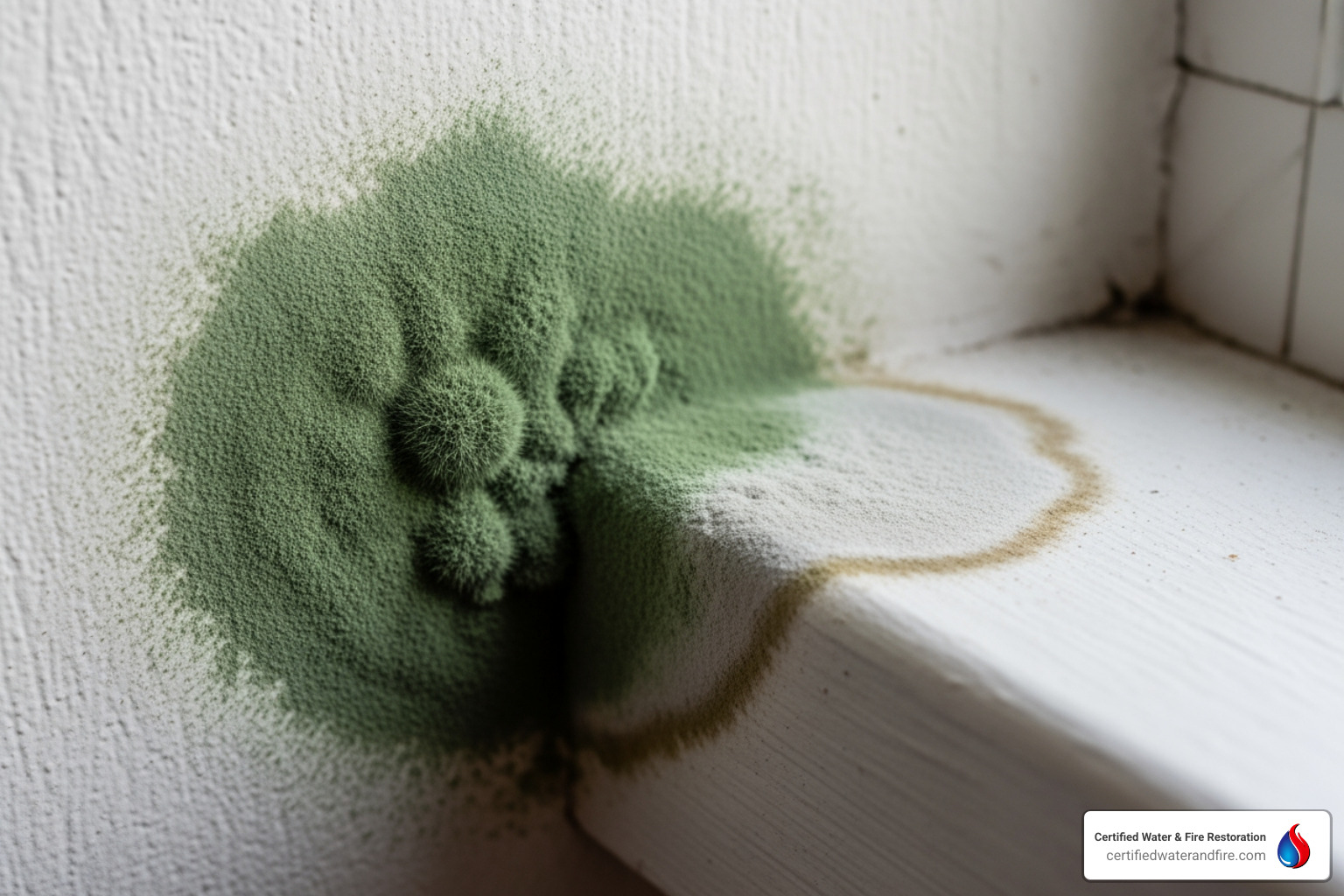
Identifying Mildew: Appearance, Texture, and Smell
Mildew is easy to spot because it lives on surfaces. Look for these telltale signs:
- Appearance: It typically appears as a flat, powdery growth (powdery mildew) or as yellow splotches that darken over time (downy mildew). The color starts as white or gray and can turn yellow, brown, or black as it ages.
- Texture: Mildew has a fine, powdery feel, unlike the fuzzy or slimy texture of many molds.
- Smell: It has a mildly musty odor, often compared to damp laundry.
Because it’s a surface fungus, you can often clean it with household products if you catch it early.
Identifying Mold: Appearance, Texture, and Smell
Mold is more varied and can be harder to identify.
- Appearance: Mold comes in various colors, including black, green, gray, and red. It forms in irregular spots or patches that can look fuzzy, raised, or slimy.
- Texture: Most molds have a fuzzy or slimy texture rather than a powdery one.
- Smell: Mold produces a much stronger, earthier odor than mildew. If you notice a strong musty smell but see no growth, it may be hidden behind a wall or under flooring. For help with hidden mold, learn about our comprehensive mold damage remediation services.
Growth Habits and Structural Damage
Both mildew and mold need moisture, oxygen, and organic matter to grow. However, their impact on your home differs significantly.
Mildew causes primarily cosmetic damage, like discoloration on tiles, fabric, or window sills. It generally won’t compromise your home’s structural integrity.
Mold, on the other hand, consumes the materials it grows on, causing serious property damage. This includes wood rot, which weakens structural supports, and drywall damage. Materials like carpet and insulation often need complete replacement. If you’re dealing with moisture on your floors, see our guide on hardwood floor mold removal.
Here’s a side-by-side comparison:
| Characteristic | Mildew | Mold |
|---|---|---|
| Appearance | Powdery or downy; flat growth; typically white or gray, turning yellow, light brown, or black over time | Fuzzy, velvety, or slimy; raised patches; irregular spots; various colors including black, green, gray, yellow, red, and purple |
| Texture | Fine, powdery | Fuzzy, slimy, or cotton-like |
| Smell | Mildly musty, similar to damp clothes | Stronger, earthy, pungent, or decaying odor; often described as distinctly “musty” |
| Growth | Grows on surfaces; often described as “early-stage mold” | Grows into and through porous materials; can be hidden behind walls, under floors, or in HVAC systems |
| Damage | Primarily cosmetic (discoloration); can harm textiles and plants; generally does not compromise structural integrity | Causes significant structural damage by consuming materials like wood, drywall, and insulation; leads to rot and material degradation |
The bottom line? While mildew is dangerous to your health, mold poses both health risks and serious property damage concerns. Recognizing which one you have helps you respond appropriately.
Is Mildew Dangerous? A Look at the Health Risks
Is mildew dangerous to your health? Yes. While it generally poses less of a threat than aggressive mold species, any fungus growing in your home can affect your well-being, especially with continued exposure.
Mildew is a warning sign of excess moisture. It releases microscopic spores and allergens into the air you breathe. Some species can even produce mycotoxins, though in lower concentrations than more aggressive molds. Your body’s reaction depends on the level of exposure and your individual sensitivity. What starts as a minor irritation can become more persistent if the source isn’t removed.

Common Health Symptoms from Mildew Exposure
Mildew exposure symptoms often mimic a cold or seasonal allergies. Common reactions include:
- Persistent coughing
- Recurring headaches
- A lingering sore throat
- Sneezing and a runny nose
- Itchy, watery eyes
- Skin rash or irritation
Because mildew grows on surfaces, it’s easier to spot and eliminate than hidden mold. This reduces the risk of prolonged exposure and more severe health issues, but the symptoms are real and should be taken seriously.
Is mildew dangerous for vulnerable populations?
The question of “is mildew dangerous” is especially critical for certain groups who face higher risks.
- Infants and young children: Their developing immune and respiratory systems are more susceptible. Research links early childhood mold exposure to a higher risk of developing asthma. The scientific research on childhood asthma and mold highlights the importance of indoor air quality.
- Elderly individuals: Weaker immune systems make them more prone to respiratory infections from fungal exposure.
- People with asthma or allergies: Mildew can trigger asthma attacks and intensify allergic reactions, interfering with daily life.
- People with weakened immune systems: This group (including those undergoing chemotherapy or with chronic lung conditions) faces the highest risk. For them, mildew exposure can lead to serious fungal infections.
If anyone in your home falls into these categories, swift action is essential.
How does mildew’s danger compare to toxic ‘black mold’?
The term “toxic black mold” usually refers to Stachybotrys chartarum, a species known for producing potent mycotoxins. So, how does mildew compare?
Mildew is generally less dangerous. It produces fewer mycotoxins and stays on surfaces where it can be seen and cleaned. Toxic black mold often grows hidden inside walls or under floors, leading to prolonged exposure to higher concentrations of harmful substances. Symptoms of toxic mold exposure can be more severe, including chronic fatigue and neurological issues.
However, all indoor mold growth represents a potential risk. Whether it’s powdery mildew or suspected black mold, it indicates a moisture problem that needs to be fixed. We’ve seen many cases where ignored mildew led to more aggressive mold growth in hidden areas. For more information, visit our page on Black Mold Houston.
Don’t let the comparison lead to inaction. Mildew is a problem that deserves your immediate attention to protect your family’s health.
How to Effectively Remove and Prevent Mildew
The good news about mildew is that its surface-level growth makes it easier to tackle than deeply embedded mold. However, cleaning is only half the battle. If you don’t address the underlying moisture problem, it will return. Moisture control is the key to both removing and preventing mildew.
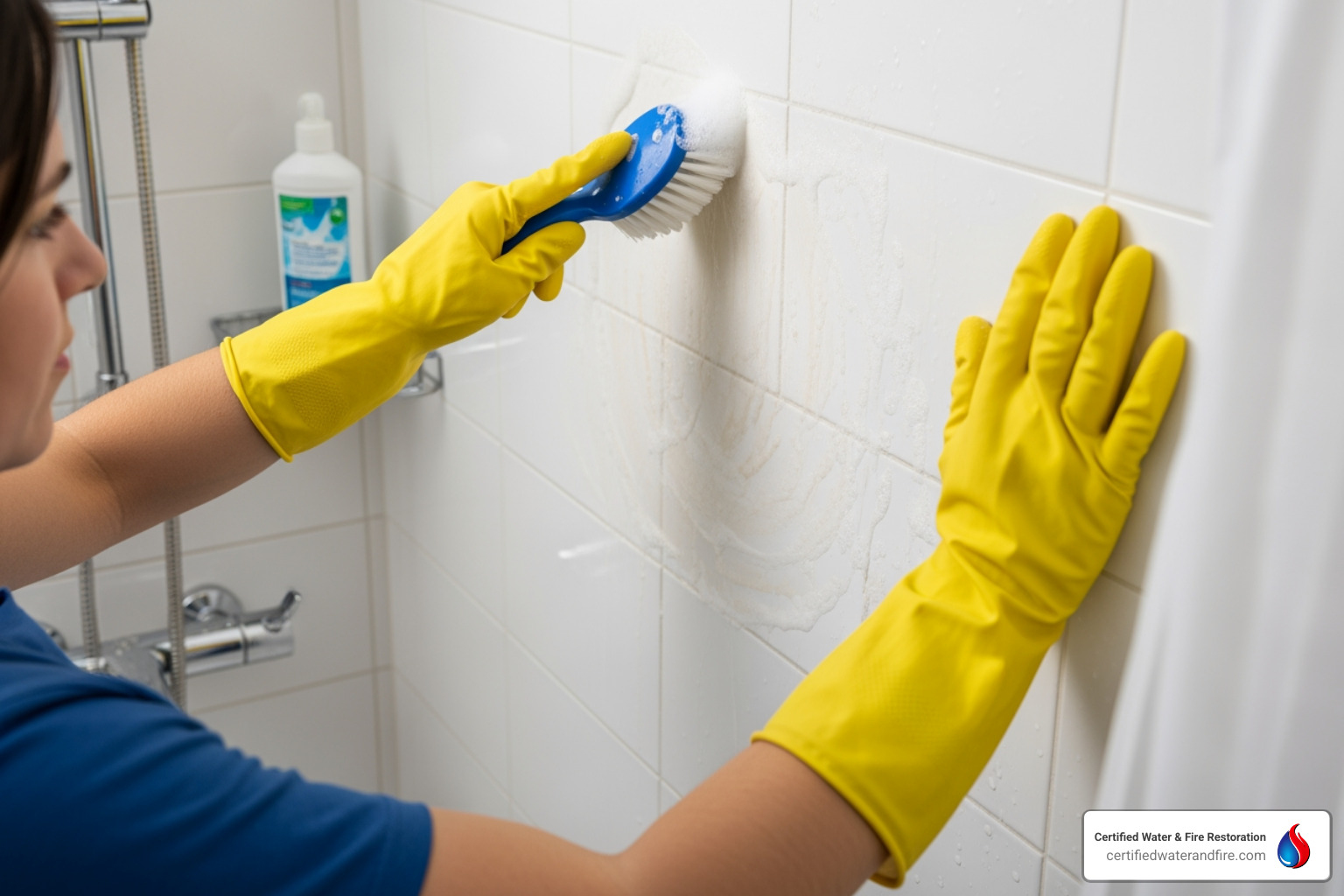
Step-by-Step Mildew Removal for Homeowners
For small patches of mildew (less than 10 square feet), you can usually handle the cleanup yourself.
- Gear Up: Wear rubber gloves, eye protection, and an N-95 face mask to avoid inhaling spores.
- Ventilate: Open windows and doors to allow fresh air to circulate and disperse spores and fumes.
- Clean: Use a household cleaner, undiluted white vinegar, or a bleach solution (1 cup of bleach per gallon of water) on hard surfaces. Never mix bleach with ammonia or other cleaners. For more on using bleach safely, see our article: Can Bleach Clean and Kill Mold Effectively?.
- Scrub: Use a stiff brush to scrub the mildew off the surface. It’s often safer to discard heavily affected soft items like shower curtains.
- Dry Completely: Use fans or a dehumidifier to thoroughly dry the area. Any remaining moisture will invite mildew to return.
- Fix the Source: Identify and repair the moisture source, whether it’s a leak, condensation, or poor ventilation.
Best Practices for Mildew Prevention
In humid climates like those in Houston, Dallas, Irving, and Plano, prevention is essential.
- Control Humidity: Keep indoor humidity below 50% using an air conditioner or dehumidifier.
- Improve Ventilation: Use exhaust fans in bathrooms and kitchens, ensuring they vent outside. Make sure your clothes dryer also vents outdoors.
- Fix Leaks Promptly: Repair any leaks from plumbing, roofs, or windows as soon as you spot them.
- Clean and Dry Surfaces: Regularly wipe down shower walls, sinks, and windowsills where moisture collects.
- Ensure Proper Drainage: Keep gutters clean and ensure the ground around your foundation slopes away from the house to prevent water intrusion.
For more tips, consult the EPA guide to moisture control or our local advice on Mold Prevention Houston.
When to Call a Professional for Help
While DIY cleaning works for small spots, some situations require professional help. Call an expert if:
- The mildew covers an area larger than 10 square feet.
- The growth keeps coming back after cleaning.
- You can smell a musty odor but can’t see any growth (it could be hidden).
- Someone in your home has severe or persistent health symptoms.
- You’ve had a major water damage event, like a flood or burst pipe.
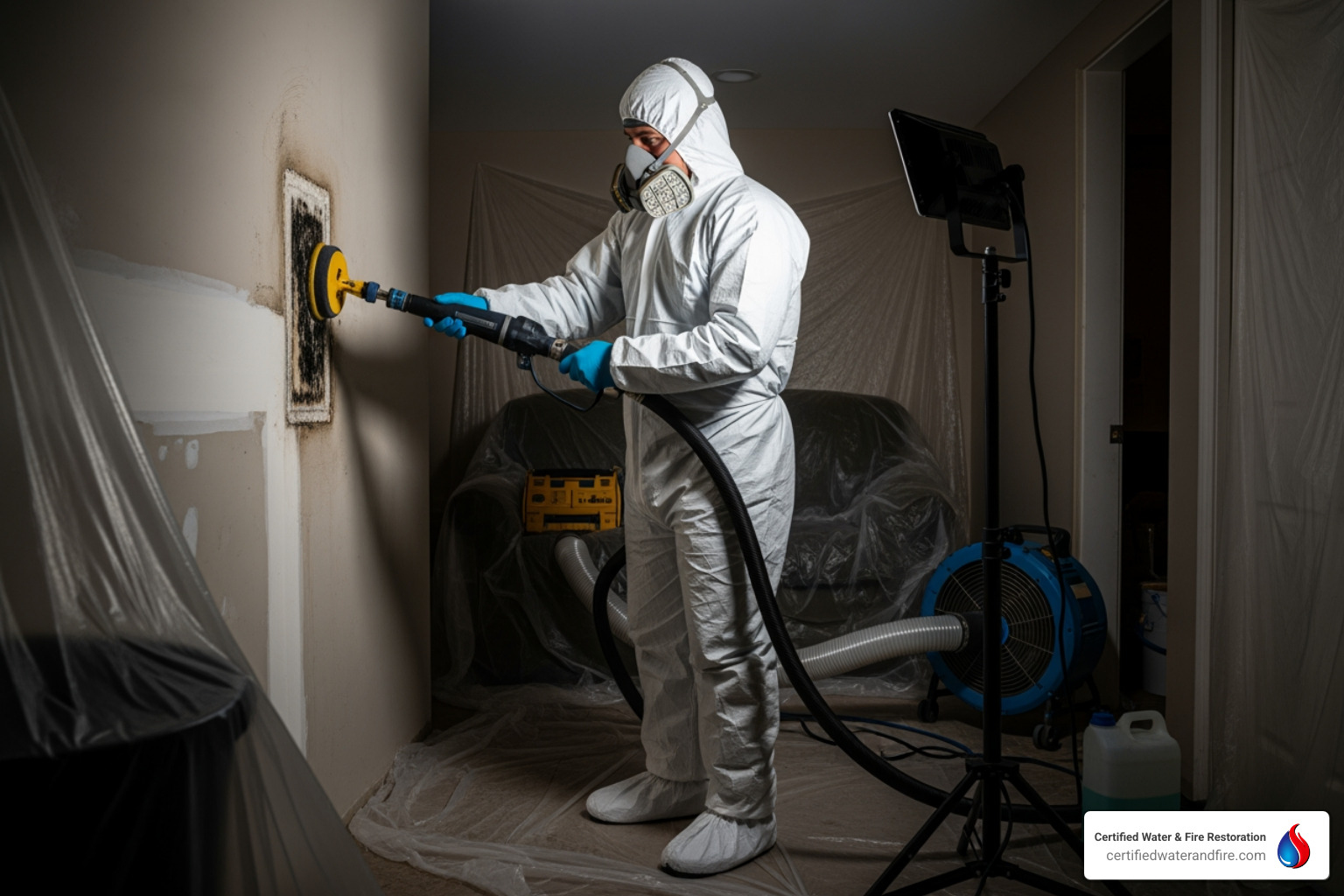
At Certified Water & Fire Restoration, we have the expertise to handle large-scale or hidden mold and mildew issues. If you’re unsure about your situation, learn more about our inspection process at Don’t Guess? Test! Expert Houston Mold Inspection.
Frequently Asked Questions about Mildew and Mold

Beyond the main concern of “is mildew dangerous,” homeowners often have other questions. Here are answers to the most common ones we hear at Certified Water & Fire Restoration.
Is mildew dangerous to breathe in?
Yes, breathing in mildew spores can be dangerous, especially over time. While less hazardous than toxic mold, mildew releases spores and allergens that can cause respiratory irritation (coughing, sore throat) and allergic reactions (sneezing, itchy eyes). For those with asthma, it can trigger attacks. While a brief encounter is unlikely to cause lasting harm to a healthy adult, prolonged exposure increases health risks, particularly for vulnerable individuals.
Does mildew have any beneficial uses like some molds?
No. Unlike some molds used to create antibiotics (Penicillium) or foods (blue cheese), mildew has no known beneficial uses for humans. It is exclusively a pest. Its presence in your home is always a sign of excess moisture and a potential health hazard that needs to be addressed.
Can I just paint over mildew?
No. Painting over mildew is a common mistake that only hides the problem. The paint does not kill the fungus; it simply covers it up. Worse, it traps moisture, creating an even better environment for the mildew to grow. The mildew will continue to thrive underneath, eventually causing the new paint to bubble, crack, and peel. This damages the wall and does not eliminate the health risks, as spores can still become airborne. The only correct method is to completely clean and remove the mildew, fix the underlying moisture issue, dry the area thoroughly, and only then repaint.
Protecting Your Home and Health
So, is mildew dangerous? Yes. While generally less hazardous than toxic mold, it is a legitimate health concern that signals an underlying moisture problem in your home. Ignoring it can lead to allergic reactions and respiratory issues like coughing and headaches. These symptoms can be especially severe for vulnerable individuals, including children, the elderly, and those with asthma or weakened immune systems.
The good news is that prevention is achievable. By controlling humidity, ensuring good ventilation, and fixing leaks promptly, you can stop most mildew problems before they start. Moisture control is your first line of defense against both mildew and more serious mold issues.
If you face a recurring problem, a large patch of growth, or suspect hidden mold after water damage, professional help is essential. At Certified Water & Fire Restoration, we’ve served homeowners throughout Houston, Dallas, Irving, and Plano, Texas for years. We understand that dealing with mold can be overwhelming.
Our team is available 24/7 and arrives within 60 minutes for emergencies. We work directly with your insurance, so there are no upfront costs, and we back our work with a 2-year warranty. Your family’s health and home are too important to leave to chance. If you need a professional assessment or remediation, we’re here to help.
Get professional mold remediation services and let us help you create a healthier, safer home.
