

Black Mold in Houston: 2026 Guide
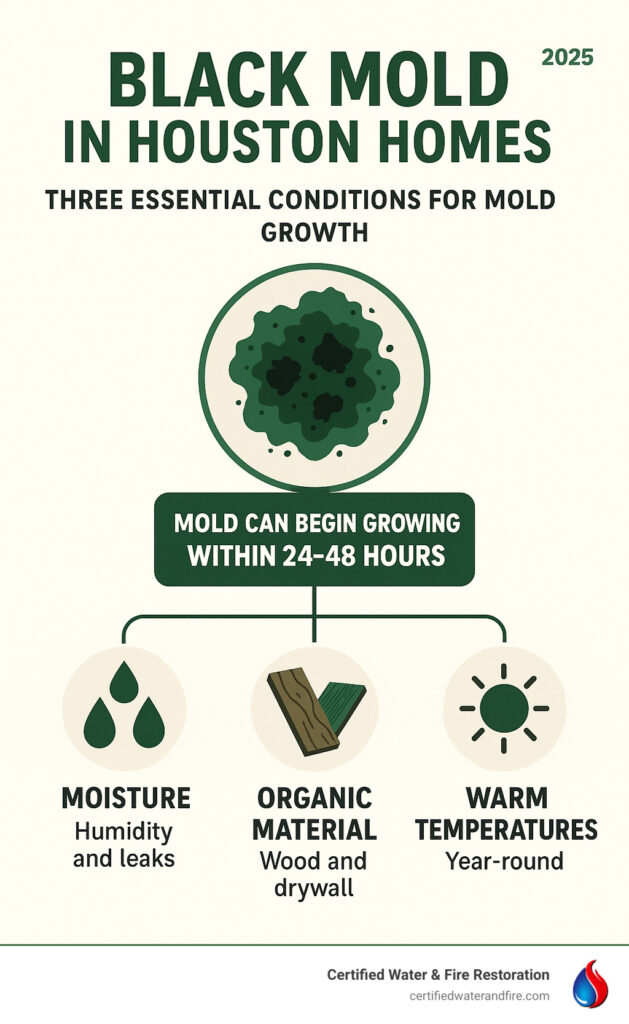
When it comes to black mold, homeowners face is more than an unsightly problem—it’s a serious health and property threat that thrives in our city’s humid climate. Houston’s high humidity, frequent flooding, and long warm seasons create the perfect breeding ground for toxic mold, which can grow in as little as 24-48 hours after water damage.
Quick Answer for Houston Residents:
- What it is: Stachybotrys chartarum (toxic black mold) that produces harmful mycotoxins
- Where it grows: Bathrooms, kitchens, basements, HVAC systems, and anywhere moisture persists
- Health risks: Respiratory problems, allergic reactions, coughing, and serious complications for children and elderly
- Houston’s risk: 80% of days have enough humidity to create mold problems
- Action needed: Professional assessment within 24-48 hours of water damage
The combination of Gulf Coast moisture, warm temperatures, and storms like Hurricane Harvey has made mold a persistent challenge for local property owners. Nearly half of water-damaged homes inspected after major flooding events contain mold, according to CDC findings.
As General Manager of Certified Water & Fire Restoration, I’ve spent over a decade helping Houstonians recover from black mold infestations in Houston. My experience shows that early detection and professional remediation are critical to protecting both your health and your property investment. This guide explains signs, health effects, and first steps but does not replace a site inspection.
What is “Black Mold”? Unpacking the Truth
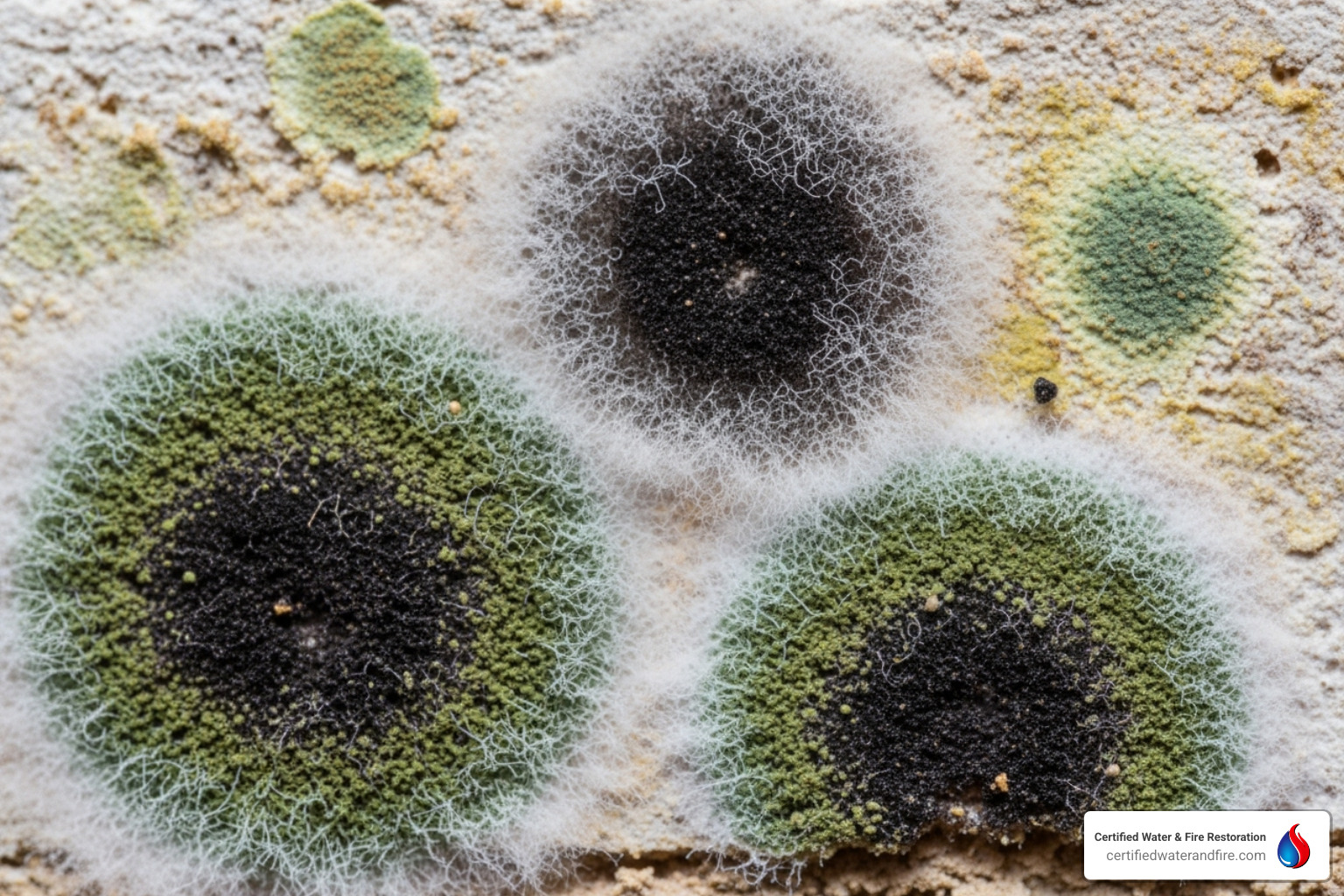
When Houston homeowners worry about “black mold,” they usually mean Stachybotrys chartarum. However, this notorious mold isn’t always black; it can be dark green, gray, or brown.
Stachybotrys chartarum earned its reputation by producing mycotoxins—toxic compounds that can cause health problems if inhaled. It’s slimy when wet and becomes a powdery, airborne threat when dry.
Crucially, not all dark-colored mold is the toxic Stachybotrys type. Many other mold species can appear dark, so color alone is not a reliable identifier. This is why professional identification is so important.
Houston’s climate also welcomes other common molds:
- Aspergillus: Often found in AC systems, it can cause respiratory infections, especially in those with weakened immune systems.
- Penicillium: This blue or green mold can grow on wallpaper and carpets, and some species produce carcinogenic mycotoxins.
- Cladosporium: An outdoor mold that easily enters homes, triggering allergy symptoms like sneezing and itchy eyes.
- Mildew: This is simply mold in its early, powdery stage.
The bottom line is that any significant mold growth, regardless of color, signals a moisture problem that needs immediate attention. Our Houston team can identify the type of mold and create the right treatment plan for your property.
The Houston Climate Connection: A Perfect Storm for Mold
Houston’s sauna-like weather and relentless humidity create the biggest challenge for homeowners dealing with black mold problems. On 80% of days, our air has enough moisture for mold to grow, even without any leaks or flooding.
Mold spores are always present, and Houston’s climate provides the perfect conditions: high humidity, long warm seasons, and condensation from hot air meeting cool indoor surfaces.
When Houston Weather Becomes Your Home’s Enemy
The real trouble starts with unnoticed condensation. When humid Houston air hits cool, air-conditioned surfaces like walls or pipes, hidden moisture forms. For example, losing power for a few days during a summer storm can lead to rapid mold growth. Our climate is relentless.

Hurricane Season: When Bad Gets Worse
Hurricane season amplifies the mold problem. Beyond obvious flooding, hidden dangers include water intrusion from damaged roofs and power outages that disable AC systems, creating a recipe for disaster. The CDC found that after major storms, nearly half of water-damaged homes had mold.
FEMA guidance makes it clear that mold can begin growing within the critical 24-48 hour window after water damage occurs. In Houston’s climate, that window can be even shorter. For detailed guidance, FEMA provides valuable resources here: FEMA guidance on mold after a disaster.
In Houston, being prepared for mold is as essential as having a hurricane kit. Our unique climate challenges require quick, professional action when problems arise.
Recognizing the Threat: Signs, Symptoms, and Health Risks
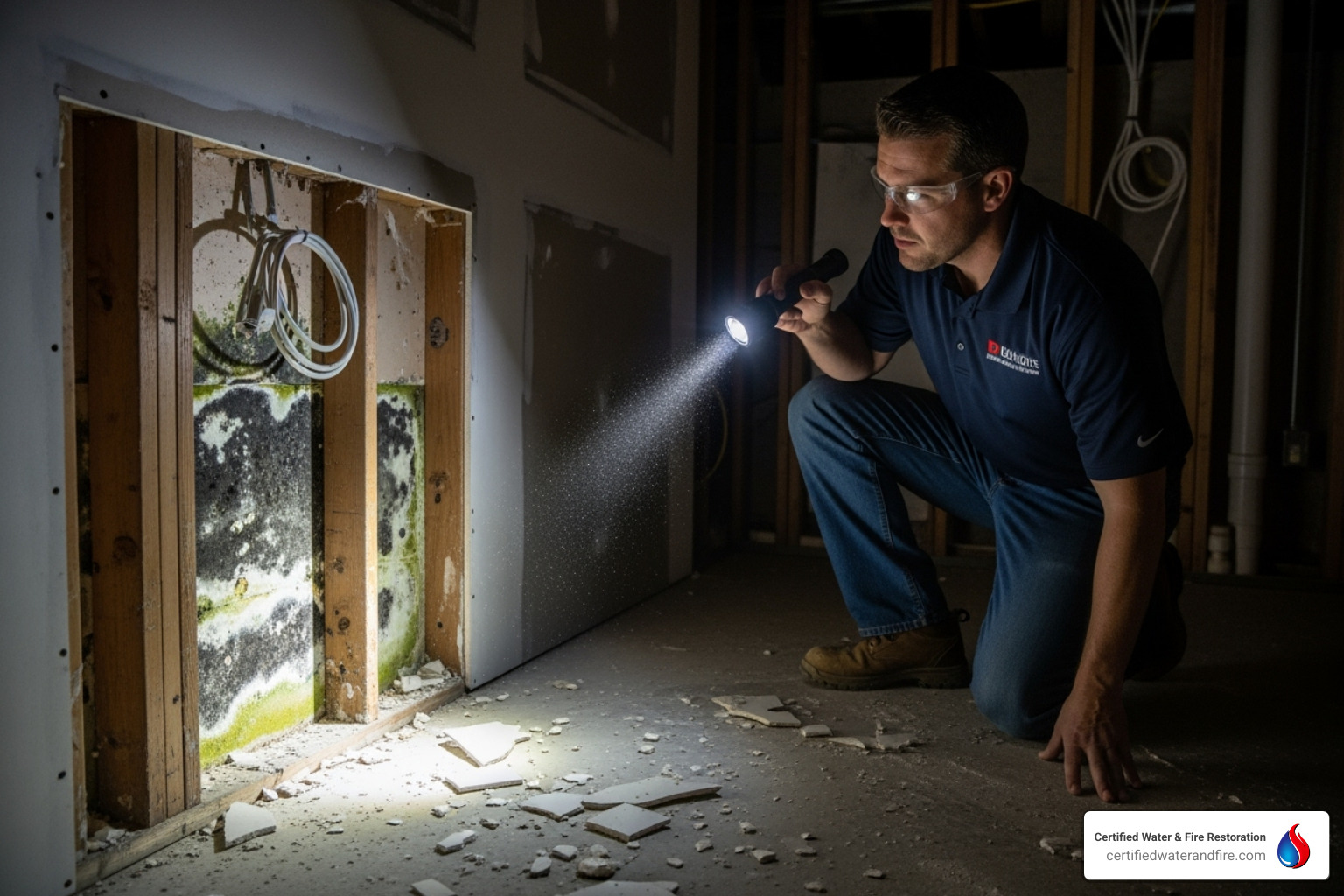
Spotting black mold residents face can be tricky, as it often hides in dark, damp corners. Knowing the signs helps with early detection, saving you money and protecting your family’s health. You may notice dark spots, staining, or a musty odor, but identifying mold by appearance alone is not reliable.
If you want a clear breakdown of what black mold looks like and how to recognize it, read our full guide: what does black mold look like. In Houston homes, the bigger concern is not appearance. The real risk is hidden moisture and how fast mold spreads after water damage.
Health Symptoms of Black Mold Exposure in Houston
Mold exposure can cause genuine health problems, especially for vulnerable individuals. Common symptoms include:
- Respiratory issues: Coughing, stuffy nose, sneezing, and wheezing.
- Allergic reactions: Itchy eyes, scratchy throat, and skin rashes.
- Worsening of chronic conditions: More frequent or severe asthma attacks.
- General symptoms: Unexplained fatigue and persistent headaches.
Certain groups face higher risks: young children, the elderly, and individuals with respiratory conditions or compromised immune systems. If your family has these symptoms, especially if they improve when you leave the house, mold could be the cause. Consult your doctor and get a professional home inspection. The CDC offers more information on mold and health.
Where to Look for Black Mold in Your Houston Home
In Houston, mold can grow wherever moisture lingers. Check these common spots for leaks, condensation, or musty smells:
- Bathrooms and showers: Under sinks, behind tiles, and around toilet bases.
- Kitchens: Under sinks, behind refrigerators, and around dishwashers.
- Basements and crawl spaces: These damp, low-airflow areas are mold magnets.
- Attics: Check for roof leaks and poor ventilation.
- Windows: Look for leaks and condensation, especially in older homes.
- HVAC system: Ducts can grow mold and spread it through your home.
- Behind wallpaper: Trapped moisture allows mold to grow unseen.
Any porous material (drywall, wood, carpet) wet for 24-48 hours is a potential mold site. Don’t ignore a musty smell you can’t place—it’s the best early warning for hidden mold.
Your Action Plan for a Mold-Free Home
Finding mold is overwhelming, but the right steps make all the difference. If you suspect a black mold problem, your first rule is: don’t disturb it. Scrubbing or wiping can release millions of spores, spreading the contamination.
Your top priority is to identify and fix the moisture source. Mold cannot survive without water, so stopping the leak is the most critical step.
For Houston homes, anything more than a small spot requires a professional assessment due to high humidity and fast mold growth. DIY attempts can fail because professionals use specialized tools to find hidden mold, follow strict containment procedures to prevent cross-contamination, addressing the root cause. Air quality testing can also identify the type and concentration of airborne spores. Learn more about our mold removal process here.
What to Do If You Had Water Damage in the Last 48 Hours
If your home had a leak, flood, or storm damage in the last 24 to 48 hours, mold can already be growing.
In Houston’s climate, humidity speeds up mold growth. Waiting can increase damage and cost.
- Musty smell after water damage
- Wet drywall, flooring, or insulation
- Recent leaks, flooding, or roof damage
- Visible dark spots or staining
If you notice any of these signs, schedule an inspection now.
Long-Term Prevention Strategies
Prevention starts with moisture control. Keep indoor humidity under 60%. Fix leaks fast. Vent bathrooms and kitchens. For a full prevention plan, read Mold Prevention Houston.
Frequently Asked Questions about Black Mold
Here are straight answers to the most common questions we hear from concerned homeowners.
Is it safe to stay in a house with black mold?
We do not recommend staying in a house with significant black mold growth, especially if you have health symptoms. Safety depends on the infestation’s size, your exposure, and your health. Vulnerable individuals—children, the elderly, and those with asthma or compromised immune systems—face the highest risks. If you experience respiratory issues, fatigue, or worsening allergies at home, it’s a warning sign. A professional evaluation can determine if temporary relocation is needed.
Can I just paint over mold?
No. Painting over mold is a temporary fix that backfires. The mold continues to grow underneath, often thriving in the trapped moisture. Crucially, this approach doesn’t fix the underlying moisture problem that caused the mold in the first place. Professionals can easily detect painted-over mold, which can hurt your property value and cause issues when selling. The correct approach is to properly remove the mold, fix the moisture source, and then repaint the clean, dry surface.
Does homeowners insurance cover mold?
It’s complicated and depends on the cause. Generally, if mold results from a sudden, covered event (like a burst pipe), your policy will likely cover it. However, mold from long-term issues like chronic leaks or poor maintenance is usually not covered. In Houston, mold from flooding requires a separate flood insurance policy. We work directly with insurance companies daily and can help streamline your claim, often starting work with no upfront cost to you. Every policy differs, so check with your agent. We can also review your policy to help you understand your coverage.
Your Path to a Mold-Free Houston
Houston’s unique climate creates a “perfect storm” for black mold challenges. After a decade of helping local families, we know that knowledge and quick action are your best defense.
Staying vigilant and acting at the first sign of trouble—a musty smell or visible spots—is crucial. Early detection saves money and protects your family’s health. Prevention is your best investment. Simple steps like controlling humidity and fixing leaks are powerful. Take away the moisture, and you win the battle.
When prevention isn’t enough, especially after storms, professional help is essential. DIY can spread spores and worsen the problem.
At Certified Water & Fire Restoration, we understand the devastation of untreated mold. That’s why we offer 24/7 emergency services with a 60-minute response time. We work directly with your insurance, so there are no upfront costs. We provide a 2-year warranty because we do the job right the first time, giving you peace of mind.
Don’t let mold become Houston’s hidden threat in your home. If you’re experiencing any of the warning signs we’ve discussed – musty odors, visible growth, or unexplained health symptoms – take action today. Get a professional inspection from our Houston mold damage remediation team. We also have a Dallas mold removal team helping in the DFW area.
