

What Does Black Mold Look Like?
Why Knowing What Black Mold Looks Like Could Save Your Home and Health
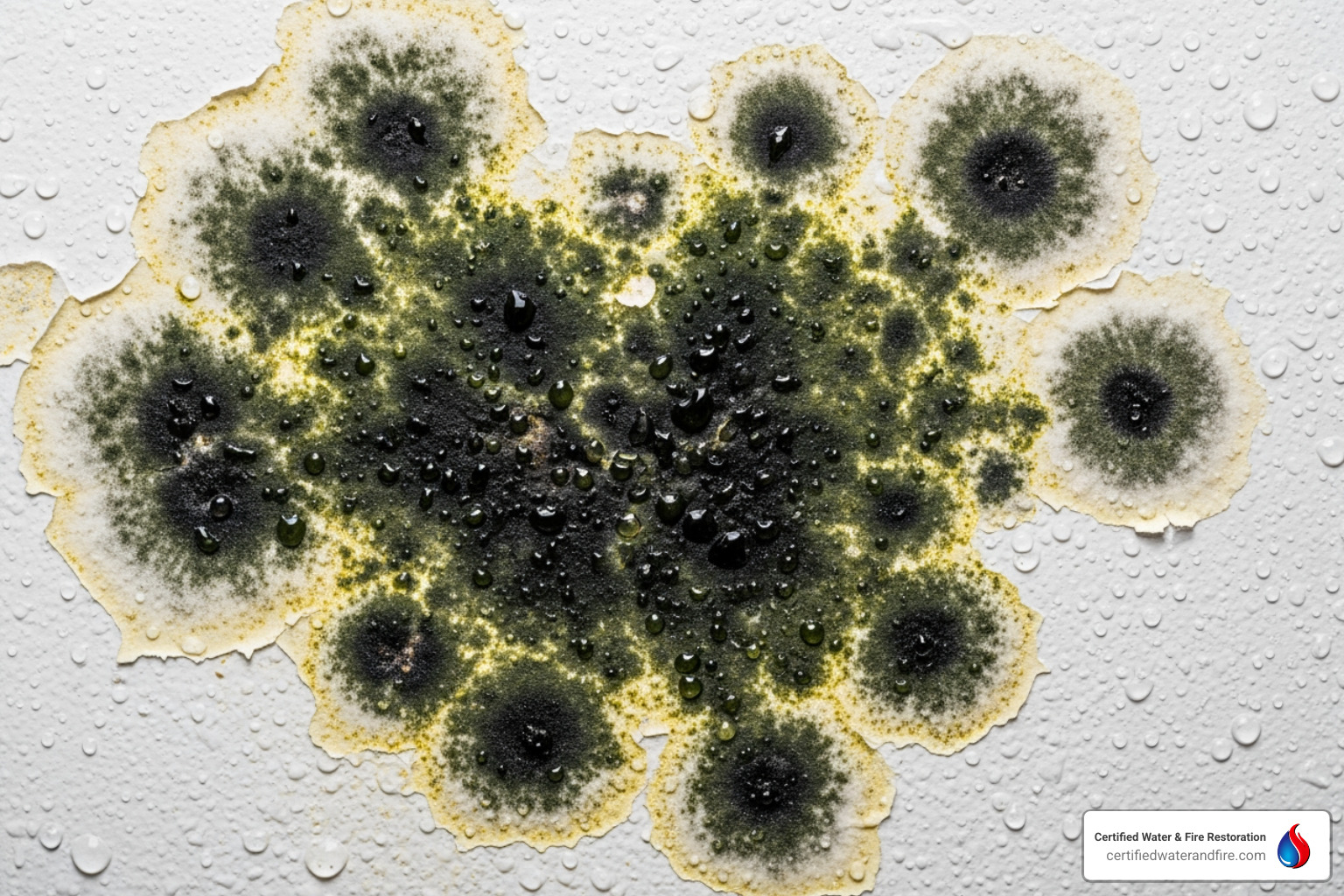
What does black mold look like? Black mold typically appears as dark green, dark brown, or jet black patches or circular spots on surfaces. It often has a slimy, wet texture when moisture is present, or a dry, powdery appearance when the water source has dried up. It frequently forms in clusters with fuzzy white edges and may leave a green stain when wiped.
Quick identification checklist:
- Color: Dark green, dark brown, or black (not always pure black)
- Texture: Slimy and wet when active, or dry and powdery when dormant
- Pattern: Circular spots, patches, or irregular clusters
- Smell: Strong musty, earthy odor (like rotting wood or damp soil)
- Common locations: Bathrooms, basements, under sinks, around leaks, behind drywall
Have you ever noticed a musty smell in your basement or dark, fuzzy patches on your walls after a leak? That could be black mold, and knowing what to look for is the first step in protecting your property and your family’s health.
Black mold, scientifically known as Stachybotrys chartarum, thrives in damp, humid environments where moisture problems go unaddressed. People often experience black mold in Houston, where high humidity and frequent storms create ideal conditions for growth. While not every dark spot on your wall is toxic black mold, any mold growth signals a moisture problem that needs immediate attention. The challenge is that black mold can hide in places you cannot easily see—inside walls, under carpets, or in crawl spaces—making early visual identification critical.
I’m Ryan Majewski, General Manager of Certified Water & Fire Restoration. Over the past decade, I’ve helped countless Texas homeowners and businesses identify and remediate mold before it spirals out of control. Understanding what black mold looks like is crucial for catching problems early and preventing extensive property damage and health issues.
If you believe you have black mold in your home or business, we offer Houston mold remediation services for the Greater Houston Area and Dallas mold remediation for North Texas residents.
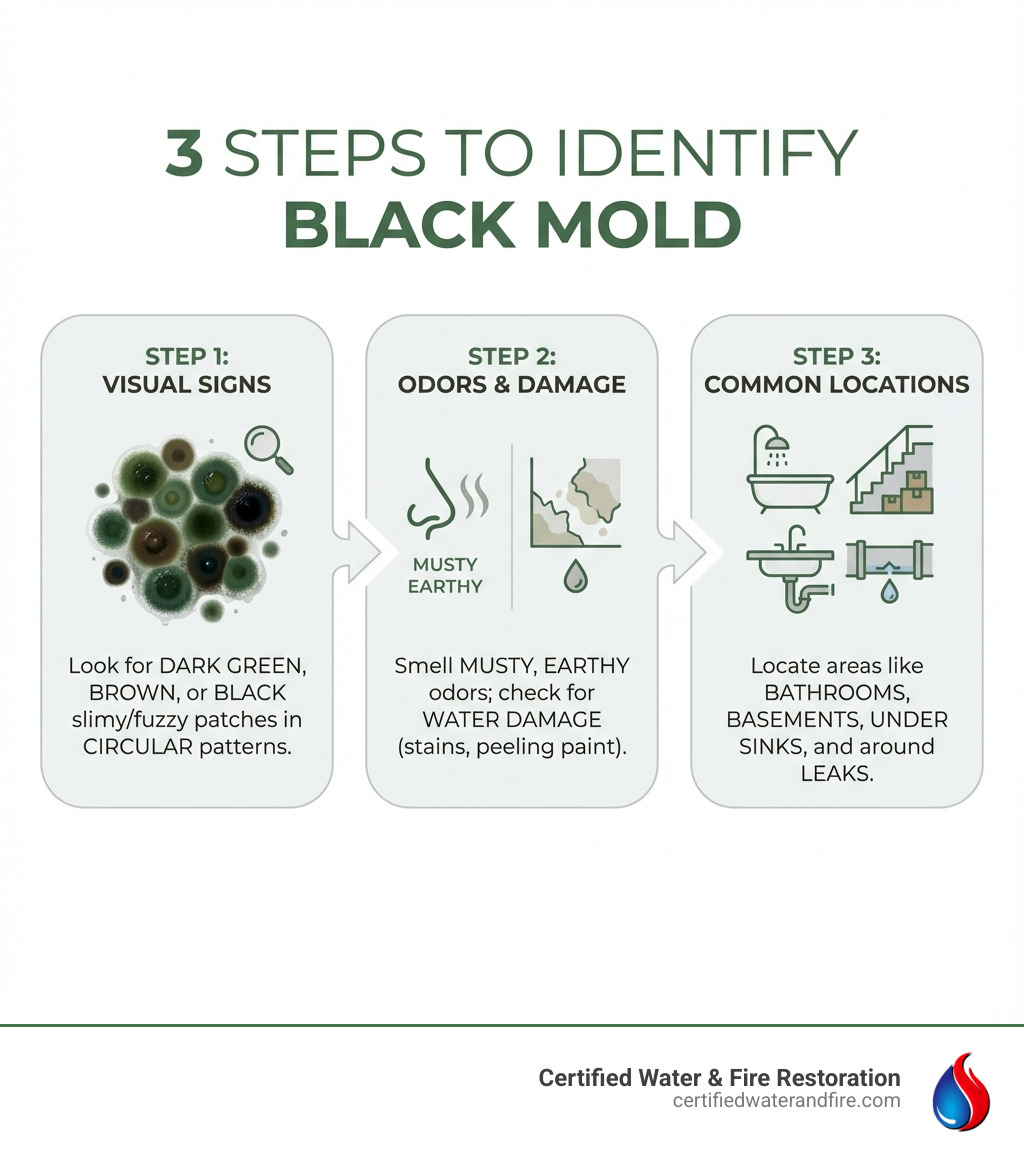
Step 1: What Does Black Mold Look Like Visually?
When we talk about what does black mold look like, we’re often picturing something sinister and obvious. But the truth is, its appearance can vary, making it a bit of a chameleon in your home. Black mold, specifically Stachybotrys chartarum, is not always uniformly black. It can actually appear in various shades, often starting as dark green, dark brown, or even a bluish-black.
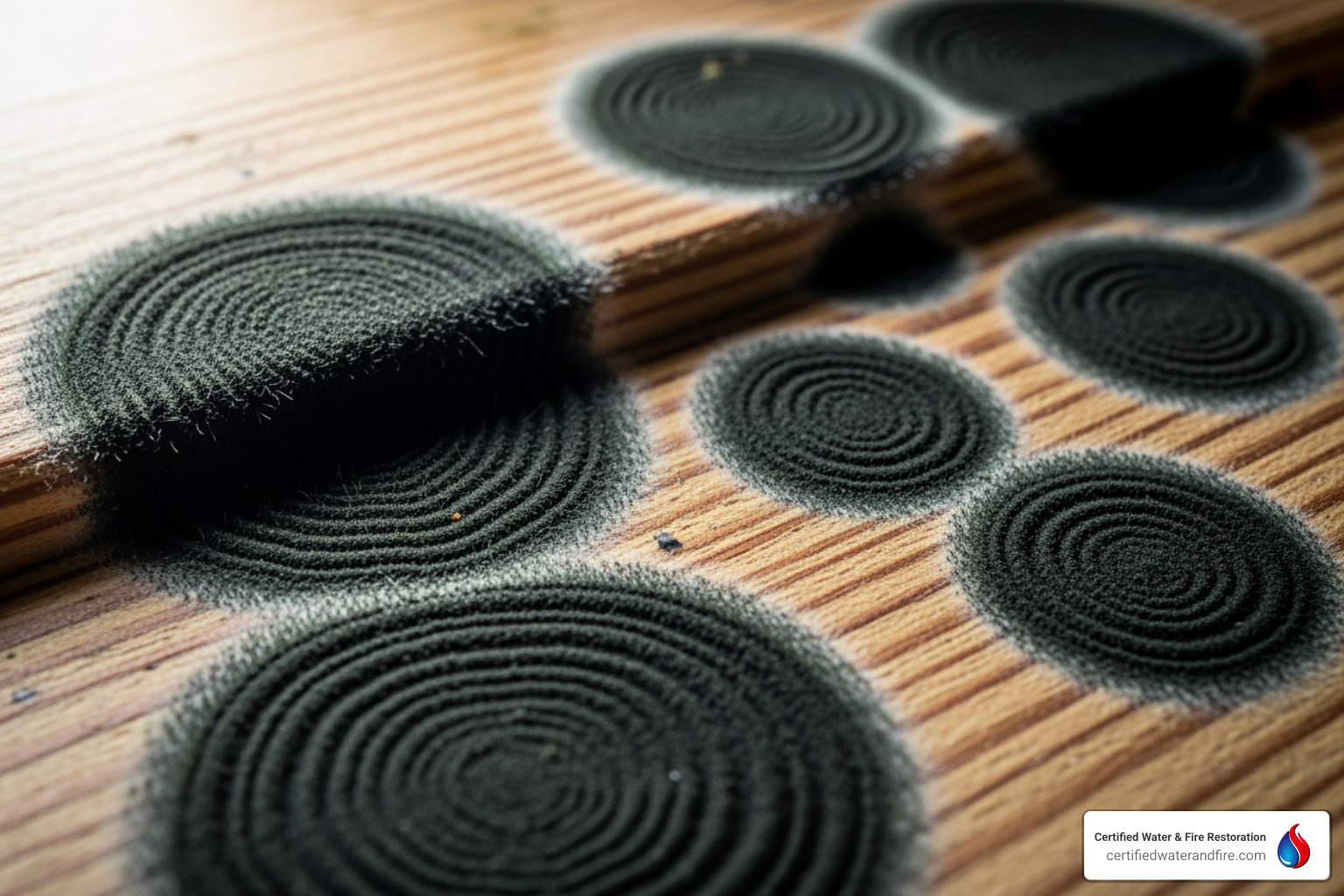
When it’s actively growing and moist, black mold often has a wet, shiny, and slimy texture. It can also look fuzzy or furry, forming distinct clusters of circular spots. These spots may even have fuzzy white edges, giving them a somewhat eerie halo. If you were to wipe a fresh patch of black mold, it might leave a green stain behind, further revealing its true colors. As it matures, or if its water source runs out, its appearance can change, becoming dry and powdery.
The growth patterns of black mold are also quite characteristic. It typically forms in clusters of round spots, which can range from less than an inch to many inches across. These often expand in circular patterns, sometimes even concentric circles, as the colony spreads. However, don’t be fooled; it can also appear as dark, irregular patches, especially when it’s hidden or growing on porous materials like drywall or wood.
Photos of black mold (Stachybotrys chartarum) · iNaturalist can give you a better visual understanding of its diverse appearances in real-world settings.
How to Differentiate Black Mold from Other Molds
Identifying what does black mold look like requires a keen eye, especially since many other common household molds can mimic its dark hue. It’s easy to mistake black mold for dirt, soot, or even less harmful types of mold. Here’s how we differentiate:
| Characteristic | Black Mold (Stachybotrys chartarum) | Mildew | Other Common Molds (e.g., Cladosporium, Aspergillus) | Soot/Dirt |
|---|---|---|---|---|
| Color | Dark green, dark brown, bluish-black, or jet black | White, gray, or yellow | Red, pink, orange, gray, green, white, black | Gray, black, brown |
| Texture | Slimy, wet, fuzzy, furry (when active); dry, powdery (when dormant) | Powdery, flat | Fuzzy, slimy, velvety | Smudgy, gritty, non-organic |
| Growth Pattern | Circular spots, clusters, spreading patches; penetrates deep | Flat patches, surface-level growth | Irregular patches, often fuzzy; can penetrate | Random smudges, no growth pattern |
| Odor | Strong, musty, earthy, like rotting wood or damp soil | Milder musty odor | Musty, earthy (can vary) | No distinct organic odor |
| Penetration | Deeply penetrates porous materials (drywall, wood) | Stays on the surface | Can penetrate porous materials | Sits on the surface |
| Health Risk | Potentially severe (mycotoxins, chronic symptoms, respiratory issues) | Generally mild (allergy-like symptoms, respiratory irritation) | Varies, can cause allergies, respiratory issues | Primarily respiratory irritation from particles |
Mildew, for example, is often mistaken for mold. While both are fungi, mildew typically appears as flat, powdery patches of white, gray, or yellow and stays on the surface. It’s like the annoying cousin of black mold – not as sinister, but still a nuisance! Other common molds can be almost any color – red, pink, orange, green, white, or gray – and can also look fuzzy or slimy.
Soot and dirt, on the other hand, won’t show the organic growth patterns or distinct musty smell of mold. They are just surface stains. If you’re unsure, a simple wipe might reveal if it’s just dirt, but always exercise caution and wear protective gear when dealing with any suspicious dark growth.
What does black mold look like when it’s dry?
When its moisture source dries up, black mold becomes dry and powdery instead of wet and slimy. This doesn’t mean the mold is harmless; it’s just dormant and can still release spores into the air. These microscopic spores can become airborne easily, spreading throughout your home and starting new colonies on other damp surfaces.
We advise against scraping dry mold yourself, as this can spread toxic spores. Dry, powdery black mold is a clear sign that a moisture problem existed and that professional remediation may be necessary to safely remove the dormant spores.
Step 2: Use Your Senses to Detect Odor and Moisture
Beyond its appearance, your nose is an effective tool for detecting black mold, even when it’s not visible. Black mold has a distinct musty, earthy odor, often compared to rotting wood or damp soil. This smell is caused by microbial volatile organic compounds (mVOCs) released as the mold grows, creating the unpleasant “moldy” odor.
If you smell this musty odor but can’t see any mold, it’s a critical indicator of hidden growth, possibly behind drywall, under flooring, or in ventilation systems. A persistent musty smell is often the first clue to a significant hidden mold problem. If you’re used to the smell, ask a friend for a second opinion—a fresh nose can often detect odors you no longer notice.
The presence of black mold is almost always tied to moisture. So, understanding the signs of water damage is key to locating potential mold growth. Keep an eye out for:
- Water stains or discoloration: Darker rings on walls, ceilings, or floors. Yellow stains or black spots can indicate previous water intrusion.
- Peeling, bubbling, or cracking paint: Moisture behind a surface can cause paint to lose adhesion and deform.
- Warped or bulging walls/flooring: Wood, drywall, or laminate can swell and warp when exposed to excess moisture.
- Condensation: Excessive condensation on pipes, windows, or cold surfaces, especially in areas with poor ventilation, can create the damp conditions mold loves.
- Musty smells: As mentioned, a persistent earthy or rotting odor is a major red flag.
Damp spots can quickly become breeding grounds for mold, with growth potentially starting within 24 to 48 hours in water-damaged areas. Common causes of dampness that lead to mold include leaky pipes, roofs, or poor ventilation. Addressing these issues quickly is paramount. For more insights on this, the EPA provides a brief guide to mold, moisture, and your home.
Common Locations for Black Mold Growth
Black mold is a creature of habit, preferring consistently damp, dark, and humid environments. Knowing its favorite haunts can help you pinpoint potential problems in your Houston, Dallas, Irving, or Plano home.
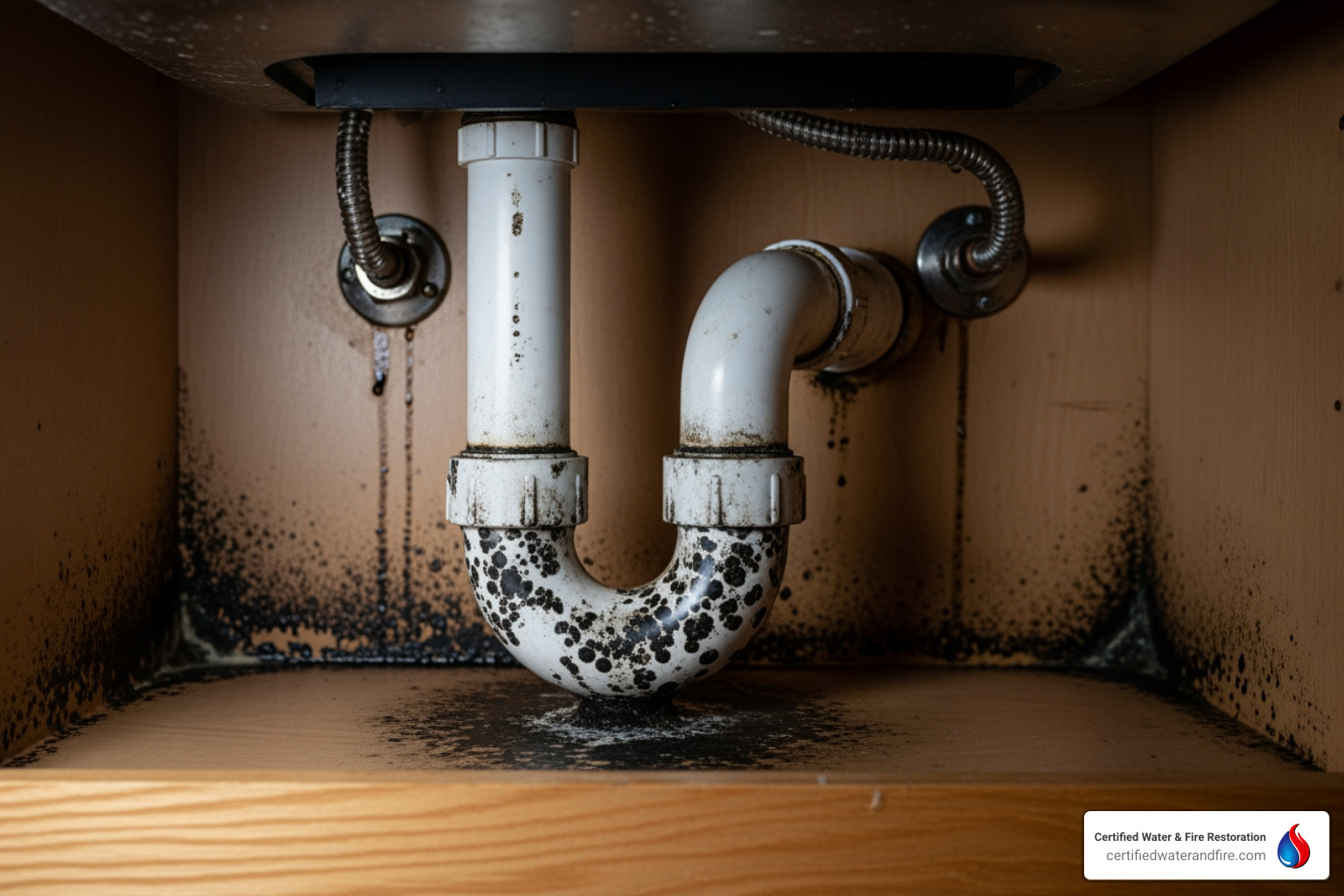
Here are the common locations where we often find black mold making itself at home:
- Bathrooms and Showers: High humidity, steam, and water splashes make these areas prime real estate for mold. Look around shower stalls, behind tiles, under sinks, and around toilets.
- Basements and Crawl Spaces: These areas are often prone to consistent humidity, leaks, or even flooding, creating ideal conditions. Inspect walls, floors, support beams, and stored items.
- Kitchens: Leaky pipes under sinks, dishwashers, and refrigerators can lead to hidden mold growth. Check cabinets, pantries, and behind appliances.
- Laundry Rooms: Washing machine leaks, dryer vent issues, and high humidity from damp clothes contribute to mold growth. Look behind appliances and in utility sinks.
- Around Windows: Condensation buildup on windowsills and frames can lead to mold, especially if not regularly wiped dry.
- Behind Drywall and Under Carpets: After a leak or flood, moisture can get trapped in these unseen areas, allowing mold to flourish out of sight. This is where that musty smell becomes your best detective.
- Attics: Poor ventilation or roof leaks can lead to humidity and moisture, making attics another common spot for mold to thrive. For more specialized information, we have resources on Attic Mold Removal for a Healthy Home.
- Hardwood Floors: Water damage can lead to mold growth beneath or within hardwood flooring. If you notice discoloration, cupping, or a musty smell, it’s worth investigating.
Black mold can grow on virtually any organic material, including wood, drywall, insulation, paper products, and carpet fibers. If there’s a consistent source of moisture, black mold will almost certainly grow.
Step 3: Understand the Health Risks and When to Get Help
Understanding the health impact of black mold is as important as identifying it. While not every dark spot is Stachybotrys chartarum, any mold growth can affect indoor air quality and should be addressed.
Black mold can produce mycotoxins, but risk depends on the person, the amount of mold, and how long exposure lasts. Exposure to mold can cause allergy-like symptoms, breathing issues, and other reactions, especially for sensitive individuals.
The Cleveland Clinic reports that black mold can trigger allergy symptoms and worsen asthma in some people, although serious illness is rare for most individuals.
Any visible mold also signals a moisture problem that needs to be fixed.
We cover symptoms, higher-risk groups, and when to leave the area in the next section.
What does black mold look like and when is it a job for professionals?
While we’ve discussed what does black mold look like and how to spot it, sometimes the problem is too big or too tricky for a DIY approach. Knowing when to call in the cavalry is crucial for your safety and the effective remediation of your home.
Here are clear signs that it’s time to call Certified Water & Fire Restoration for professional mold removal services:
- Widespread Growth: If the mold covers an area larger than 10 square feet (roughly a 3×3-foot patch), it’s considered a large infestation. Professionals have the right equipment and containment strategies to handle this without spreading spores.
- Mold Inside Walls or Hidden Areas: If you can smell mold but can’t see it, it’s likely growing behind walls, under flooring, or in other inaccessible spots. This requires specialized tools to detect and safely remove without damaging your home further.
- HVAC System Contamination: If you suspect mold in your heating, ventilation, and air conditioning (HVAC) system, do not run it. Mold spores circulating through your HVAC can rapidly spread throughout your entire home. This requires professional assessment and cleaning.
- Strong, Persistent Odor: A powerful, lingering musty or earthy smell often indicates a significant, potentially hidden, mold problem that needs expert attention.
- Recurring Mold After Cleaning: If you’ve tried to clean a small area yourself and the mold keeps coming back, it means the underlying moisture problem hasn’t been fully resolved, or the mold has penetrated too deeply.
- Health Symptoms Present: If anyone in your household is experiencing persistent allergy-like symptoms, respiratory issues, or other health problems that you suspect are linked to mold, it’s best to have professionals handle the cleanup to minimize further exposure.
- Water Damage from Contaminated Sources: If the mold growth resulted from sewage backup or other unsanitary water sources, always call a professional. This type of water damage carries additional health risks.
Attempting to remove extensive or hidden mold yourself can be dangerous. It can release a massive amount of spores into the air, worsening the problem and increasing health risks. Professionals, like our team at Certified Water & Fire Restoration, use personal protective equipment (PPE), containment barriers, and specialized equipment to safely remove mold and address the underlying moisture issues. For a glimpse into our process, check out our mold removal and remediation video.
Is Black Mold Dangerous?
Once you identify possible black mold, the next question is whether it can affect your health. Black mold can affect health, but risk depends on the person, the amount of mold, and how long exposure lasts. Mold growth also signals a moisture problem that needs a fix.
Common symptoms of mold exposure
People often report these symptoms after mold exposure:
- Stuffy nose and congestion
- Sneezing and coughing
- Wheezing or shortness of breath
- Itchy or watery eyes
- Skin rash or irritation
- Headaches and fatigue
Cleveland Clinic reports that black mold can trigger allergy-like symptoms and can worsen asthma symptoms for some people. It rarely causes serious illness or death for most people.
Who faces higher risk
Some people react more strongly to mold exposure:
- Infants and young children
- Older adults
- People with asthma or allergies
- People with weaker immune systems
The Institute of Medicine review found evidence of an association between damp indoor environments and upper respiratory symptoms, coughing, wheezing, and asthma symptoms in sensitive people.
The Difference Between ‘Black Mold’ and ‘Toxic Black Mold’
People often confuse ‘black mold’ with ‘toxic black mold.’ Not all black-colored mold is Stachybotrys chartarum, the specific type known for producing mycotoxins. Many less harmful varieties like Cladosporium or Aspergillus can also appear black, making visual identification alone unreliable for determining toxicity.
The key differentiator is Stachybotrys chartarum‘s production of hazardous mycotoxins. The CDC states that all mold should be removed regardless of type, but identifying Stachybotrys chartarum can inform the urgency and precautions needed for removal.
Because visual identification isn’t enough, professional mold testing is the most accurate way to confirm if you have a Stachybotrys chartarum problem. Our experts in Houston, Dallas, Irving, and Plano can conduct thorough testing to identify the mold species and contamination extent. If you suspect toxic black mold, we encourage you to not guess, but test with an expert Houston mold inspection.
Mold toxicity and CIRS
Some people in moldy buildings report fatigue, poor focus, and other whole-body symptoms. Research still develops in this area, and symptoms can overlap with many other conditions. You should still treat visible or suspected indoor mold as a problem that needs cleanup and moisture control.
When you should leave the home or stop using a room
You should limit exposure and get help fast if any of these apply:
- You have trouble breathing, chest tightness, or severe asthma symptoms
- You see large growth or heavy contamination
- You smell strong odor that does not go away
- You have symptoms that improve when you leave the building
What to do next
You should focus on moisture control first. If you dry wet materials within 24–48 hours after a leak or spill, mold often does not grow.
If you already have mold, you should remove it and fix the moisture source. The CDC gives practical cleanup guidance and safety rules for bleach use.
How to Prevent Black Mold from Returning
Preventing black mold from returning means controlling the conditions it needs to thrive: moisture, a food source (organic material), oxygen, and temperatures between 60-80°F. Moisture is the most critical factor.
Mold flourishes when relative humidity is above 70%, so vigilance is key in humid climates like Texas. Here are our top strategies for preventing black mold growth in your Houston, Dallas, Irving, or Plano home:
- Master Moisture Control: This is the golden rule. Fix any leaks immediately—whether it’s a leaky pipe under the sink, a dripping roof, or a window seal that isn’t tight. Even small, persistent leaks can create the perfect breeding ground for mold within 24 to 48 hours.
- Maintain Optimal Humidity Levels: Aim to keep your home’s indoor relative humidity between 30% and 50%. You can monitor this with a hygrometer and control it with a dehumidifier, especially in damp areas like basements, crawl spaces, and bathrooms.
- Ensure Proper Ventilation: Use exhaust fans in bathrooms when showering or bathing, and in kitchens when cooking. Open windows when possible to allow fresh air circulation. Ensure your dryer vents outdoors, not into an attic or crawl space.
- Promptly Dry Wet Areas: After any water intrusion, whether it’s a spill, a leak, or even just condensation, dry the area completely within 24-48 hours. This includes carpets, rugs, and any absorbent materials.
- Regular Inspections and Maintenance: Periodically check areas prone to moisture, such as under sinks, around water heaters, in basements, and attics. Look for signs of water damage or visible mold. Regular HVAC maintenance, including changing filters, can also help prevent mold from spreading through your system.
- Improve Drainage Around Your Home: Ensure that rainwater drains away from your foundation. This means properly sloped landscaping and well-maintained gutters and downspouts that direct water at least 5 feet away from the house.
By proactively managing moisture and maintaining good ventilation, you can significantly reduce the risk of black mold taking hold in your home. For more localized advice, check out our insights on effective mold prevention in Houston.
Frequently Asked Questions about Black Mold
Can I clean black mold myself?
You can clean small areas of mold (less than 10 sq. ft.) on hard, non-porous surfaces yourself, but safety is paramount. Always wear personal protective equipment (PPE), including an N-95 respirator mask, disposable gloves, and goggles, to protect yourself from spores.
You can use a solution of five parts distilled white vinegar, five parts water, and one part baking soda in a spray bottle. Saturate the mold with the solution, let it sit for 30-60 minutes, then scrub with a stiff brush. Disinfect the area afterward with hydrogen peroxide or undiluted white vinegar. Never mix bleach with ammonia-based cleaners, as this creates dangerous fumes. While bleach can be effective on non-porous surfaces, it can be irritating and potentially cause burns, so use with extreme caution. For a deeper dive into cleaning solutions, you might find our article can bleach clean kill mold effectively? helpful.
However, if the mold is on porous materials like drywall, insulation, or carpet, or if the infestation is larger than 10 square feet, we strongly recommend calling professionals. These materials often need to be removed and replaced, a task best left to experts who can contain the spores and prevent further contamination.
How fast does black mold grow?
Black mold grows remarkably fast. Under ideal conditions (constant moisture and an organic food source), growth can start in just 24 to 48 hours and spread rapidly.
You might not see it immediately, as it can take anywhere from 1 to 12 days for mold to become visible to the naked eye. However, once visible, it can colonize at an astonishing rate, growing about one square inch per day. In less than a week, a small patch can expand to cover several square feet. By the end of the third week, a mold colony can be fully grown and quite extensive. This rapid growth underscores why addressing moisture problems immediately is so critical.
Does homeowners insurance cover black mold?
Homeowners insurance coverage for mold removal cost in Houston depends on your policy and the cause. It’s typically covered if it results from a “covered peril,” such as a sudden and accidental event that your policy explicitly insures.
For example, if a sudden and accidental event like a burst pipe or a severe thunderstorm causes roof damage that leads to water intrusion and subsequent mold growth, your insurance policy is likely to cover the mold remediation. We work directly with insurance companies for such situations, ensuring no upfront costs for you.
However, most policies do not cover mold that results from homeowner neglect (e.g., ignoring a long-standing leak) or from events like floods, which usually require separate flood insurance. It’s always best to review your policy or speak with your insurance agent to understand your specific coverage for mold-related issues.
What is the difference between allergenic, pathogenic, and toxigenic molds?
Molds are often grouped into three categories based on their potential health effects:
- Allergenic molds: These trigger allergies and asthma. They are the most common type of mold people react to, causing sneezing, runny nose, and itchy eyes.
- Pathogenic molds: These can cause infections, primarily in people with severely weakened immune systems.
- Toxigenic molds: These can produce mycotoxins, chemical compounds that can cause adverse health effects. Stachybotrys chartarum (“black mold”) is a well-known example.
A single mold species can fall into multiple categories, and health effects depend more on individual sensitivity than the mold type. This is why all indoor mold growth should be addressed promptly.
How do I know if my symptoms are from mold?
This is challenging because symptoms of mold toxicity overlap with many other conditions. Here are some clues:
- Timing and Location: Do your symptoms worsen in a specific building (home, office) and improve when you leave? This is a strong indicator.
- Exposure History: Have you had recent water damage, or do you see or smell mold?
- Symptom Cluster: Are you experiencing a mix of respiratory issues, fatigue, brain fog, and pain?
There is no single, definitive test for “mold toxicity.” Consulting a healthcare professional is essential to rule out other conditions and get a proper diagnosis. A doctor can help you investigate potential environmental triggers and guide you toward an appropriate treatment plan.
What are the rights of renters and landlords regarding mold?
Responsibilities are shared between tenants and landlords. Landlords must provide a safe, habitable environment, which includes fixing moisture problems and remediating significant mold growth. Renters are responsible for keeping the unit clean and promptly reporting any leaks or mold to the landlord in writing.
If a landlord fails to act, tenants may need to contact local housing authorities. Laws vary, but this Guide to tenant rights provides a general overview.
Is black mold always black?
Black mold is not always jet black. It can appear dark green, dark brown, or even bluish-black. The color can change depending on moisture levels and the surface it grows on. This is why color alone does not confirm the type of mold.
Can black mold grow behind walls?
Yes. Black mold often grows behind drywall, under flooring, or inside insulation after water damage. You may not see it, but you may notice a strong musty smell, peeling paint, or unexplained allergy symptoms. Hidden mold usually requires professional inspection to confirm.
How can I tell if it is mold or just dirt?
Mold typically has an organic growth pattern and a musty odor. Dirt and soot do not spread in circular clusters or produce a strong earthy smell. If the spot returns after cleaning or grows over time, it is likely mold.
How long does it take for black mold to become dangerous?
Mold can begin growing within 24 to 48 hours after moisture exposure. Health effects depend on exposure time, amount of mold, and individual sensitivity. Large infestations or long-term exposure increase risk.
Should I test for black mold?
In most cases, testing is not required. The CDC advises that if you see or smell mold, you should remove it and correct the moisture problem. Identifying the exact species does not usually change the cleanup process.
Final Thoughts on Identifying and Handling Black Mold
Knowing what black mold looks like is your first line of defense. It isn’t always jet black; it can be dark green, brown, slimy, fuzzy, or powdery when dry. Its distinct musty odor is a tell-tale sign of a moisture problem. From bathrooms to basements, knowing its common hiding spots helps you stay vigilant.
While all mold should be treated with caution due to potential health risks, especially for sensitive individuals, distinguishing between simply black-colored mold and toxic black mold (Stachybotrys chartarum) often requires professional testing.
Addressing the source of moisture is paramount to preventing mold growth. For small, surface-level mold, a DIY cleanup might be feasible with proper safety gear. However, for widespread contamination, hidden mold, recurring issues, or if health symptoms are present, professional intervention is crucial.
At Certified Water & Fire Restoration, we understand the urgency and stress that mold can cause. That’s why we offer 24/7 emergency services with a rapid 60-minute response time across Houston, Dallas, Irving, and Plano, Texas. We handle everything from inspection and remediation to working directly with your insurance company, offering no upfront costs and a 2-year warranty for your peace of mind.
Don’t let mold compromise your home or health. If you suspect a mold problem, especially if it’s extensive or hidden, reach out to the experts. Contact us for professional mold remediation services today.
