

How a Mold Testing Claim in Plano Can Be a Dealbreaker in Your Recovery

Here is everything that you need to know when you are dealing with a mold testing claim in Plano:
Here is a Step-by-Step Guide on How to File a Mold Testing Claim in Plano:
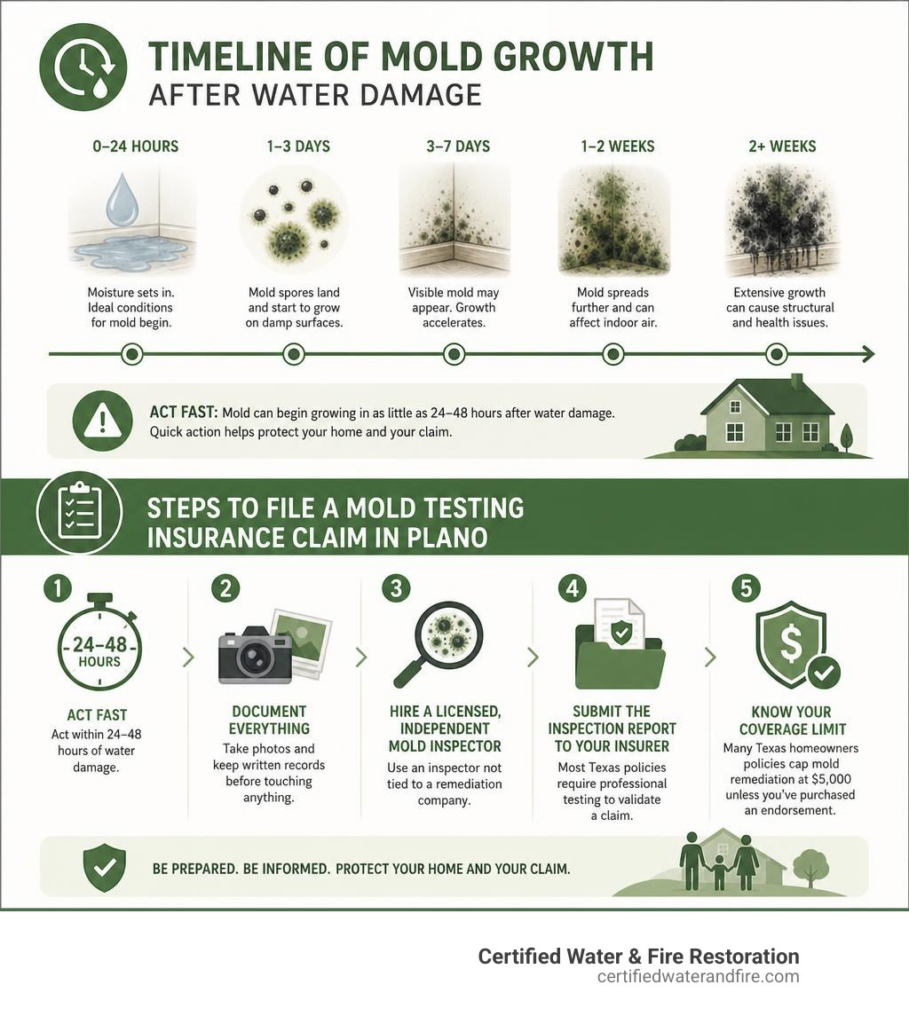
- Act within 24-48 hours of any water damage. Mold starts growing fast. The sooner you act, the better.
- Document everything with photos and written records before doing anything
- Hire a licensed, independent mold inspector (not one tied to a remediation company)
- Submit the inspection report to your insurer: Most Texas policies require professional testing to validate a claim
- Know your coverage limit: Many standard Texas homeowners’ insurance policies cap mold remediation coverage at $5,000. To get more, you’ll need to purchase an endorsement
Dealing with water damage in your home is stressful enough. Then a musty smell or a dark spot shows up on your drywall. Now you’re also dealing with insurance adjusters, mold inspectors, and a policy full of fine print.
The Unique Challenges of Mold Damage in Plano
Plano homeowners face a variety of challenging factors when it comes to water damage and mold. The city gets about 39 inches of rain per year and sits on shifting clay soils. It also has a large number of homes built between the 1970s and 1990s. Over time, all of these factors raise mold risk. When mold grows after a water event, insurance companies don’t just take your word for it. For them to cover your claim, they want documentation. Professional documentation.
That’s where mold testing becomes more than a health precaution; it becomes an essential part of your entire insurance claim.
I’m Ryan Majewski, General Manager of Certified Water & Fire Restoration. I’ve spent over a decade in property restoration. In that time, I’ve helped hundreds of homeowners work through this exact process. I’ve dealt with the unique obstacles of filing a mold testing claim in Plano, where local soil conditions and aging houses cause problems most adjusters overlook. This guide will walk you through everything you will need to know about managing the process with confidence.
Understanding Your Mold Testing Claim: Plano Insurance Requirements
Filing a mold testing claim in Plano is much different than filing a standard wind or hail claim. In the state of Texas, the rules regarding mold claims are highly specific. The local environmental conditions in Collin County create distinct challenges that insurance adjusters watch closely.
Plano sits on top of a mix of Austin Chalk and blackland prairie clay. As any experienced Plano resident knows, Austin Chalk acts like a sponge. The clay swells dramatically when wet and shrinks when dry. This frequent movement leads to shifts in foundations, which open up tiny, invisible cracks in your home’s foundation and slab. These tiny cracks become direct paths for groundwater and moisture to seep into your crawl space or under your flooring.
With Plano’s climate, we get about 39 inches of rainfall annually, which is above the broader Dallas-Fort Worth average. When that rain lands on our shifting soils, moisture builds up around foundations. Additionally, if your home is part of Plano’s maturing housing stock, particularly those built in the 1970s through the 1990s, moisture barriers have likely begun to deteriorate.
When you file an insurance claim, you are dealing with restrictive policy limits and a ticking clock. Many standard Texas homeowners’ insurance policies restrict mold remediation coverage to a strict $5,000 unless you have specifically purchased additional mold endorsement policies. Because of this limit, many insurance companies will dig into what actually caused the mold. They want to know whether it came from a sudden, accidental water event like a burst pipe or from a long-term maintenance issue like a slow leak or high indoor humidity.
What You Should Know About the Texas Insurance Code
To protect yourself, you must first understand your rights under Texas law. The Texas Insurance Code Chapter 542 (also known as the Prompt Payment of Claims Act) requires insurance companies to acknowledge your claim within 15 calendar days and make an acceptance or denial decision within 15 business days after you submit all requested documentation. If they fail to meet these deadlines, they can be subject to statutory interest penalties. If you believe your insurer is unfairly delaying or underpaying your claim, you can reference resources like the Plano Mold Damage: Texas Property Insurance Rights Guide | Louis Law Group to better understand your legal standing. For a more in-depth look into how these regulations dictate the cleanup and claim process, check out our guide on Texas Restoration Rules Insurance Codes Claim Requirements.
How to Know When Your Plano Property Needs an Inspection
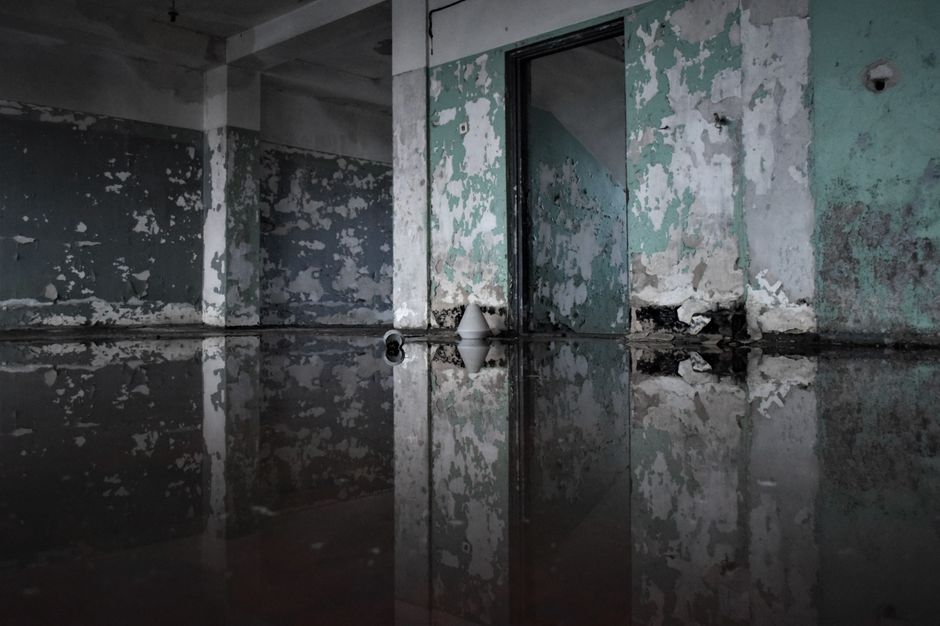
Mold can grow where you can’t see it. By the time you actually see it, it’s usually been growing for days or even weeks. The growth hides behind your walls, under your floors, or inside your HVAC system. It only takes 24 to 48 hours after a water leak for mold spores to build up.
If you are trying to figure out whether it is time to bring in a professional for a mold inspection, look out for these common warning signs:
- Musty, Earthy Odors: This is often the very first sign. If a room or crawl space smells damp and musty—even if you can’t see anything—there is a high probability of hidden mold.
- Water Stains and Discoloration: Yellow, brown, or dark staining on your ceilings, drywall, or baseboards indicates active or past water intrusion.
- Physical Symptoms: If you or your family members experience unexplained headaches, fatigue, congestion, or asthma flare-ups that suddenly improve when you leave the house, you might be dealing with Sick Home Syndrome Everything You Need to Know.
- Visible Growth: Mold doesn’t always look like fuzzy black spots. It can appear gray, green, white, or even powdery pink. To help identify what you are looking at, read our article on What Does Black Mold Look Like.
Ignoring these signs can have serious consequences. For example, failing to address and disclose mold issues can even lead to legal disputes, as seen in the public eye when Plano ISD was Sued for Failing to Disclose Mold Information. Whether you are a homeowner, landlord, or business owner, getting an early, professional inspection is the best way to protect your health and property value.
The Step-by-Step Mold Testing Process for Insurance Claims
When you file a mold testing claim in Plano, your insurance company won’t just accept a photo of a stained wall. They require a scientific, multi-step assessment performed by a licensed professional. This ensures that the mold is accurately identified and that the scope of repairs is justified.

A comprehensive, professional mold testing process typically involves:
- Visual Inspection: A licensed inspector will walk through your home, using advanced tools like infrared thermal imaging cameras to locate hidden pockets of cold, wet insulation or drywall behind your walls.
- Moisture Mapping: Using specialized moisture meters, the inspector maps out the exact boundaries of the water damage. This prevents the mold from spreading and ensures no wet materials are left behind to rot. You can learn more about how we pinpoint these hidden trouble spots through our Moisture Mapping services.
- Air Sampling: The inspector collects air samples from the affected rooms and compares them to an outdoor baseline sample. If the indoor spore count is significantly higher than the outdoor sample, it proves you have an active, indoor mold source.
- Surface Sampling: This entails taking tape lifts or swab samples of visible mold to identify the exact species.
- Independent Lab Analysis: All samples must be sent to an accredited, third-party laboratory for analysis. This step is vital because different mold types require different remediation protocols.
To ensure your assessment meets precise Texas legal and insurance standards, you can work with local specialists who focus entirely on independent diagnostics, such as those offering Mold Assessments in Plano, TX – ERI Consulting.
How to File a Mold Testing Claim Plano Residents Can Trust
Following your insurer’s process closely is the best way to keep your claim from getting denied. The window immediately following water damage is critical. Here is how to handle the process step-by-step:
- Act Fast: You have a 24-to-48-hour window before mold begins to colonize waterlogged drywall and carpet. Call a restoration professional immediately to start drying out the property.
- Document the Damage: Take high-quality, time-stamped photos and videos of the water source, the standing water, and any visible mold. Do not throw away waterlogged materials (like a burst pipe or ruined carpet) before your adjuster has a chance to inspect them.
- Contact Your Insurer: File the claim as soon as possible. Keep a detailed log of every phone call, email, and representative you speak with.
- Avoid Common Pitfalls: Insurance companies often deny mold claims by disputing that the damage was caused by pre-existing wear and tear or owner neglect. To avoid a claim denial, read our guide on 10 Mistakes That Cause Insurance Claim Denials and How to Avoid Them.
Understanding Your Mold Testing Claim: Plano Costs and Coverage
How much should I expect to pay for mold testing in Plano?
Generally, a professional mold inspection and testing package costs around a flat rate of $500 for an initial assessment. This will typically cover a visual walkthrough, two lab samples, and moisture mapping. For larger properties, typically over 2,500 square feet, you may be subject to an additional charge of around $0.10 per square foot.
When it comes to insurance coverage, it depends on whether this was a single long-term maintenance issue or a single, quick cause of the mold. If the mold grew because of a sudden, accidental plumbing burst that’s covered under your standard policy, the cost of the mold testing and cleanup is usually covered too. That coverage applies up to your policy’s mold limit.
However, if the mold is a result of long-term humidity or a roof leak you ignored for months, it most likely won’t be covered. To understand how water damage and mold coverage are connected, take a look at our breakdown: Does Homeowners Insurance Cover Water Damage?
Once the cleanup is finished, you should always invest in post-remediation clearance testing. This is an additional, independent test that proves the mold spore levels in your home have returned to safe, normal levels, giving you and future home buyers complete peace of mind.
Frequently Asked Questions About Plano Mold Claims
How quickly can I schedule a mold inspection in Plano?
After your initial call, you can get a licensed inspector to your home within 24 to 48 hours of your initial call. Because mold spreads quickly, getting an inspector out as soon as possible is vital to preventing a small water leak from turning into a massive, whole-house remediation project. Are you dealing with an active water intrusion right now? We offer a quick, 60-minute emergency response. We’ll dry out your property and stop mold from taking hold in the first place.
What should I expect to see in a professional mold inspection report?
A professional report will be extremely detailed. It will include the independent laboratory analysis identifying the specific mold species and spore concentrations, a comprehensive moisture map of your home, thermal imaging photos showing hidden dampness, and a clear, step-by-step remediation process. This protocol serves as the “blueprint” that restoration companies must follow to clean up mold safely.
Why is independent mold testing required by insurance adjusters?
Insurance adjusters mandate that all independent testing be conducted to avoid a conflict of interest. Under Texas state law, the business that tests and inspects your home for mold cannot be the same company that performs the actual cleanup. This protects you, as the homeowner, by ensuring that the inspector has no financial motive to recommend unnecessary, expensive remediation services. It also allows for unbiased, scientific proof that your insurer requires to approve the claim.
Conclusion
We understand that dealing with water damage in your home and having to handle a mold testing claim in Plano can be overwhelming. You don’t have to handle it by yourself. At Certified Water & Fire Restoration, we are devoted to making the recovery process as simple and stress-free as possible.
We are proud to provide 24/7 emergency property restoration services across Dallas, Plano, Irving, and Houston. When you call us, you get:
- A rapid 60-minute response time to stop water damage in its tracks.
- No upfront costs—we work directly with your insurance provider to handle all of the paperwork and claims process.
- An industry-leading 2-year warranty on our work so you can have peace of mind knowing your home was restored correctly.
If you believe you have mold growth in your home or have recently experienced water damage in your Plano home, don’t wait for the problem to grow. Schedule professional mold remediation today and let our family take care of yours.