

Mold Removal Costs: Decode 2026 Prices
Understanding Mold Removal Costs
If you’re wondering about the cost of mold cleanup, here’s a quick overview:
- Average Cost: $500 – $6,000+
- National Average: Often in the low-$2,000s
- Per Square Foot: $10 – $25
- Mold Inspection & Testing: $200 – $600
Need an exact price for your home? Get a local estimate based on square footage, location, and moisture source. Get a Houston mold damage estimate or get a Dallas mold repair estimate.
Finding mold in your home can be unsettling. Houston’s humid climate makes properties especially prone to mold growth, often triggered by water damage from leaky pipes or storms. This guide will help you understand the factors that drive these costs. It will also explain why quick action is key for your property and your family’s health.
I’m Ryan Majewski, General Manager at Certified Water & Fire Restoration. With over a decade of experience, I’ve seen the complexities of managing property damage, including the varied removal costs homeowners face. My goal is to guide you through this process with clear, expert advice.
Key Takeaways
- Costs vary widely based on damage. Most projects range from $500 to $6,000+, but hidden mold, large areas, or structural repairs can push totals much higher—so early action keeps costs low.
- Moisture drives everything. Mold returns if you do not fix the leak or humidity issue, making moisture control the most important step in any remediation.
- Location impacts price the most. Mold in walls, attics, or HVAC systems costs more because it requires containment, removal of materials, and rebuilding—not just cleaning.
- Professional help protects your health and home. For areas over 10 sq. ft. or hidden mold, certified remediation prevents spread, ensures safe removal, and reduces long-term damage risks.
- Insurance may cover sudden damage. Mold linked to burst pipes or storm damage is often covered, while slow leaks are not—so document issues early and file claims quickly.
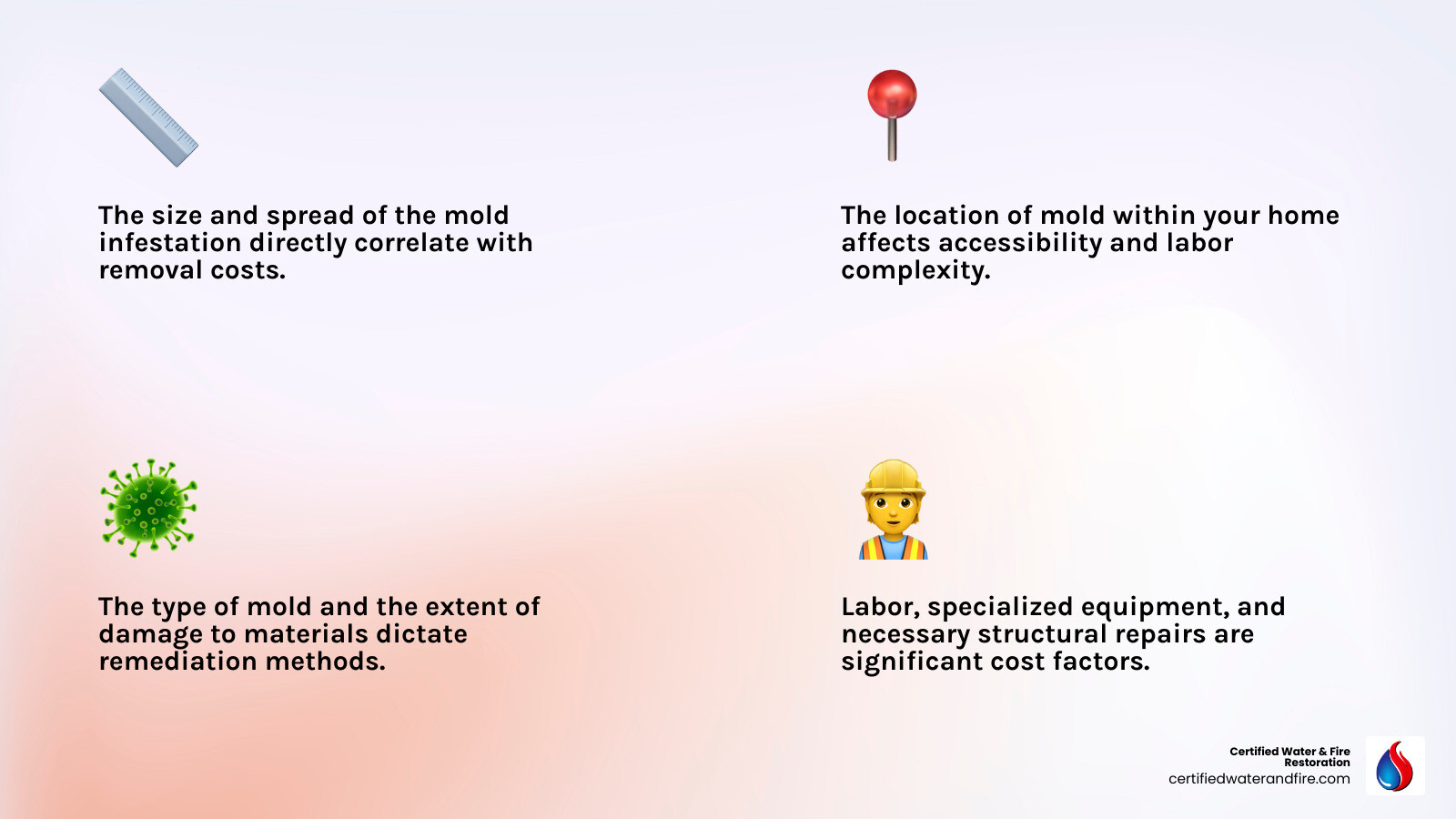
Average Mold Removal Cost and Key Influencing Factors
When you find mold, one of your first questions will be about the cost. The costs homeowners face varies, but understanding the typical ranges and influencing factors will help you make informed decisions.
What is the Average Cost?
On average, Houston residents can expect mold remediation to cost between $500 to $6,000 or more. National averages often fall in the low-$2,000s. Professionals often price the work at $10 to $25 per square foot. A small, localized patch might be on the lower end of the spectrum, while extensive mold across large areas can quickly rise into the thousands. For whole-property remediation, costs could reach $10,000 to $30,000.
Key Factors Driving the Price
Several factors determine the final cost in Houston. It’s not just about the visible mold but also hidden issues and the complexity of the cleanup.
Here are the key drivers:
- Infestation Size: The larger the area covered by mold, the more labor, materials, and time are required, which directly increases the cost.
- Accessibility: Mold in easy-to-reach places is cheaper to treat. Mold hidden behind walls, under floors, in crawl spaces, or within HVAC systems requires more labor, demolition, and reconstruction, driving up the cost.
- Type of Mold: While all mold must be removed, toxic molds like require stricter safety protocols, specialized gear, and careful containment, leading to higher costs.
- Contaminated Materials: Porous materials like drywall, insulation, and carpeting often can’t be cleaned and must be removed and replaced. The amount of material that needs disposal directly impacts the total cost.
- Required Repairs: The original moisture source must be fixed to prevent mold from returning. This could involve repairing a leaky pipe ($150-$350), fixing a roof leak ($400-$1,000), or sealing a foundation, which adds to the project’s total cost.
- Labor and Equipment: Professional remediation requires skilled technicians and specialized equipment like HEPA air scrubbers and negative air machines, which contribute to the overall expense.
What Changes the Price?
- Storm and flood exposure: Past water events can leave hidden moisture in walls and flooring. This raises containment and rebuild needs.
- High indoor humidity: Long humid seasons can expand the affected area if drying starts late.
- AC and ductwork: Condensation around vents, coils, and drain pans can spread spores. This increases the cleaning scope.
- Attics and wall cavities: These areas cost more because crews need access cuts, negative air machines, and material replacement.
- Older finishes: Plaster, layered flooring, and multiple remodel layers can increase labor and disposal time.
The Role of Mold Inspection and Testing
Before remediation, a thorough mold inspection is essential to determine the extent of the problem and locate the moisture source. A professional mold inspection typically costs $200 to $600. The size of your home can affect this price.
Mold testing, which identifies the specific type of mold, can cost between $50 and $700 per sample. However, the CDC states that testing isn’t always necessary because all mold should be removed regardless of its type. Testing can be useful for medical or legal reasons or to verify that remediation was successful. At Certified Water & Fire Restoration, we recommend using a third-party testing agency to avoid any conflict of interest.
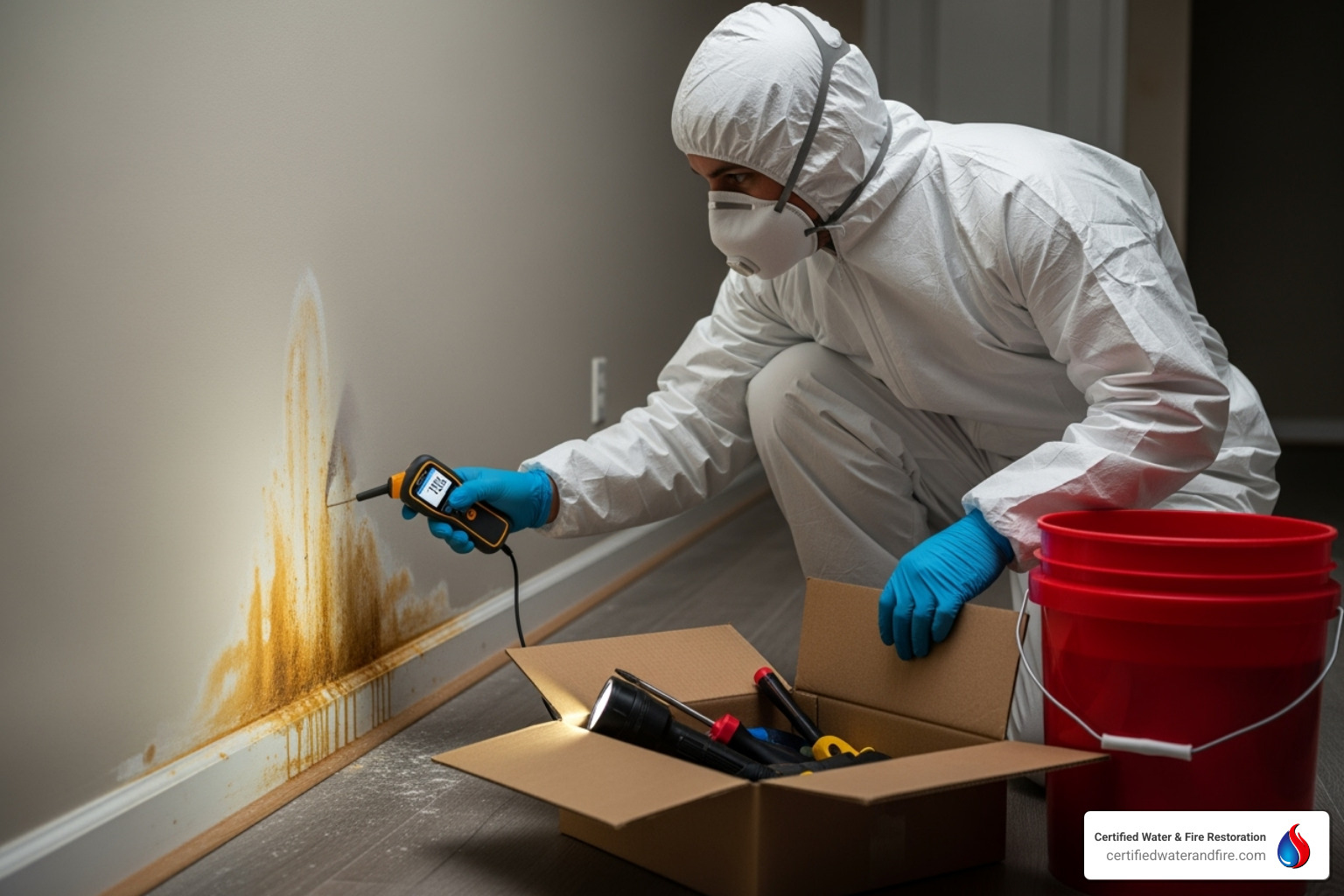
Cost Breakdown by Location in Your Home
Where mold grows in your home significantly impacts the cost. Some areas are easy to access, while others are complex and require extensive work.
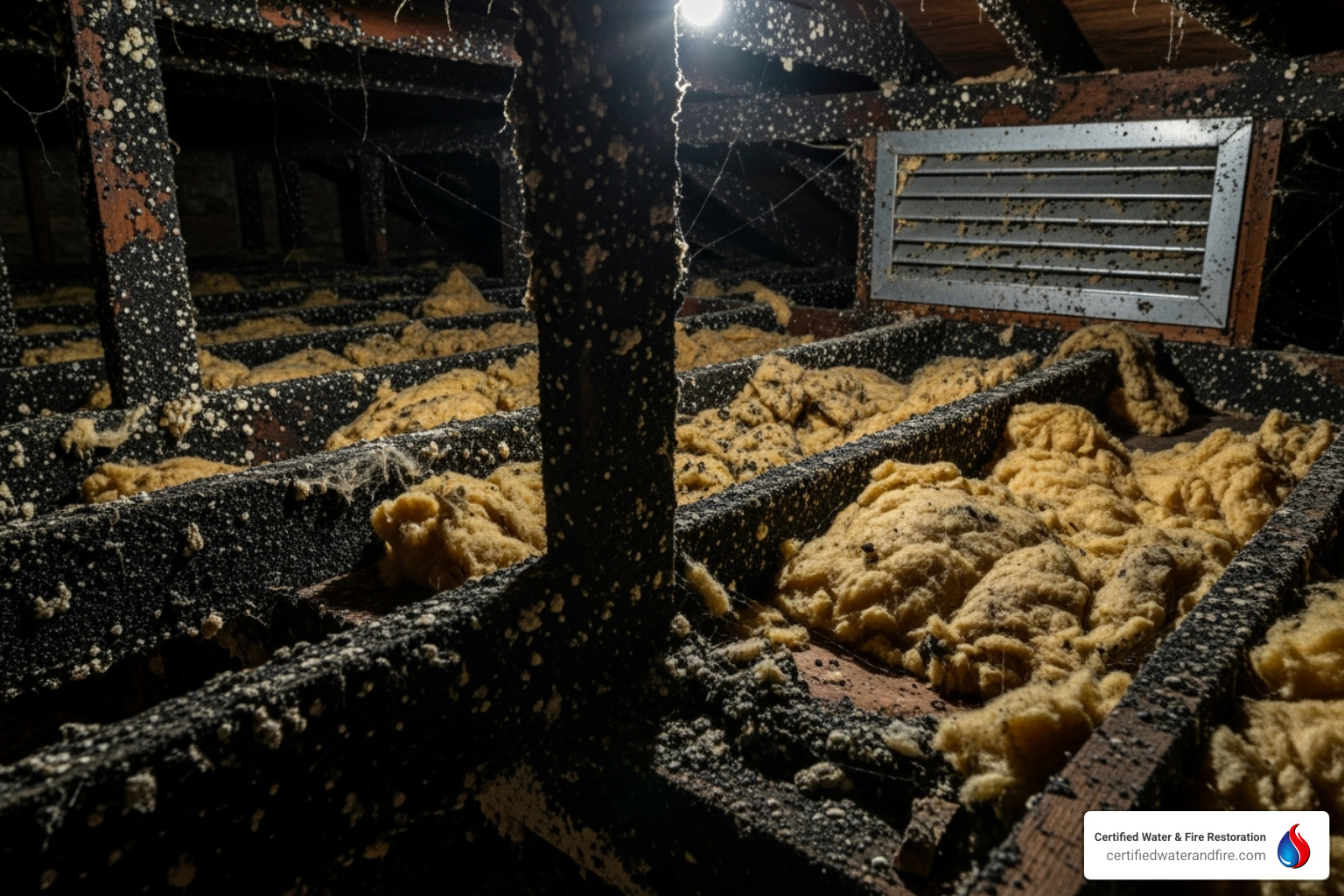
Attic & Crawl Space Remediation
Attics and crawl spaces are common mold hotspots due to darkness and humidity, making them tricky and expensive to remediate.
Attic mold remediation typically costs between $1,000 and $4,000, but severe cases can exceed $9,000. The cause is often roof leaks or poor ventilation. Costs are high because contaminated insulation usually requires complete removal and replacement.
Crawl space mold removal generally costs $500 to $2,000. These areas are difficult to access, which increases labor costs. If mold has reached structural wood or insulation, expect costs to be higher.
Basement & Wall Remediation
Basements and walls are also prone to mold, especially with hidden moisture issues.
Basement mold remediation usually falls between $500 and $3,000. Basements are susceptible to moisture but are often more straightforward to access and treat than mold hidden in walls.
Wall mold remediation has a wide cost range of $1,000 to $20,000. This is because mold often grows unseen behind drywall. By the time it’s found, significant demolition, cleaning, and reconstruction may be required. Understanding Common Causes of Spring Water Damage can help you prevent these costly issues.
HVAC System & Bathroom Costs
Your HVAC system and bathrooms present unique remediation challenges.
HVAC system mold remediation is complex and expensive, typically ranging from $3,000 to $10,000. When mold enters your air ducts, it can spread spores throughout your home. Cleaning HVAC systems requires specialized equipment and expertise to ensure complete removal. If you find mold in your system, turn it off immediately.
Bathroom mold remediation is more manageable, costing between $500 and $1,000. Bathrooms have high moisture, so small amounts of surface mold are common. However, persistent mold signals deeper issues like leaks or poor ventilation. If you’re dealing with water issues, our Houston water damage repair services can address the root cause before mold becomes a larger problem.
Understanding the Remediation Process and What’s Included
Understanding the professional remediation process can help you feel more in control. It’s a multi-step procedure designed to safely remove mold and restore your home to a healthy state.
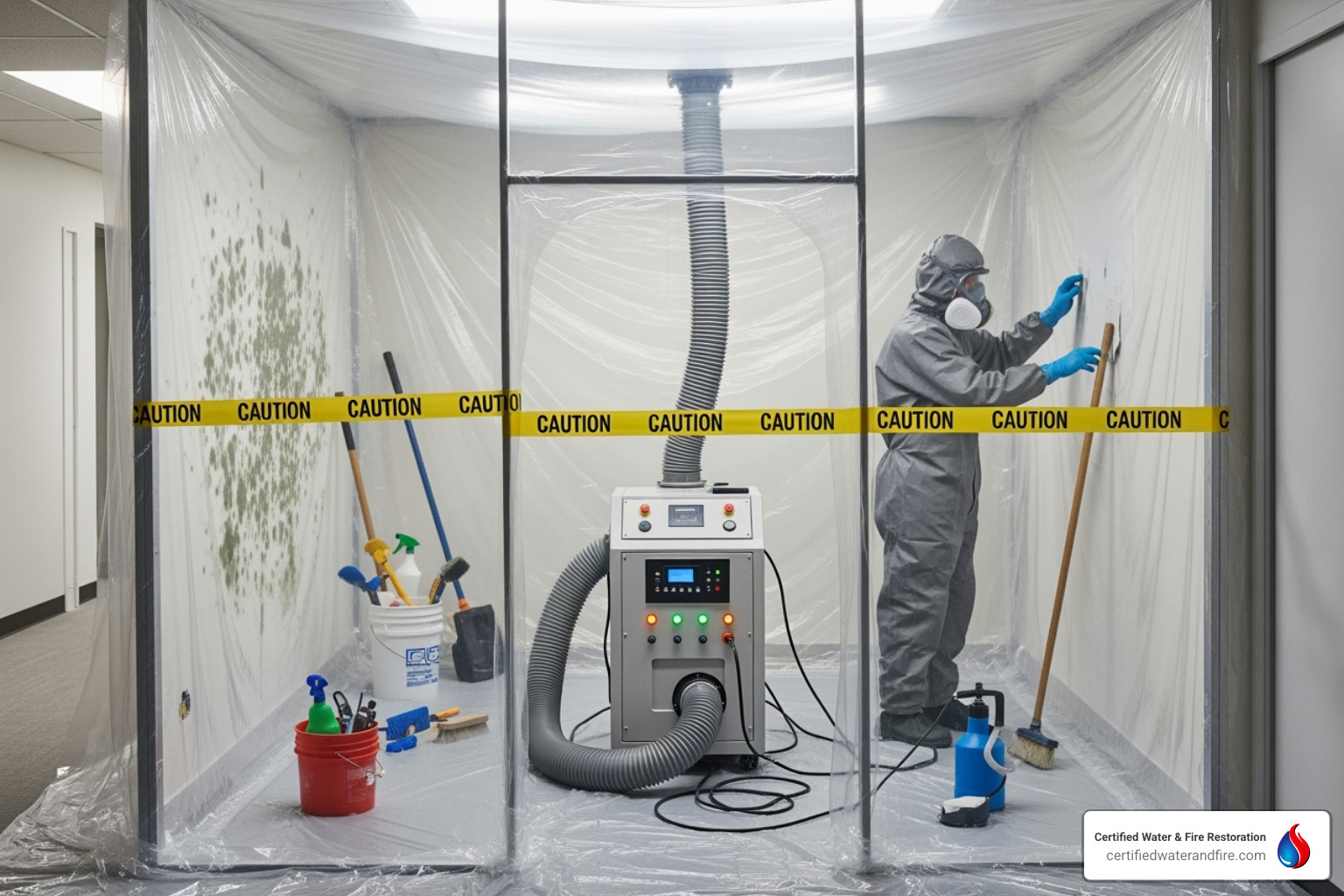
The Professional Mold Remediation Process
Here is what a professional mold remediation project usually includes:
- Inspection and Assessment: We begin by identifying the extent of the mold and the moisture source that allowed it to grow.
- Containment: The work area is sealed off with plastic sheeting and negative air pressure to prevent spores from spreading to other parts of your home.
- Air Filtration: Powerful HEPA air scrubbers are used to capture airborne mold spores, purifying the air and reducing contamination risk.
- Removing Contaminated Materials: Porous materials like drywall and insulation that are heavily affected are carefully removed and disposed of according to industry standards.
- Cleaning and Sanitizing: All surfaces in the contained area are cleaned with antimicrobial solutions to eliminate any remaining mold.
- Post-Remediation Verification: After cleaning, the area is dried, and we ensure the moisture source is resolved. Third-party testing can be used to confirm that mold levels have returned to a healthy state.
- Restoration: The final step is to repair or replace any removed materials, such as drywall or flooring, to return your home to its pre-mold condition.
Health Risks of Mold Exposure
Beyond property damage, mold poses significant health risks. According to the EPA, mold allergies are common and can cause various symptoms.
Exposure can lead to allergy-like symptoms such as sneezing, runny nose, red eyes, and skin rashes. For those with asthma, mold can trigger wheezing, coughing, and shortness of breath. Long-term exposure may lead to respiratory issues, headaches, and fatigue. Certain molds produce mycotoxins, which may cause more serious conditions. Immunocompromised individuals, infants, and the elderly are especially vulnerable to severe reactions. Acting quickly is crucial for the health of everyone in your home.
How Long Does Mold Removal Take?
The duration of mold remediation varies. A typical project can take from 1 to 5 days. However, extensive mold that requires significant demolition and reconstruction could take several weeks.
Key factors that influence the timeline include:
- Size of the Area: A small patch is much quicker to treat than a widespread infestation.
- Extent of Repairs: Significant demolition and reconstruction will extend the project timeline.
- Drying Time: Affected areas must be thoroughly dried, which can add a day or two to the process.
- Accessibility: Hard-to-reach areas require more time and effort to treat safely.
DIY vs. Professional, Insurance, and Saving Money
When you find mold, you might wonder if you can clean it yourself to save money. While tempting for small spots, it’s crucial to understand the risks and when to call a professional.
Here’s a quick comparison:
| Feature | DIY Mold Removal | Professional Mold Remediation |
|---|---|---|
| Cost | $50 – $300 (materials & basic gear) | $500 – $6,000+ (average for Houston) |
| Safety | High risk of exposure; improper PPE | Trained professionals, specialized PPE, containment |
| Effectiveness | Limited to surface mold; high risk of recurrence | Thorough removal, addresses moisture source, prevents recurrence |
| Time | Can be time-consuming for homeowners | Efficient, quicker resolution by experts |
| Equipment | Basic cleaning supplies | Industrial-grade air scrubbers, HEPA vacuums, moisture meters |
| Warranty | None | Often includes a warranty on work (e.g., our 2-year warranty) |
DIY vs. Hiring a Professional: A Cost and Safety Comparison
The EPA recommends only removing mold yourself if it covers less than 10 square feet (an area about 3×3 feet). For larger areas, or if mold is in your HVAC system or behind walls, professional help is the safest and most effective choice.
For small DIY jobs, costs are around $50 to $300 for supplies. Always wear an N-95 respirator, long gloves, and eye protection. We also advise against using bleach, as it can be ineffective on porous surfaces. Learn more in our article: Can Bleach Clean and Kill Mold Effectively?.
While DIY seems cheaper, professional remediation offers significant advantages. We ensure safety with specialized equipment, provide effective removal by addressing the root cause, and offer the peace of mind of a job done right, often backed by a warranty.
Preventing Mold Growth in Houston
Control indoor humidity and dry wet materials fast. Fix leaks the same day and keep airflow moving in damp rooms. Replace water-damaged porous materials that do not dry quickly. For deeper prevention steps and a full checklist, read our guide on mold prevention in Houston.
What should I look for when hiring a mold remediation company?
Choosing the right professional is crucial for a safe and effective job. Look for a company with:
- Proper Licensing: They must hold a Texas Mold Remediation Contractor (TMRC) License from the TDLR.
- Certifications and Insurance: Look for IICRC certification and proof of general liability and pollution insurance.
- Positive Reviews and References: Check online reviews and ask for references from past clients.
- A Detailed, Written Estimate: The estimate should clearly outline the scope of work, timeline, and all costs.
- A Warranty on Work: A warranty, like our 2-year guarantee, provides peace of mind that the job was done right.
For unbiased results, it’s often best to use a separate, third-party inspector for testing.
Protecting Your Home and Health
The cost homeowners pay can feel uncertain. We’ve seen that costs are highly variable, influenced by the size and location of the infestation, the type of mold, the extent of damage to materials, and the need for professional inspection and repairs.
The most crucial takeaway is the importance of addressing moisture issues immediately. Houston’s humid climate means mold can start growing within 24 hours of a leak. Acting fast can prevent a small, manageable problem from escalating into a costly, extensive remediation project that impacts both your property value and your family’s health.
At Certified Water & Fire Restoration, we are committed to helping home and business owners with expert mold remediation. We offer 24/7 emergency services, ensuring a rapid 60-minute response time when you need us most. Our promise of no upfront costs and our direct work with insurance companies are designed to ease your financial burden, and our 2-year warranty provides lasting peace of mind.
Don’t let mold compromise your home or health. If you suspect a mold problem, reach out to us. Our experienced team is ready to provide professional assessment and remediation, ensuring your home is safe and healthy once again.

