

Does homeowners insurance cover water damage 101: Essential
Understanding Your Coverage When Water Strikes
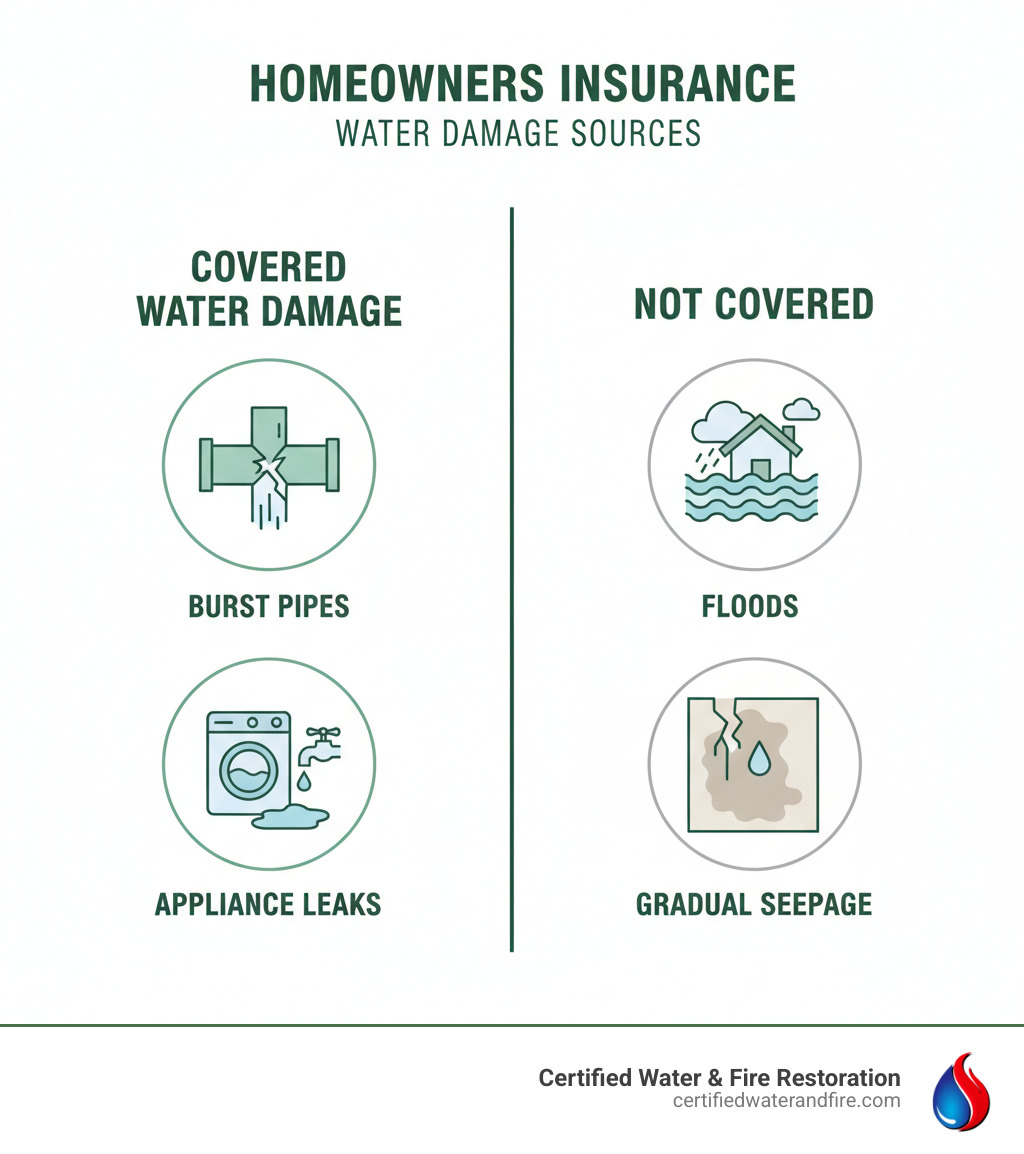
Does homeowners insurance cover water damage? The answer is yes, but with important conditions. Standard homeowners insurance typically covers water damage that is sudden and accidental from internal sources—like a burst pipe or malfunctioning appliance. However, it generally does not cover:
- Flood damage from external sources (rivers, storms, ground water)
- Gradual damage from slow leaks or poor maintenance
- Sewer backups or sump pump failures (without additional coverage)
- Neglect or issues you could have prevented with routine maintenance
Water damage claims make up 24% of all home insurance claims in the United States, with an average payout of $12,514. That’s significant—but many homeowners find too late that their specific situation isn’t covered. The difference often comes down to how the water entered your home and how quickly it happened.
A burst pipe flooding your kitchen at 2 AM? Likely covered.
A slow leak behind your water heater that’s been dripping for months? Probably not.
The confusion is understandable. Insurance policies use terms like “sudden and accidental,” “peril,” and “seepage” in ways that aren’t always clear. And when you’re standing in a waterlogged home, you need answers immediately—not after reading pages of policy documents.
I’m Ryan Majewski, General Manager at Certified Water & Fire Restoration, and over the past decade I’ve helped hundreds of Texas property owners steer the complexities of does homeowners insurance cover water damage claims while restoring their homes and businesses. Understanding your coverage before disaster strikes can save you thousands of dollars and weeks of stress.
Key Takeaways
- Coverage depends on the cause: Insurance usually covers sudden and accidental water damage, like burst pipes or appliance failures.
- Flooding is not included: Water from outside the home requires separate flood insurance, not a standard policy.
- Maintenance issues are excluded: Slow leaks, wear and tear, or neglect often lead to denied claims.
- Extra coverage may be needed: Sewer backups and sump pump failures require added endorsements for protection.
- Fast action protects your claim: Stop the water, document damage, and report quickly to avoid delays or denial.
Essential does homeowners insurance cover water damage terms:
What Water Damage Is Typically Covered by Standard Policies?
Here’s where things get practical. Most standard homeowners insurance policies follow what I call the “sudden and accidental” rule. If water damage happens unexpectedly—without warning and through no fault of your own—there’s a good chance your policy will cover it.
The key is understanding that we’re talking about internal water sources—the plumbing, appliances, and systems already inside your home. When these fail suddenly, your insurance typically steps in to help.
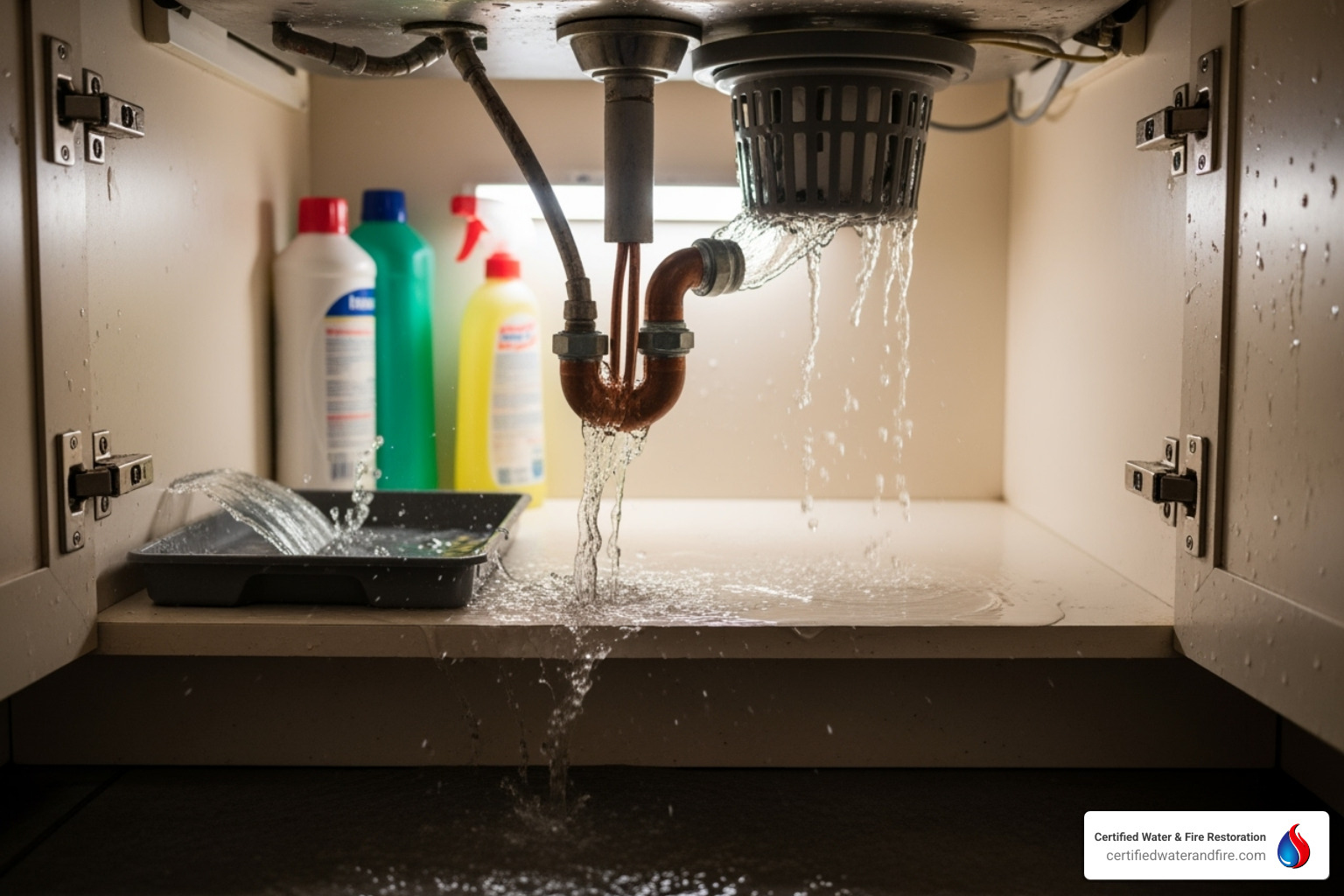
Let’s say you’re upstairs when you hear a loud bang from the kitchen. You rush down to find water spraying everywhere from a burst pipe under your sink. This is the classic covered scenario. The pipe failed without warning, and now your floors, cabinets, and maybe even your downstairs ceiling are soaked. Your policy should cover the damage to your home and belongings (though not necessarily the pipe repair itself).
Does homeowners insurance cover water damage from your appliances? Usually, yes—when they malfunction suddenly. Your washing machine’s supply hose ruptures mid-cycle, flooding your laundry room. Your dishwasher develops a sudden leak that damages your kitchen floor. Your water heater’s tank fails and releases gallons of water. These are all typically covered events because they happened without warning.
The same goes for HVAC system leaks. If your air conditioner’s condensate line suddenly clogs and overflows, or a component fails and water escapes, that’s generally a covered event. Again, the damage happened quickly and unexpectedly.
Here’s something that surprises many homeowners: water damage from extinguishing a fire is covered under standard policies. If firefighters flood your home while putting out a blaze, or your sprinkler system activates, the resulting water damage is part of your fire coverage. You’re already dealing with one disaster—at least the insurance helps with the water part.
If you’re facing a burst pipe emergency in Texas, our guide on What To Do When Your Pipes Burst: A Step-By-Step Guide For Texas Homeowners walks you through exactly what to do. And if you’re dealing with damage to specific areas, like a Water Damage Bathroom Ceiling, we have specialized guidance for that too.
One important note: your policy typically covers the damage caused by the water, not the appliance or pipe that failed. So if your washing machine breaks and floods your laundry room, insurance will help with the flooring and drywall—but you’ll need to replace the washing machine yourself.
Common covered water damage scenarios include:
- Burst or ruptured pipes (including frozen pipes if you took reasonable precautions)
- Washing machine overflow or supply line failure
- Dishwasher leaks
- Water heater tank failure
- HVAC condensate overflow
- Water damage from firefighting efforts
- Wind-driven rain entering through storm-damaged openings
- Plumbing damage from vandalism
The pattern here? All of these events are sudden, accidental, and involve water from sources inside your home. That last part becomes crucial when we look at what’s not covered—which is where many homeowners get caught off guard.
So, does homeowners insurance cover water damage from all sources?
While a standard homeowners policy provides solid protection, it’s not a universal safety net for all water disasters. Coverage often comes down to where the water originated and how it entered your home. For certain situations, you’ll need to purchase additional coverage through endorsements or riders to expand your policy’s boundaries.
This is especially important in Texas, where weather from frozen pipes in Dallas to heavy storms in Houston can test your home’s vulnerabilities. Knowing your policy can mean the difference between a covered claim and thousands of dollars out of pocket.

Common Exclusions: What Your Policy Won’t Cover
The same “sudden and accidental” rule that provides coverage also excludes it in many situations. Here are the most common scenarios where a claim might be denied.
Gradual damage and slow leaks are probably the biggest claim killers I see. That pipe dripping behind your water heater for months? The slow seepage through your bathroom floor? Insurance companies view these as preventable problems. They expect you to notice and fix small issues before they become catastrophes. If you’ve been living with water stains or ignoring a damp spot, you might face a denied claim. This includes situations where you’ve been postponing Repairing Water Damaged Hardwood Floors from an ongoing leak.
Poor maintenance and neglect go hand-in-hand with gradual damage. Your policy assumes you’re taking reasonable care of your home. Gutters clogged for years that cause water to overflow into your walls? A roof leak you knew about but didn’t repair? These situations often lead to denied claims because insurance is for sudden accidents, not the consequences of deferred maintenance.
Wear and tear from aging components is another common exclusion. An old water heater that corrodes through after 20 years isn’t covered. A deteriorated pipe that gives out due to age falls into the same category. Your policy might cover the damage the water causes, but not the cost of replacing the worn-out component itself.
Foundation cracks and seepage are also typically not covered. Water slowly working its way through cracks in your foundation is viewed as either a maintenance issue or groundwater intrusion, which brings us to our next topic.
The Critical Difference: Water Damage vs. Flood Damage
Many homeowners assume any water entering their home is covered, but insurers draw a clear line between water damage from internal sources and flood damage from external ones.
So does homeowners insurance cover water damage from flooding? Almost never.
What exactly is a flood? The National Flood Insurance Program defines it as a general and temporary condition where normally dry land gets inundated by water from overflow of inland or tidal waters, unusual accumulation of surface water, or mudflow. In plain English: if water comes from outside and covers the ground before entering your house, that’s a flood.
This means water from overflowing rivers, heavy rainfall, storm surge, or surface water runoff all fall under the flood category. Your standard homeowners policy specifically excludes these scenarios.
Flooding is a widespread natural disaster, so insurers offer separate flood policies—often through the National Flood Insurance Program—to cover this specific peril. Given that ninety percent of all natural disasters involve flooding, this separate coverage is essential for many homeowners.
Living in Texas, you know we face serious flood risks from hurricanes, flash floods, and urban flooding. At Certified Water & Fire Restoration, we respond to flood damage regularly and always stress the importance of having proper flood insurance. You can learn more in our guide on how to Protect Your Property From Storm Wind And Flood Damage.
What about sewer backups and sump pump failures?
These situations are surprisingly common yet rarely covered by standard policies.
Sewer backups involve raw sewage backing up through your drains. Standard insurance typically doesn’t cover this because the water originates from outside your home’s internal plumbing, even though it comes up through your drains. Causes can include overwhelmed municipal systems or tree root invasions. Without additional protection, you’re likely looking at an uncovered claim. Our article on Sewer Line Backup explains more.
Sump pump failures present a similar coverage gap. Your sump pump removes excess groundwater. When it fails—due to a power outage, mechanical breakdown, or being overwhelmed—the resulting water damage usually isn’t covered by a standard policy.
Here’s the good news: you can add water backup coverage to your policy. This endorsement specifically covers damage from sewer backups, drain overflows, and sump pump failures. It’s an essential add-on if you have a basement or live in an area with older sewer infrastructure. The small additional premium can save you from massive out-of-pocket expenses.
Finding water damage is overwhelming, but how you respond in the first few hours can make the difference between a smooth insurance claim and a denied one. At Certified Water & Fire Restoration, we’ve guided hundreds of Texas homeowners through this process. Here’s what you need to know to protect your home and your claim.
Safety comes first. Always. If water is near electrical outlets, shut off power at the main breaker. If a pipe burst or an appliance is leaking, turn off your main water shut-off valve. Do not walk through standing water if the electricity is on.
Stop the water and prevent further damage. This step is critical. Insurance companies expect you to take “reasonable” steps to protect your property. If you don’t, they can deny your claim. Use buckets to catch drips and consider temporary tarping if safe. Move furniture, electronics, and valuables out of the water’s path. Open windows to circulate air. Save every receipt for materials you buy, like tarps or fans, as these expenses are often reimbursable.
Document everything like your claim depends on it—because it does. Use your phone to take extensive photos and videos of all damage: floors, walls, ceilings, furniture, and belongings from multiple angles. If safe, photograph the water source. Note the date and time on your documentation and find any “before” photos you have. This visual evidence is your strongest ally when the adjuster reviews your claim.
Contact your insurance company immediately. As soon as the scene is secure and documented, call your insurer. Most policies require “prompt” notification, and delays can complicate your claim. They’ll assign you a claim number and explain their process.
Get a professional assessment right away. While talking to your insurer, call us at Certified Water & Fire Restoration. We offer a 60-minute response for emergencies throughout Houston, Dallas, Irving, and Plano. Why bring in professionals so quickly? Because moisture can hide in wall cavities, under flooring, and in ceilings, causing mold and structural problems.
Our team provides a comprehensive Water Damage Assessment using specialized equipment to detect hidden moisture. We document everything with detailed reports and photos that support your insurance claim. We work directly with your insurance company, handling the paperwork and communication so you don’t have to. We offer no upfront costs and back our work with a 2-year warranty.
Even if you’re not sure whether does homeowners insurance cover water damage in your situation, it’s always better to report it. When you need an Emergency Water Company that understands both restoration and insurance, we’re here.
For additional guidance on disaster claims specific to Texas, the Texas disaster claims FAQ from the Texas Department of Insurance can be helpful.
The bottom line? Act fast, document thoroughly, and bring in professionals who know how to steer the insurance maze. Your future self will thank you.
Frequently Asked Questions about Water Damage and Insurance
Over my years helping Texas homeowners steer water damage claims, I’ve noticed the same questions come up again and again. Let’s address the big ones, so you can feel more confident about your coverage.
Does homeowners insurance cover water damage from a leaking roof?
The answer depends on the cause of the leak.
If your roof starts leaking because of a sudden, covered event—like a tree falling on it, hail damage, or high winds tearing off shingles—then the resulting water damage inside your home is typically covered. When a thunderstorm rips through Dallas and damages your roof, causing water to pour in, that’s the kind of scenario insurance is designed for.
However, if your roof has been gradually deteriorating or you’ve put off repairs, your claim might be denied. Insurance companies expect you to maintain your roof. A small leak you’ve ignored for months will likely be considered a maintenance issue, not a covered peril.
There’s also a distinction between the interior damage and the roof repair itself. Your policy might cover the water-stained ceiling and damaged furniture, but the roof repair could be paid out at “actual cash value”—meaning they’ll factor in depreciation based on your roof’s age. A 15-year-old roof won’t get you a brand-new replacement at full cost.
If you’re dealing with a roof leak, our team specializes in Roof Leak Ceiling Repair and can help you understand what’s covered while getting your home restored.
Will my policy cover mold resulting from water damage?
Mold is a common and concerning result of water damage. So does homeowners insurance cover water damage that leads to mold? Coverage is possible, but often comes with significant limitations.
If mold develops as a direct result of a covered water damage event—like a burst pipe—most policies will cover the mold remediation. The insurance company recognizes mold as a natural consequence of water intrusion, even when you’ve acted responsibly.
However, there’s almost always a coverage cap for mold, typically between $1,000 and $10,000 in a standard Texas policy. For a serious problem, that might not be enough. You can purchase additional mold coverage, but many don’t realize they need it until it’s too late.
Coverage is denied if the mold resulted from a slow, unaddressed leak or poor maintenance. Insurers will also deny mold claims from flooding or other excluded perils. If you don’t report the initial water damage promptly, they might argue you didn’t fulfill your duty to mitigate damages.
This is why we emphasize our 60-minute response time at Certified Water & Fire Restoration. The faster we extract water and start drying, the less chance mold has to grow. Our Mold Remediation services are comprehensive, but rapid response is the best prevention.
How does homeowners insurance cover water damage if I need additional coverage?
Your standard policy provides a baseline of protection, but it doesn’t cover every water scenario. You may need to add endorsements for your specific needs.
If you have a basement or live in an area with aging sewer infrastructure, water backup coverage is essential. This endorsement covers damage from sewer backups, drain overflows, and sump pump failures—all excluded from standard policies. It’s typically affordable and can save you thousands.
For those in flood-prone areas, separate flood insurance through the National Flood Insurance Program or private insurers is non-negotiable. Your standard policy won’t cover damage if water comes from outside your home during a flood. Given Houston’s history with hurricanes, this is essential protection.
If you own valuable items like fine art or high-end electronics, consider scheduled personal property endorsements. These provide improved coverage with lower deductibles for certain types of water damage.
Some homeowners also benefit from increased limits for specific types of water damage. Talk to your agent about bumping up your limits if they seem low for your home’s value.
The best time to review these options is during your annual policy review. Our guide on Insurance Water Damage walks through many of these options in detail.
At Certified Water & Fire Restoration, we work directly with insurance companies daily. We know which endorsements provide value. When you call us, we’ll help you steer not just the restoration, but also the insurance maze—at no upfront cost to you.
Protecting Your Home and Ensuring Coverage
When water damage strikes, the question does homeowners insurance cover water damage becomes incredibly urgent. As you now know, the answer is nuanced, depending on how the water entered your home and what caused it.
Your standard homeowners policy is designed to protect you from sudden, unexpected disasters like a burst pipe or malfunctioning dishwasher. But a slow drip you’ve ignored for months or an external flood are different stories entirely.
The best defense is a good offense. Regular home maintenance protects your financial investment. Periodically check under sinks, inspect your water heater, clean your gutters, and replace old appliance hoses. These simple steps can prevent the gradual damage that insurers won’t cover, saving you from a massive repair bill.
But maintenance alone isn’t enough. Reviewing your policy annually with your agent can reveal coverage gaps. Maybe you need water backup coverage, or you live in a flood-prone area and need separate flood insurance. Maybe your coverage limits haven’t kept pace with rising repair costs.
Here in Texas, where we experience everything from hurricanes to winter freezes, having the right coverage is essential. Consider adding endorsements for sewer backup protection or looking into overland water coverage if heavy rains are a concern. These additions typically cost far less than paying for damage out of pocket.
You Need to Act Fast
When water damage does happen, act fast. Document everything, contact your insurer immediately, and call professionals who can steer both the restoration and the insurance maze.
At Certified Water & Fire Restoration, we’ve been helping Houston and Dallas homeowners through water damage emergencies for years. We understand the stress and frustration. That’s why we offer a 60-minute emergency response, work directly with your insurance company to eliminate upfront costs, and stand behind our work with a 2-year warranty. We’re not just fixing your property—we’re helping you get your life back to normal.
Whether you’re dealing with a burst pipe right now or just want to be prepared, we’re here. For expert help navigating insurance claims and restoring your property in the Houston area, contact our team for immediate assistance. Because when water damage strikes, you shouldn’t have to face it alone.
