

Clean Water Damaged Ceiling: 5 Steps to Sparkle
Why That Brown Stain on Your Ceiling Won’t Go Away
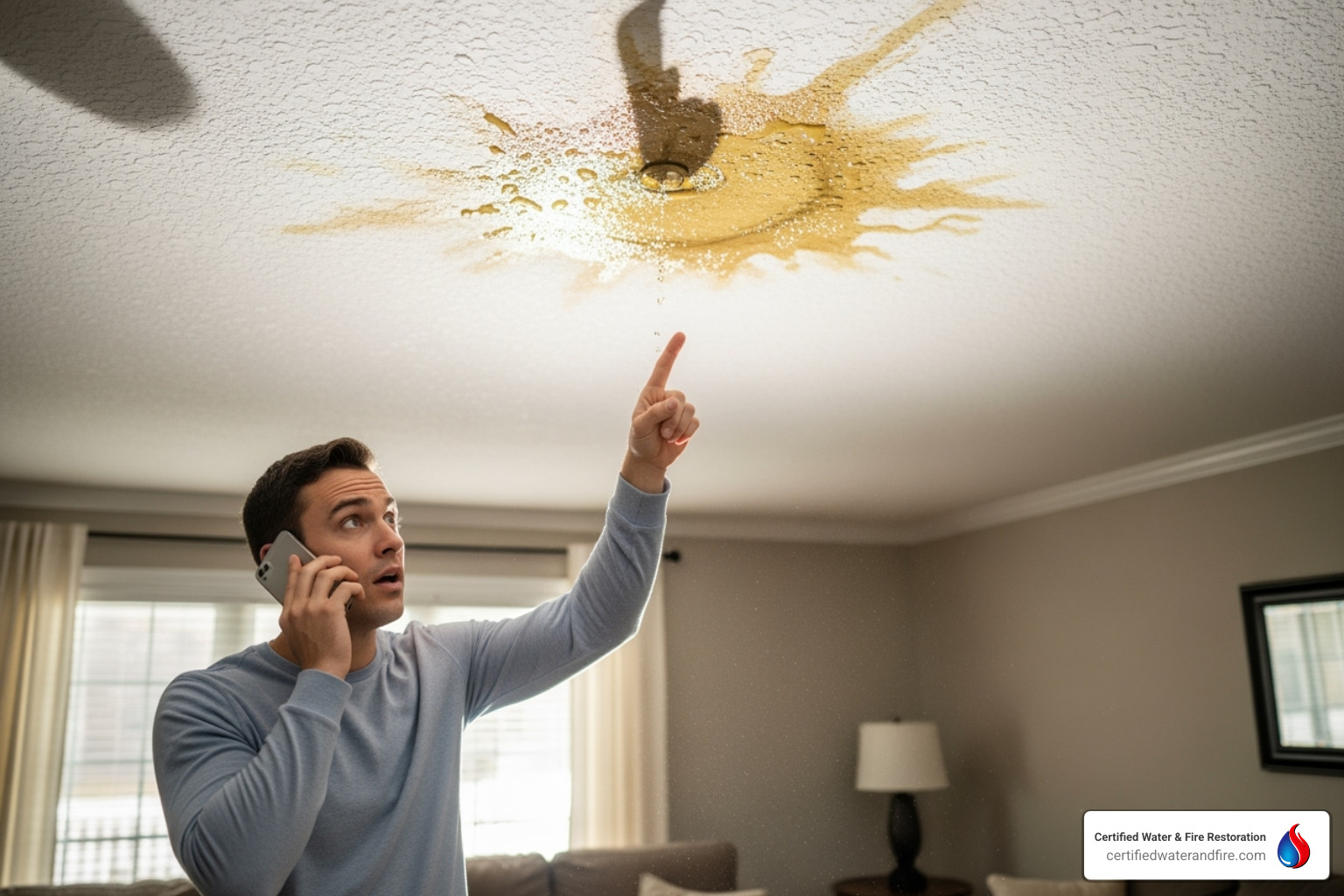
An unsightly brown or yellow patch on your ceiling is more than an eyesore—it signals a problem that won’t fix itself. You need to act quickly to prevent further damage, mold growth, and costly repairs. You’re not alone; 14,000 people in the U.S. experience water damage emergencies daily. Water-damaged ceilings are a common frustration for homeowners, especially in Texas, where storms and plumbing issues are frequent.
Here’s what you need to do:
- Stop the water source – Fix the leak or plumbing issue causing the stain.
- Dry the area completely – Use fans and dehumidifiers; ensure no moisture remains.
- Clean the stain – Apply a bleach solution (1:3 ratio) to kill mold and lighten discoloration.
- Apply stain-blocking primer – Use an oil-based primer to prevent bleed-through.
- Repaint the ceiling – Match your ceiling paint for a seamless finish.
The good news is that most ceiling water stains can be repaired once you address the leak’s source. This guide walks you through the entire process, from identifying the cause to making your ceiling look new again.
I’m Ryan Majewski, General Manager of Certified Water & Fire Restoration. With over a decade of experience in water damage restoration in Texas and the Midwest, I’ve seen every type of clean water damaged ceiling scenario. I know what it takes to restore your ceiling safely and effectively.
Key Takeaways
- Fix the source first: Cleaning alone will not work—stop the leak and fully dry the area to prevent stains and mold from returning.
- Drying is critical: Any trapped moisture can cause mold growth and repeat damage, so confirm the area is completely dry before repairs.
- Use the right repair process: Clean, apply a stain-blocking primer, then repaint to prevent stains from bleeding through.
- Act quickly to limit damage: Delays can lead to structural issues, mold, and higher repair costs.
- Call a professional when needed: Sagging ceilings, mold, or hidden leaks require expert repair to avoid safety and health risks.
What’s That Spot? Identifying Causes and Signs of Ceiling Damage
Before you can clean water damaged ceiling stains, you must find the water source. That brown spot is your home’s red flag—ignoring it will only make things worse.
Common causes include:
- Plumbing Issues: A leaking pipe, overflowing toilet, or faulty appliance can send water dripping through your ceiling. For burst pipes in Texas, see our guide on What to Do When Your Pipes Burst: A Step-by-Step Guide for Texas Homeowners.
- Roofing Problems: Missing shingles, cracked flashing, or storm damage can let water in, especially on top floors. Heavy storms in Houston and Dallas often expose these weak spots.
- HVAC System: Leaking condensate lines or condensation from poorly insulated ducts can drip onto your ceiling.
- Clogged Gutters: During rainstorms, clogged gutters can overflow and send water into your roof and ceiling.
- Attic Condensation: Poor ventilation, high humidity, or faulty insulation can create moisture that stains the ceiling below.
Once water gets in, it leaves obvious signs:
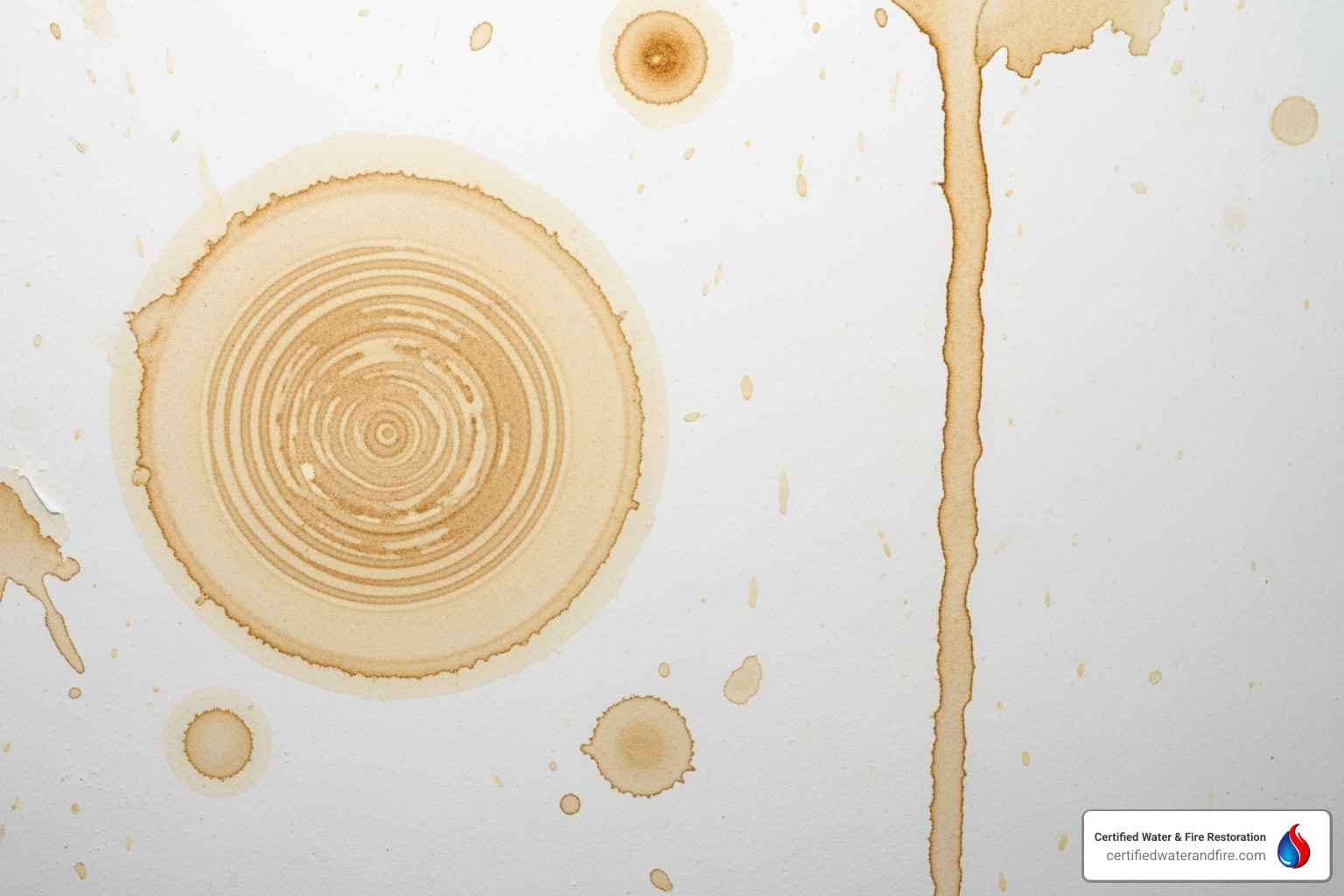
- Discoloration: Rust-colored, yellow, or brown patches.
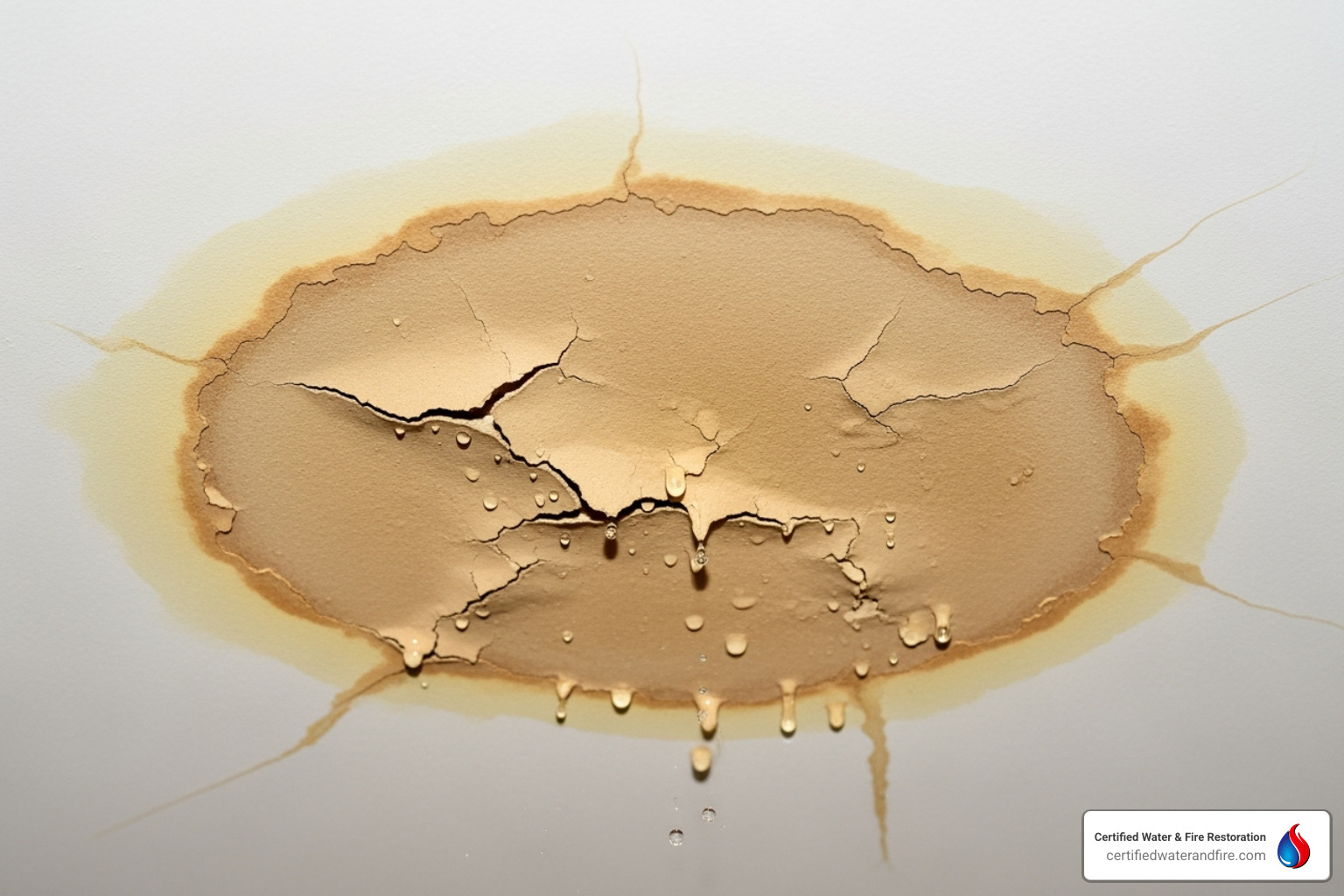
- Peeling or Bubbling Paint: Water destroys the paint’s adhesion.
- Sagging or Bowing Drywall: A serious sign that materials are saturated and losing structural integrity.
- Musty Odor: Indicates hidden moisture and potential mold growth.
- Visible Mold: Black, green, or fuzzy patches. According to the CDC, mold exposure can cause health problems, so quick action is essential.
Common Leaks and Their Telltale Stains
The stain pattern can offer clues about the leak’s origin:
- Roof Leaks: Typically cause irregular, dark patches on the top floor, often appearing after rain.
- Plumbing Leaks: Large, circular stains may indicate a leaking pipe. Straight-line stains might follow HVAC ducts. For bathroom-specific issues, see our guide on Water Damage Bathroom Ceiling.
- Condensation Issues: Often appear as widespread, patchy discoloration with peeling paint in high-humidity areas like bathrooms and kitchens.
Act Fast! Immediate Steps for a Water-Damaged Ceiling
When you spot a water-damaged ceiling, act fast. The first few hours are critical for minimizing damage and repair costs. Follow these damage control steps immediately:
- Stop the Water Source: For a plumbing leak, turn off your main water shutoff valve. For a roof leak, if it’s safe, cover the entry point with a tarp.
- Contain the Drip: Place buckets or large containers directly under the leak. Use towels or tarps to protect the floor.
- Protect Your Belongings: Move furniture, electronics, and other valuables away from the affected area. Roll up area rugs and move them to a dry space.
- Turn Off Electricity: If the leak is near light fixtures or outlets, shut off power to that room at the circuit breaker. Water and electricity are a dangerous mix.
- Relieve Pressure (If Necessary): If the ceiling is bulging with water, carefully poke a small hole in the center of the bulge with a screwdriver to release the water into a bucket. This prevents a larger, uncontrolled ceiling collapse.
- Document Everything: Take clear photos and videos of the damage from multiple angles. This documentation is crucial for your Insurance Water Damage claim. Repairing a clean water damaged ceiling can cost $45-$55 per square foot, so thorough documentation is vital.
If the damage seems extensive or you can’t find the source, call a professional for a rapid response.
Your Step-by-Step Guide to a Clean Water Damaged Ceiling
Once the leak is fixed, you can repair your clean water damaged ceiling. For minor to moderate stains, this is a manageable DIY project. Before starting, always wear safety goggles and protective gloves, as you’ll be working overhead with chemicals.

Tools and Materials You’ll Need
Gather these items before you begin:
- Safety goggles and gloves
- Sturdy ladder
- Drop cloths
- Spray bottle
- Household bleach
- Clean rags or sponges
- Oil-based or shellac-based stain-blocking primer
- Ceiling paint (matched to your existing color)
- Paint roller set with an extension pole
- Drywall patch kit, utility knife, and joint compound (if drywall is damaged)
- Moisture meter (highly recommended)
Step 1: Safely Dry the Affected Area
This step is crucial: your ceiling must be completely dry before you proceed, or the stain and mold will return. Increase air circulation by opening windows and using fans aimed at the wet spot. For significant damage or in humid climates like Houston, use a dehumidifier. Don’t just trust touch; use a moisture meter to confirm the area is bone dry. This tool is essential for preventing future issues. For more drying techniques, see our guide on How Do You Dry Out a Flooded House?.
Step 2: How to Clean Water Damaged Ceiling Stains
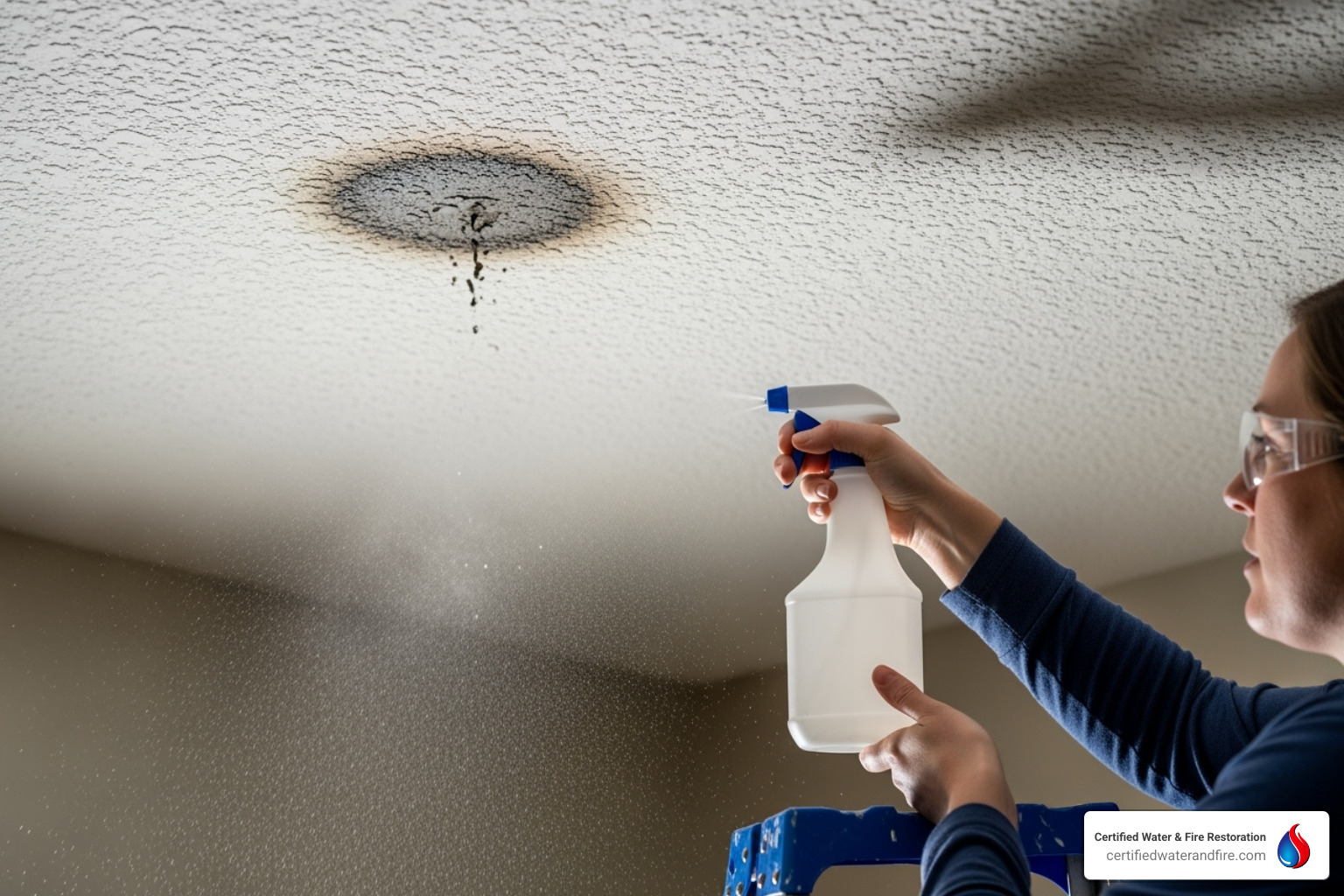
Once dry, mix a solution of one part household bleach to three parts warm water in a spray bottle. With good ventilation, lightly mist the stained area. Do not oversaturate it. Let the solution sit for a few minutes to lighten the stain, then gently wipe the area with a clean, damp rag. Repeat if necessary, allowing the ceiling to dry completely between applications.
Step 3: Prime and Paint for a Flawless Finish
The secret to a flawless finish is a stain-blocking primer. This step is not optional. Water stains contain minerals that will bleed through regular paint. Use an oil-based or shellac-based primer to create a permanent barrier. Apply one or two thin coats over the stain, extending about six inches beyond its edges. Let it dry completely according to the product’s instructions.
Before painting, protect your walls with painter’s tape and cover floors with drop cloths. Once the primer is dry, apply ceiling paint using a roller with an extension pole. For larger stains, painting the entire ceiling ensures a perfect color match. If patching, feather the edges of the new paint to blend it with the old. For more complex repairs involving drywall, see our Roof Leak Ceiling Repair guide.
When to Call for Professional Water Damage Restoration
While DIY repair is satisfying, some situations are too complex or dangerous to handle alone. Knowing when to call a professional is a smart decision that protects your home, health, and wallet.
Call us immediately if you see:
- Structural Sagging or Bowing: This is a safety hazard indicating the ceiling could collapse.
- Widespread Mold: Large patches or a strong musty smell require professional remediation to protect your family’s health.
- An Unknown Leak Source: We use advanced tools like thermal cameras to find hidden leaks that DIY methods can’t.
- Extensive Damage: Large affected areas or damage spanning multiple rooms require professional handling.
- Contaminated Water: If the source is sewage or floodwater (Category 2 or 3), it’s a hazardous situation that only certified professionals should handle.
Properly repairing extensive water damage is a complex process. While fixing the leak source can cost over $3,000, the restoration itself can run $45-$55 per square foot. We provide a comprehensive Water Damage Assessment so you know exactly what you’re facing.
When you call Certified Water & Fire Restoration, our 24/7 team responds within 60 minutes. Our certified technicians assess the damage with thermal cameras and moisture meters. We then handle the entire process: water extraction, removal of damaged materials, professional drying, and antimicrobial treatment to stop mold. After thorough drying, we manage all repairs and reconstruction.
We offer a 2-year warranty on all services and work directly with your insurance company, so you have no upfront costs. Learn more on our Insurance Water Damage page.
Preventing Future Water Woes
Dealing with a clean water damaged ceiling once is enough. Proactive maintenance is the best way to avoid future water damage by addressing small problems before they become expensive headaches.
- Inspect Your Roof: At least twice a year, check for damaged shingles or cracked flashing around chimneys and vents.
- Check Your Plumbing: Regularly look under sinks and around appliances for drips or corrosion. A sudden spike in your water bill can also signal a hidden leak. For more tips, see our Ultimate Home Water Damage Guide.
- Clean Your Gutters: Clogged gutters are a top cause of water damage. Clean them at least twice a year, especially if you have trees.
- Maintain Your Attic: Ensure proper ventilation and that exhaust fans vent outside, not into the attic. Insulate pipes in unheated areas to prevent freezing.
- Service Your HVAC: Regularly inspect the air conditioner’s condensate drain line to ensure it’s not clogged.
- Install Leak Detectors: Consider placing smart detectors in high-risk areas like under sinks, near water heaters, and by washing machines.
A little prevention goes a long way and is far less stressful than another ceiling repair.
Frequently Asked Questions about Ceiling Water Stains
As a water damage expert, I hear the same questions from concerned homeowners. Here are answers to the most common ones.
Can I just paint over a water stain on my ceiling?
No, you cannot just paint over a water stain. It’s a temporary fix that hides a bigger problem. The water-soluble minerals in the stain will bleed through regular paint, causing it to reappear. More importantly, if the leak isn’t fixed, moisture will remain trapped, leading to rot, structural damage, and dangerous mold growth.
The correct process is to fix the leak, dry the area completely, use a stain-blocking primer (oil- or shellac-based), and then paint.
Why did the water stain come back after I painted it?
If a stain returns after you’ve repaired it, it’s almost always due to one of three reasons:
- The leak wasn’t completely fixed. Even a tiny, slow drip can eventually resaturate the area and bring the stain back.
- You skipped the primer or used the wrong kind. Regular water-based primer won’t block the minerals in a water stain. You must use an oil-based or shellac-based stain-blocking primer.
- The area wasn’t completely dry before you painted. Trapped moisture will eventually work its way through the new paint, bringing the stain with it and creating a perfect breeding ground for mold.
To avoid redoing your work, ensure the leak is fixed, the ceiling is bone dry, and you always use the right primer.
Get Your Ceiling Looking New Again
You now know what it takes to tackle a clean water damaged ceiling. The process is straightforward: fix the water source, thoroughly dry the area, clean the stain, apply a stain-blocking primer, and repaint. Diligence at each step is key to a lasting repair.
However, not every situation is a DIY project. If you’re facing extensive damage, structural sagging, widespread mold, or can’t find the leak, it’s time to bring in the experts.
At Certified Water & Fire Restoration, we help homeowners across Houston, Dallas, Irving, and Plano. We offer 24/7 emergency services with a 60-minute response time because we know that fast action minimizes damage. We work directly with your insurance company, handling the claims process to reduce your stress. Plus, every restoration comes with a 2-year warranty, giving you peace of mind that the job is done right.
Don’t let a water stain become a major structural issue or health hazard. Take action now.
Ready to get started? Get professional help with your Ceiling Water Repairs today. Let’s work together to make your home beautiful and safe again.