

Texas Hail Storm Damage Restoration: Expert Guide
Why Texas Homeowners Need a Fast Hail Damage Response Plan
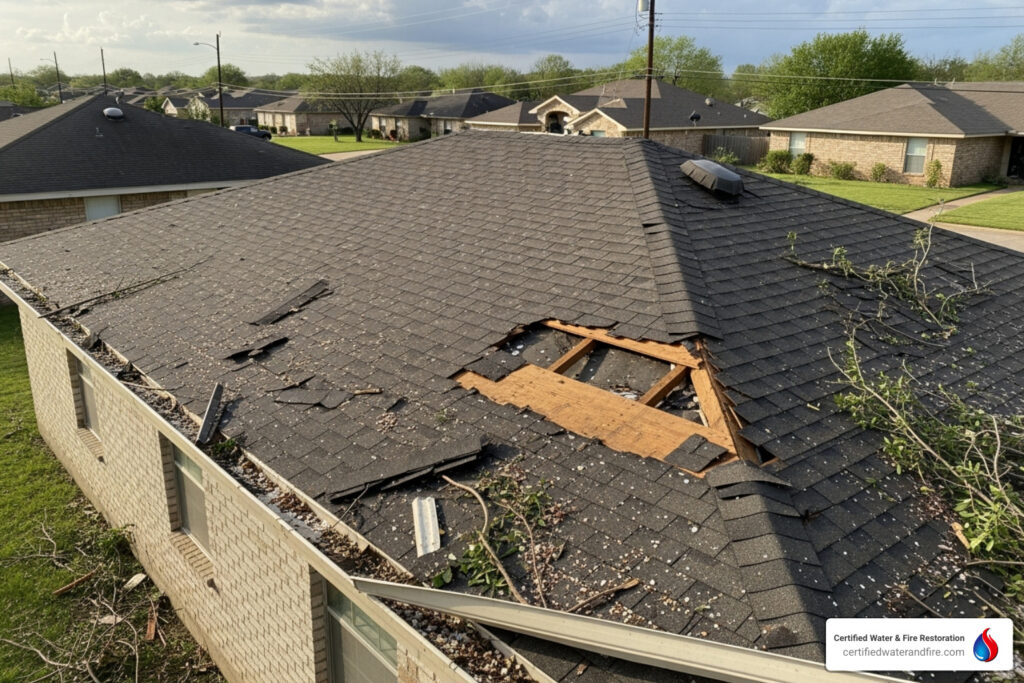
Texas hail storm damage restoration is critical for property owners, as the state consistently leads in hail damage claims. In Texas, hailstorms can strike with little warning, causing severe damage in minutes. Here’s what you need to know right away:
Immediate Steps After Hail Damage:
- Ensure safety – Stay indoors until the storm passes completely.
- Document everything – Take photos and videos of all damage before any cleanup.
- Make temporary repairs – Cover broken windows and holes to prevent water intrusion.
- Contact your insurance company – File your claim as soon as possible.
- Call a certified restoration professional – Get a thorough inspection to identify hidden damage.
Your roof is often the hardest-hit area, where damaged shingles can lead to leaks, water damage, and mold if not addressed promptly. Hail can also shatter windows, dent siding, and compromise your home’s structural integrity. Untreated hail damage compounds over time; a few cracked shingles can escalate into thousands of dollars in water damage, mold remediation, and structural repairs.
Many homeowners underestimate the urgency of hail damage restoration. Even small hail can cause serious damage that isn’t visible from the ground, such as granule loss on shingles, fractured fiberglass mats, and weakened roof seals, all of which can lead to premature roof failure.
Understanding your insurance coverage is equally critical. Most homeowners policies cover hail damage, but you must act quickly. Texas law requires insurers to acknowledge your claim within 15 calendar days and decide on it within 15 business days after receiving all documentation. Missing these windows or failing to document damage can lead to denied claims or lowball offers.
I’m Ryan Majewski, General Manager of Certified Water & Fire Restoration. I’ve spent years helping Texans with Texas hail storm damage restoration and insurance claims. My experience has shown me how quickly hail damage escalates when homeowners delay action or attempt DIY repairs without professional help.
Key Takeaways
- Act fast to limit damage: Hail damage can quickly lead to roof leaks, water intrusion, and mold, so early action prevents costly repairs.
- Document everything for your claim: Clear photos, videos, and notes help prove damage and secure fair insurance coverage.
- Hidden damage is common: Even small hail can weaken shingles and seals, leading to future leaks and structural issues.
- Protect your home immediately: Temporary fixes like tarping and boarding help stop water damage before repairs begin.
- Professional inspection adds value: Experts can identify hidden issues and support insurance claims, reducing long-term risk.
Step 1: Secure Your Property and Document Everything
After a hailstorm, your actions in the next few hours can prevent thousands in additional damage and ensure a smooth insurance claim.
Your safety comes first, always. Wait until the storm has completely passed before stepping outside. Once it’s safe, shift into damage control mode. Emergency temporary repairs are your immediate priority. Most insurance policies cover these as part of your duty to mitigate further damage.
Start by tarping your roof if you see obvious holes or missing shingles to prevent water from entering your attic, ceilings, and walls. If you’re not comfortable on your roof, call a professional. The same goes for boarding up broken windows to keep rain out and secure your home.
The real enemy after hail damage is water intrusion. We’ve handled countless Texas hail storm damage restoration projects where a small leak turned into a major mold infestation within days. Water doesn’t wait, and neither should you.
For more preparation, see our resources on protecting your property from storm wind and flood damage and our Texas storm season preparedness guide.
How to Properly Document Hail Damage
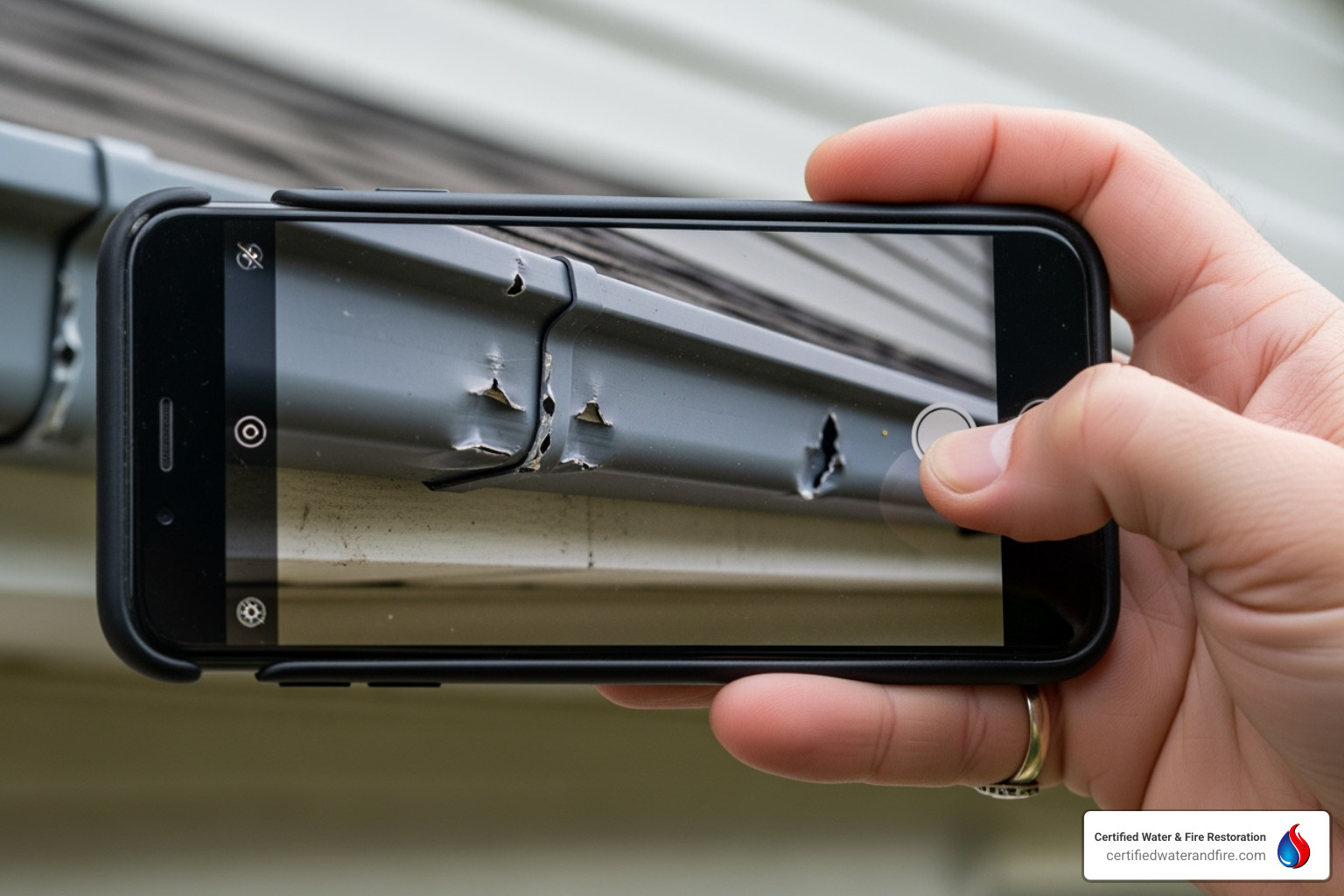
Documentation is essential for your insurance claim; we’ve seen claims denied due to a lack of proof. Use your smartphone to capture everything.
Take both wide shots and close-ups of your roof, siding, windows, gutters, AC unit, and any other damaged fixtures. Don’t forget any interior damage. Timestamping your photos provides undeniable proof of when the damage occurred. Most phones do this automatically, but check your settings.
Create a detailed written list of every damaged item. If you buy materials for temporary repairs, save every single receipt. Your policy likely covers these mitigation costs, but you need proof.
Importantly, don’t throw away damaged items until your insurer gives you the green light. The adjuster may need to inspect them. It’s inconvenient but could save your claim.
The Texas Department of Insurance offers a video with helpful claim tips. If documentation feels overwhelming, restoration professionals like us know exactly what insurance companies need to see and can help.
Step 2: Identifying the Extent of Hail Damage
After securing your property and documenting obvious damage, the next step in Texas hail storm damage restoration is a careful assessment. What you see from the ground is often just the tip of the iceberg.
While some damage like a shattered window is obvious, much of the harm is hidden, causing problems months or years later. A professional inspection is essential to protect your investment. A small dent or missing granules might seem minor, but these issues lead to hidden damage risks like water intrusion, structural rot, or mold growth. The long-term consequences of neglect can turn a manageable claim into a nightmare renovation.
Assessing Your Roof and Siding
Your roof takes the brunt of any hailstorm. Even quarter-sized stones can cause serious problems in minutes.
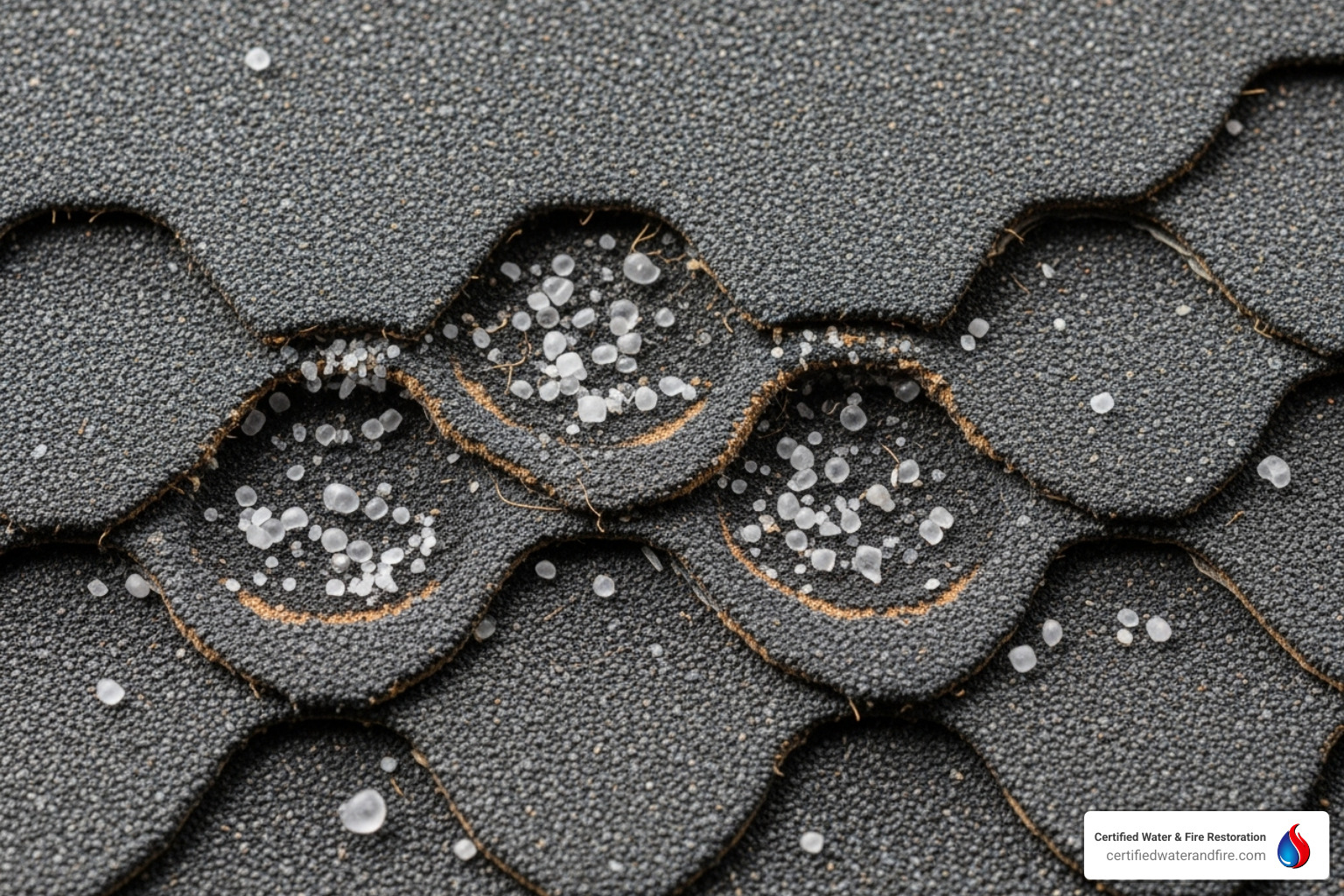
Granule loss is a common issue on asphalt shingles. These granules shield the asphalt from UV rays; when they’re knocked loose, the exposed asphalt ages faster, shortening your roof’s lifespan. Bruising creates soft spots that weaken the shingle’s structure, while cracks can quickly let water through. Hail can also compromise the self-seal strips, making your roof vulnerable to future wind damage.
Severe hail can even fracture the fiberglass mat beneath the surface, compromising the roof’s structure. Don’t forget metal components like vents, gutters, and flashing, which often show dents that affect their function.
Siding also tells a story. Hail can crack, dent, or puncture siding materials. Aluminum siding, for instance, dents easily. For more details, see our guides on hail damaged siding and repairing hail damage on aluminum siding.
Inspecting Windows, Gutters, and Outdoor Fixtures
Hail doesn’t just hit the roof; it damages everything exposed, and the costs add up.
Large hailstones can shatter window panes, but more often they dent window frames, compromising their seals. Damaged seals allow moisture and air to enter, raising energy bills and risking mold growth inside walls.
Gutters and downspouts, made from soft metals, collect dents that can impede water flow away from your foundation, leading to serious issues.
Also inspect your outdoor fixtures. A dented AC condenser unit coil can reduce efficiency and lead to costly repairs. Decks and patio covers can also be chipped, cracked, or dented.
Comparing Hail Resistance of Common Roofing Materials
| Roofing Material | Hail Resistance |
|---|---|
| Asphalt Shingles | Moderate resistance; prone to granule loss and bruising. Impact resistance varies by quality—look for Class 4 rated shingles for better protection. Most common and affordable. |
| Metal Roofing | High resistance; dents from large hail but rarely punctures. Dents are usually cosmetic. Standing seam metal offers excellent protection. |
| Slate/Tile Roofing | Very high resistance; extremely durable but can crack under severe impact. More expensive but offers exceptional longevity. |
| Impact Resistance Ratings | UL 2218 classifies roofing from Class 1 (lowest) to Class 4 (highest). Class 4 materials withstand impacts similar to baseball-sized hail. Many insurers offer discounts for Class 4 roofs. |
Why Texas Homeowners Need a Fast Hail Damage Response Plan
Texas hail storm damage restoration is critical for property owners, as the state consistently leads in hail damage claims. In Texas, hailstorms can strike with little warning, causing severe damage in minutes. Here’s what you need to know right away:
Immediate Steps After Hail Damage:
- Ensure safety – Stay indoors until the storm passes completely
- Document everything – Take photos and videos of all damage before any cleanup
- Make temporary repairs – Cover broken windows and holes to prevent water intrusion
- Contact your insurance company – File your claim as soon as possible
- Call a certified restoration professional – Get a thorough inspection to identify hidden damage
Your roof is often the hardest-hit area, where damaged shingles can lead to leaks, water damage, and mold if not addressed promptly. Hail can also shatter windows, dent siding, and compromise your home’s structural integrity. Untreated hail damage compounds over time; a few cracked shingles can escalate into thousands of dollars in water damage, mold remediation, and structural repairs.
Many homeowners underestimate the urgency of hail damage restoration. Even small hail can cause serious damage that isn’t visible from the ground, such as granule loss on shingles, fractured fiberglass mats, and weakened roof seals, all of which can lead to premature roof failure.
Understanding your insurance coverage is equally critical. Most homeowners policies cover hail damage, but you must act quickly. Texas law requires insurers to acknowledge your claim within 15 calendar days and decide on it within 15 business days after receiving all documentation. Missing these windows or failing to document damage can lead to denied claims or lowball offers.
I’m Ryan Majewski, General Manager of Certified Water & Fire Restoration. I’ve spent years helping Texans with Texas hail storm damage restoration and insurance claims. My experience has shown me how quickly hail damage escalates when homeowners delay action or attempt DIY repairs without professional help.
Step 1: Secure Your Property and Document Everything
After a hailstorm, your actions in the next few hours can prevent thousands in preventable damage and ensure a smooth insurance claim. Safety comes first, always. Wait until the storm has completely passed before going outside.
Your immediate mission is damage control. Tarping your roof over holes or missing shingles creates a temporary barrier against rain, preventing a roof problem from becoming an interior disaster. Similarly, boarding up broken windows keeps rain out and secures your home.
Don’t wait for the insurance adjuster to make these emergency repairs. Your policy requires you to mitigate further damage, and most will reimburse you for these reasonable costs. Just keep every receipt.
Water damage escalates frighteningly fast, with mold growing in as little as 24-48 hours. A small leak can quickly become a costly nightmare of mold remediation and drywall replacement. Through our experience with texas hail storm damage restoration, we know quick action saves money.
For more guidance, see our resources on protecting your property from storm wind and flood damage and our guide to storm season preparedness.
How to Properly Document Hail Damage
Quality documentation is the most powerful tool for your insurance claim. You need to show the adjuster exactly what happened to get a fair settlement.
Use your smartphone to take wide-angle shots of your property and close-up photos of every damaged area: roof, siding, windows, gutters, AC unit, and more. Videos are also helpful; narrate what you’re seeing as you record.
Timestamping is crucial to prove when the damage occurred. Most phones do this automatically, but check your settings.
Keep a written inventory of all damaged items, noting the location and extent of damage. Save every receipt for temporary repair materials, as these are likely reimbursable.
An insider tip from the Texas Department of Insurance: don’t throw away damaged items until your insurer approves. The adjuster may need to inspect them. For more guidance, watch this video on claim tips from the Texas Department of Insurance.
Thorough documentation leads to better claim outcomes.
Step 2: Identifying the Extent of Hail Damage
After documenting obvious damage, it’s time to dig deeper. Texas hail storm damage restoration is complex because not all damage is immediately visible. Subtle cracks or dents can be easy to miss.
A professional inspection is crucial. We’ve seen homeowners find major problems months later that could have been fixed early. A small dent or granule loss can lead to water infiltration, structural rot, and hidden mold. Early detection protects your home’s integrity and your family’s health.
Assessing Your Roof and Siding
Your roof takes the brunt of any hailstorm. Even small hail can cause serious damage in minutes.
We look for several telltale signs. Granule loss on asphalt shingles is common; these granules protect the shingle from UV rays, and their loss shortens the roof’s lifespan. We also check for bruising and cracks, which compromise the shingle and can lead to leaks. Damaged self-seal strips make the roof vulnerable to future wind.
Severe hail can fracture the underlying fiberglass mat, a serious issue requiring replacement. Metal components like roof vents, gutters, and flashing are also susceptible to dents that affect function.
Siding can also be cracked, dented, or chipped. Aluminum siding is especially prone to visible denting. For more details, see our guides on hail damaged siding and repairing hail damage on aluminum siding.
Inspecting Windows, Gutters, and Outdoor Fixtures
Hail doesn’t just hit the roof. Windows can crack, but more often, window frames get dented, compromising the seal. This can raise energy bills and lead to mold.
Gutters and downspouts are made of soft metal and dent easily. These dings aren’t just cosmetic; they can impede water flow and lead to foundation problems.
Don’t overlook outdoor fixtures. A dented AC condenser coil can reduce efficiency. Your deck or patio cover can also be chipped or cracked. Document all these issues for your claim.
Comparing Hail Resistance of Common Roofing Materials
If you need a roof replacement, consider which materials hold up best in Texas.
| Roofing Material | Hail Resistance | Impact Resistance Rating |
|---|---|---|
| Asphalt Shingles | Moderate—standard shingles are vulnerable to granule loss and cracking; impact-resistant versions (Class 4) offer better protection | Class 3-4 available |
| Metal Roofing | Good to Excellent—dents may occur but rarely lead to leaks; steel and aluminum hold up well against most hail sizes | Typically Class 3-4 |
| Slate/Tile Roofing | Excellent—highly durable but can crack under very large hail; individual tiles can be replaced if damaged | Class 4 |
Asphalt shingles are affordable but moderately vulnerable to hail. Impact-resistant (Class 4) versions offer much better protection, and many insurers offer discounts for them.
Metal roofing is increasingly popular. Dents from large hail are often cosmetic and rarely cause leaks. Metal roofs are also long-lasting and energy-efficient.
Slate and tile roofing offer the highest resistance. They are extremely durable and can last over 50 years but are the most expensive option and require a reinforced roof structure.
Understanding these differences helps you make an informed decision. We can walk you through all options to balance your budget with long-term protection.
