

How to Find a Water Leak in Your House Like a Pro
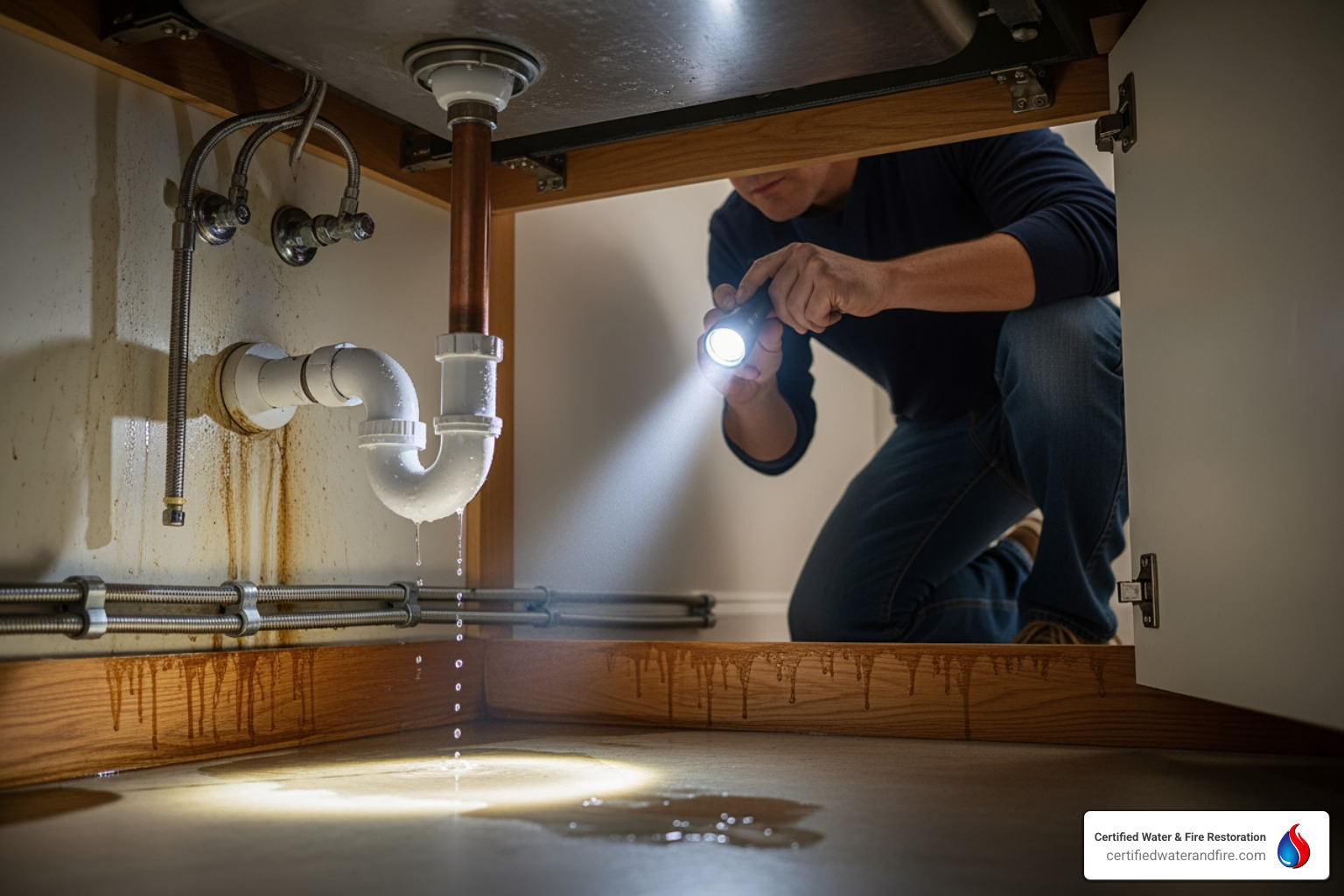
How to find a water leak in your house is something every homeowner should know — and the good news is, most leaks leave clues if you know where to look.
Here’s a quick overview of the most effective ways to check:
- Check your water meter — turn off all water, wait 15–30 minutes, and see if the dial moves
- Test your toilets — drop food coloring in the tank; if the bowl changes color without flushing, you have a leak
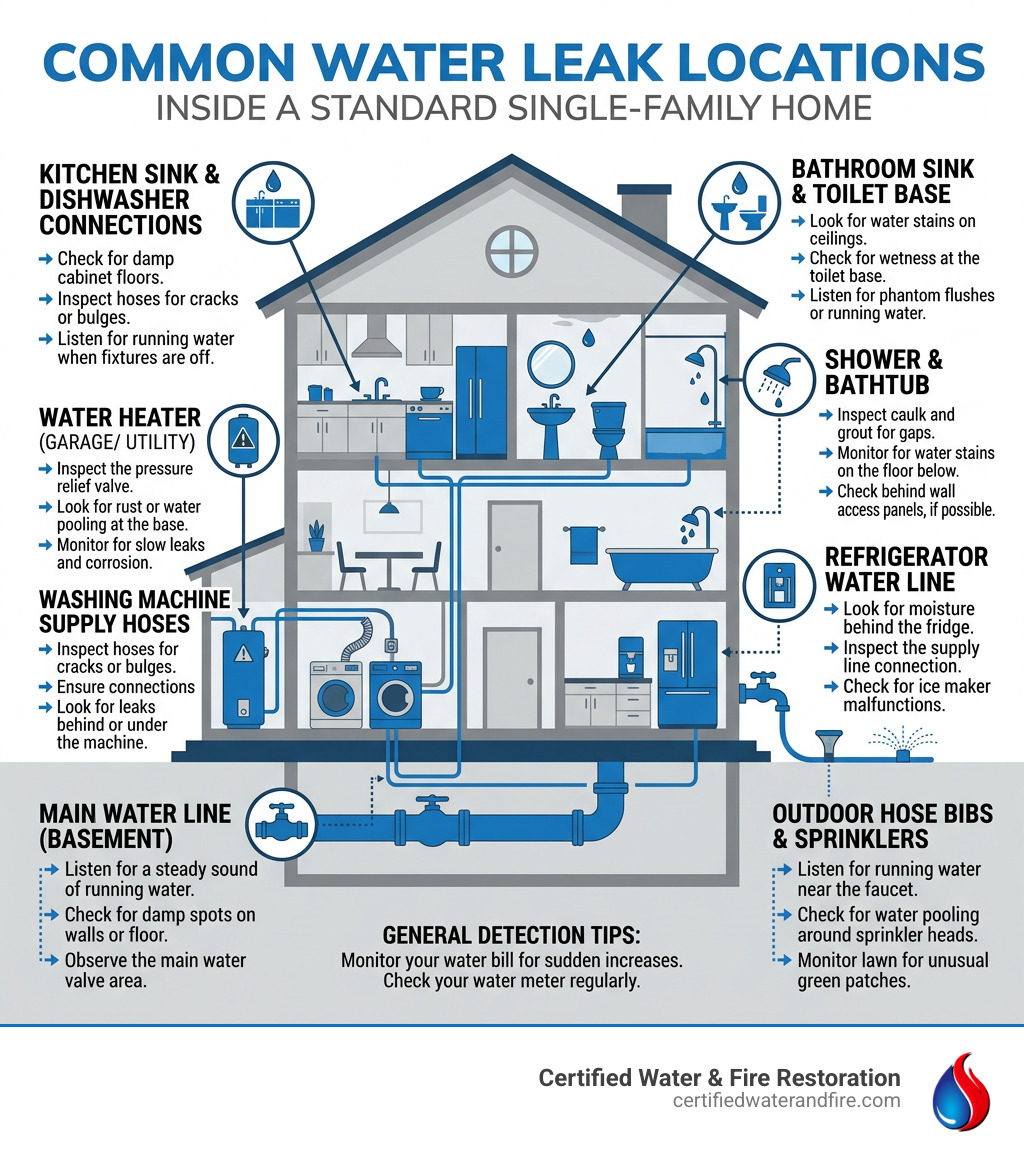
- Inspect taps and appliances — look under sinks, behind the dishwasher, and around the washing machine for pooling water or moisture
- Look outside — unusually green patches of grass or soggy spots in dry weather can signal an underground leak
- Use your senses — listen for running water when nothing is on; smell for musty odors; watch for peeling paint or water stains
Water leaks are sneaky. A single dripping tap can waste up to 20,000 liters of water per year — and that’s just what you can see. The leaks hiding behind walls, under floors, or beneath your yard? Those are the ones that quietly rack up your bill and damage your home before you ever notice them.
Left unchecked, a hidden leak doesn’t just waste water. It can warp your floors, feed mold growth, undermine your foundation, and turn a small repair into a very expensive one.
Key Takeaways
- Start with the water meter test — Turn off all fixtures, wait 15–30 minutes, and check for dial movement. If it moves, you have an active leak. This step confirms the problem before you open walls or call a contractor.
- Test toilets first — they’re the #1 hidden culprit — Use the food coloring dye test in the tank. If color appears in the bowl without flushing, replace the flapper. Silent toilet leaks can waste thousands of gallons per year.
- Inspect high-risk appliances and supply lines — Check under sinks, behind refrigerators, dishwashers, and washing machines. Look for swollen cabinetry, peeling paint, warped floors, or braided hose wear.
- Don’t ignore outdoor clues — Unusually green grass, soggy patches in dry weather, foundation dampness, or meter movement with the main valve off may signal a service line or underground leak.
- Call for professional detection if DIY fails — If the meter moves but no source is visible, tools like thermal imaging, acoustic sensors, and moisture mapping can locate hidden slab or wall leaks before they cause structural damage or mold growth.
I’m Ryan Majewski, General Manager of CWF Restoration, and with over a decade of hands-on experience in property restoration — including hundreds of water damage cases — I’ve seen what happens when leaks go undetected too long. In this guide, I’ll walk you through exactly how to find a water leak in your house, from the simplest DIY checks to knowing when it’s time to call in a pro.
How to Find a Water Leak in Your House Using Your Water Meter
If you suspect something is wrong but can’t see a single drop, your water meter is your best friend. It’s essentially a truth-teller for your plumbing. Whether you’re in a historic home in Dallas or a newer build in Plano, the meter doesn’t lie.
First, you need to find the meter. In Texas, these are often located near the curb in a concrete box with a heavy lid. Once you’ve found it, make sure every single water-consuming device in your home is off. That means no laundry, no dishwasher, and definitely no one flushing the toilet while you’re out there.
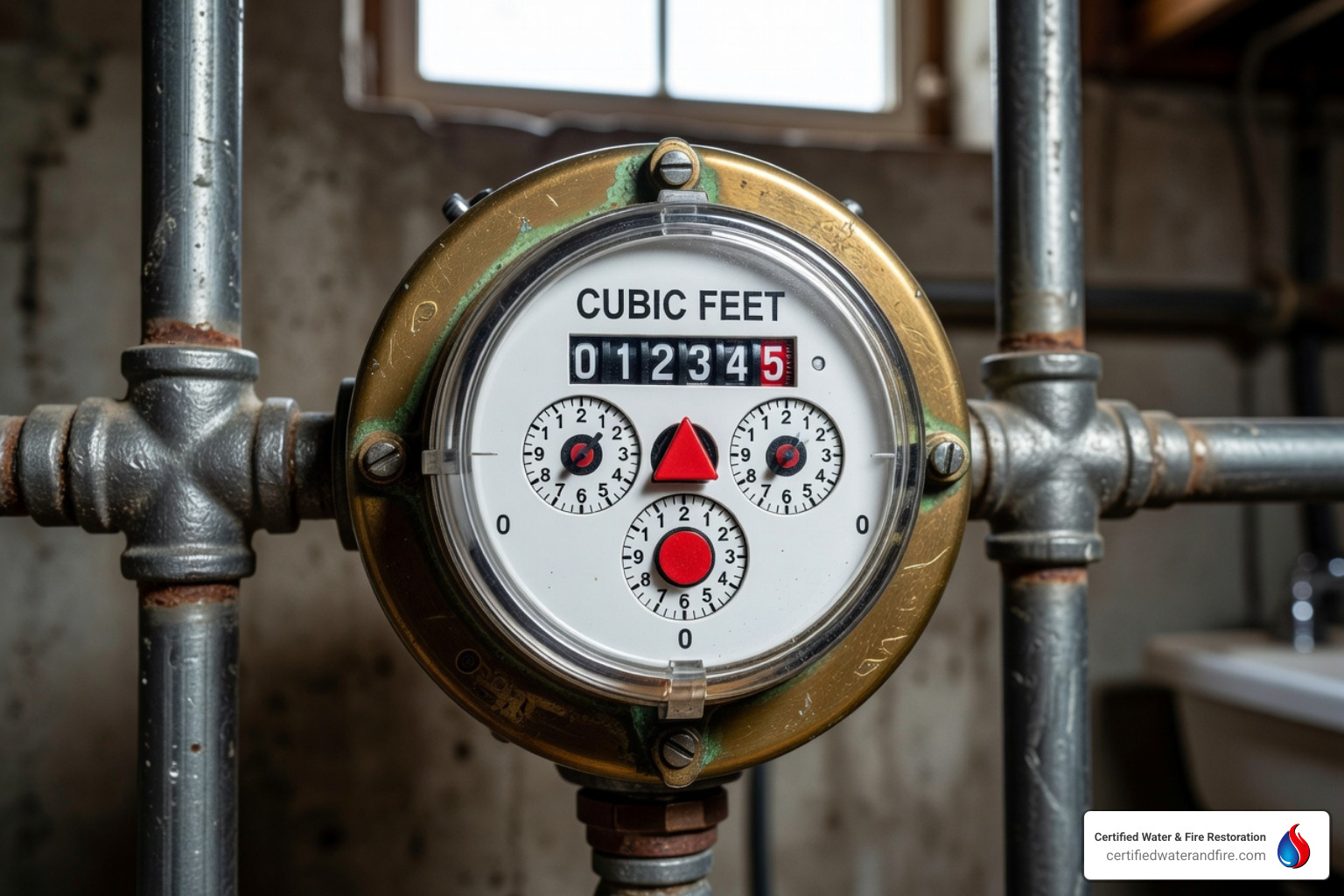
Look at the dial. Many meters have a small “leak indicator”—usually a tiny red or blue triangle or a snowflake-shaped wheel. If that little thing is spinning even slightly while all your water is off, you’ve got a leak.
If your meter doesn’t have a leak indicator, note the current reading. Leave the water off for at least 15 to 30 minutes (an hour is even better). If the numbers have moved when you come back, the mystery is solved: water is escaping somewhere. If you want to be extra thorough, perform an overnight reading. Check it before you go to bed and first thing in the morning. If the dial moved while everyone was sleeping, it’s time for a Water Damage Assessment.
To narrow it down further, try turning off the main shut-off valve to the house. If the meter stops moving, the leak is inside. If it keeps spinning, the leak is likely in the service line between the meter and your home. For a visual walkthrough, you can Play Find your water meter video to see exactly what to look for.
Hunting for the Usual Suspects: Toilets and Taps
When we talk about how to find a water leak in your house, we usually start with the “noisy” neighbors: the toilets and the faucets. A single faucet dripping once per second can waste over 2,700 gallons of water a year. That’s a lot of money literally going down the drain.
Toilets are the number one source of hidden indoor leaks. They can be completely silent and still waste hundreds of gallons a day. The “Toilet Dye Test” is the gold standard here. Take the lid off the tank and drop in some dark food coloring or a dye tablet. Don’t flush! Wait about 15 to 60 minutes. If that color shows up in the toilet bowl, your flapper valve is worn out and needs replacing. It’s a cheap fix that saves a fortune.
While you’re at it, listen. Do you hear a faint hissing sound coming from the tank? That’s often the sound of water constantly running. Also, check for “phantom flushes” where the toilet sounds like it’s refilling itself even though no one used it. If you start seeing stains on the ceiling below a bathroom, you might be dealing with more than just a bad flapper; you could have a wax ring failure. We’ve put together a guide on Unmasking the Mystery: Your Guide to Bathroom Ceiling Leaks to help you figure out if the problem is the toilet or the pipes.
Don’t forget the hot water heater. Check the pressure relief valve. If it’s dripping or hissing, it might be failing. Also, look for “efflorescence”—white, powdery mineral deposits—on the tank or nearby pipes, which suggests a slow, evaporating leak.
Appliances like dishwashers and washing machines are workhorses, but they are also common leak culprits. Because they are often tucked into tight spaces, a leak can go unnoticed for months until the floor starts to buckle or you notice a musty smell.
Keep an eye out for peeling paint or bubbling wallpaper on the walls adjacent to these appliances. If your kitchen cabinets look warped or the “wood” is starting to swell at the base, water is likely the cause.
How to Find a Water Leak in Your House Behind Appliances
To really get a look, you might need to pull the appliance out slightly. Check the supply lines—those flexible hoses that connect the machine to the wall. Over time, these can become brittle and crack.
Refrigerators with icemakers are notorious for this. A tiny pinhole leak in the plastic line can spray a fine mist behind the fridge for weeks. If you find moisture there, you’ll want to know How to Fix Icemaker Water Line Leaks the Right Way to prevent permanent floor damage.
For washing machines, we always recommend switching to braided stainless steel hoses. They are much less likely to burst than the standard rubber ones. If you see pooling water under the machine, check the drain hose as well; sometimes they just wiggle loose during a heavy spin cycle.
Outdoor and Structural Leak Detection
Sometimes the leak isn’t even inside your house. If you’ve checked the meter and it’s moving, but the house is bone dry, head outside. In the heat of a Houston or Dallas summer, we expect the grass to be a bit crispy. If you see a patch of grass that is suspiciously lush, green, and growing faster than the rest of the yard, you might have an underground line leak.
Check your hose bibs (outdoor faucets). A common trick is to take a screwdriver, place the metal tip against the faucet, and put your ear against the handle. It acts like a makeshift stethoscope. If you hear a distinct vibrating or rushing sound, water is moving through that pipe even if the faucet is off.
How to find a water leak in your house in the garden or driveway
Sprinkler systems are another huge waste of water. Check for broken heads that spray like geysers or “bubbling” spots in the lawn when the system is running. If you have a pool, the Environmental Protection Agency suggests the “bucket test” to see if water loss is due to evaporation or a structural leak.
Inside the garage or basement, look at the foundation. Are there cracks that seem damp? Do you see white, chalky streaks (efflorescence) on the concrete? This often means water is being pushed through the foundation from the outside, which could be a drainage issue or a leaking main line. Muddy patches in the yard during dry weather are a dead giveaway that the main service line has a break.
When the DIY Search Hits a Dead End
You’ve done the dye test, you’ve stared at the meter, and you’ve crawled behind the fridge, but you still can’t find the source. This is when frustration sets in—but don’t start tearing down drywall just yet.
Modern restoration technology has come a long way. Professional teams use acoustic sensors that can “hear” the specific frequency of a leak through concrete slabs and walls. We also use thermal imaging cameras. These cameras don’t see through walls, but they do detect temperature differences. Since leaking water is usually a different temperature than the surrounding structure, it shows up as a “hot” or “cold” spot on the screen.
Another vital tool is Moisture Mapping. This involves using specialized meters to track the path of moisture through a home, allowing us to find the exact point of origin without making a mess. If you suspect a slab leak—where a pipe has burst under your home’s foundation—professional detection is the only way to go. Trying to DIY a slab leak usually ends with a lot of broken concrete and a still-leaking pipe.
Frequently Asked Questions about Finding Leaks
How can I tell if I have a water leak in my house?
The most common signs are a sudden spike in your water bill, the sound of running water when all taps are off, musty odors, or visible changes like damp spots on walls, sagging ceilings, or buckling floors. If your water meter is moving when no water is being used, you definitely have a leak.
What should I do if I suspect a leak but can’t find it?
If you’ve performed the basic DIY checks (meter test, toilet dye test, appliance inspection) and still can’t find the source, call a professional. Hidden leaks in the “envelope” of the house or under the slab can cause massive structural damage and mold growth if left alone. It’s better to pay for a professional detection service than to pay for a full-scale mold remediation later.
Are there differences in checking for leaks in homes versus small businesses?
Yes. Businesses often have more complex plumbing systems, including cooling towers, commercial boilers, and extensive irrigation. For small businesses, the meter test is still effective, but it should be done after hours when all systems are shut down. Large facilities may require isolation valves to test different sections of the building individually.
Catch Leaks Early, Prevent Bigger Damage
Finding a leak early is the difference between a quick fix and a total home restoration. By knowing how to find a water leak in your house, you’re taking the first step in protecting your property and your wallet. Whether it’s a simple flapper replacement in the toilet or catching a pinhole leak behind the dishwasher, your diligence pays off.
However, we know that some leaks are just too well-hidden for a flashlight and a screwdriver. If you’ve found a leak—or the damage it left behind—you don’t have to handle it alone. At Certified Water & Fire Restoration, we specialize in helping homeowners in Houston, Dallas, Irving, and Plano get their lives back to normal.
We offer a 60-minute rapid response, 24/7. We work directly with your insurance company so there are no upfront costs for you, and we stand behind our work with a 2-year warranty. Don’t let a small drip turn into a big disaster. Contact our Houston water damage experts today, and let’s get your home dry and safe again.
