

The Ultimate Guide to Category 3 Water
Understanding What is Category 3 Water
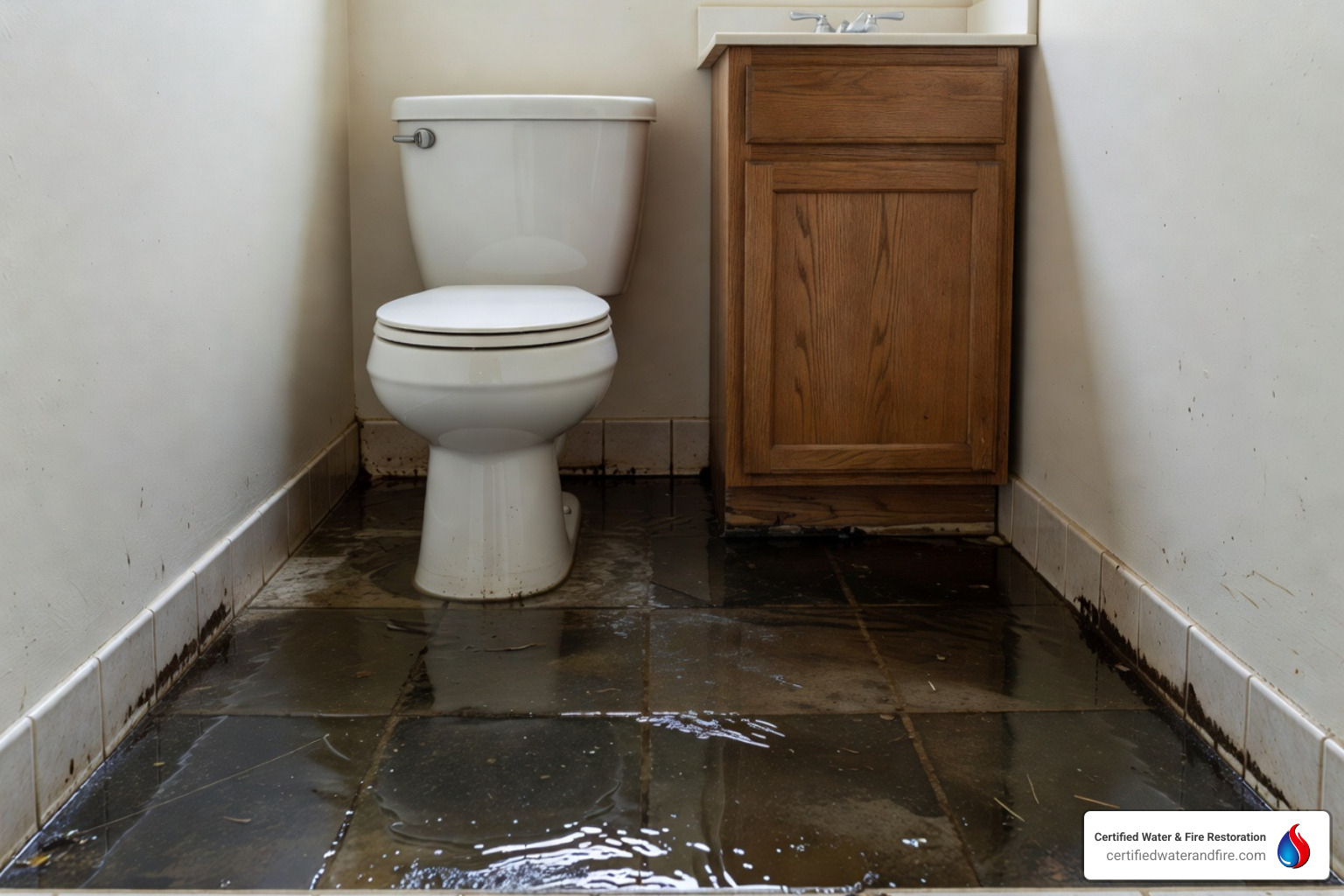
When we talk about what is category 3 water, we aren’t just talking about water that looks a bit “off.” In the restoration industry, specifically following the IICRC S500 Standard, Category 3 is the highest level of contamination. We often call it “black water,” but don’t let the name fool you. Category 3 water can actually look clear, but it is “grossly unsanitary.”
This water contains pathogenic agents—think bacteria, viruses, and fungi—along with toxigenic or other harmful substances. It’s essentially a biohazard soup. Whether it’s raw sewage or rising floodwaters from a Houston bayou, this water is teeming with microorganisms that can make you very sick.
Key Takeaways
- Category 3 water is the most dangerous type of water damage. It contains harmful bacteria, viruses, and toxins (like sewage or floodwater) and poses serious health risks through contact, inhalation, or ingestion.
- Common sources include sewage backups and flooding. Any water from toilets with waste, rising groundwater, or storm surges is automatically classified as Category 3 due to contamination.
- Water damage worsens quickly without action. Clean water can escalate to Category 3 within 24–72 hours as bacteria grow, especially in warm, humid environments.
- Most affected materials must be removed and replaced. Porous items like drywall, carpet, and insulation cannot be safely cleaned and are typically discarded to prevent mold and contamination.
- Professional cleanup is critical for safety. Proper containment, protective gear, and industrial disinfection are required—DIY cleanup increases the risk of illness and spread of contaminants.
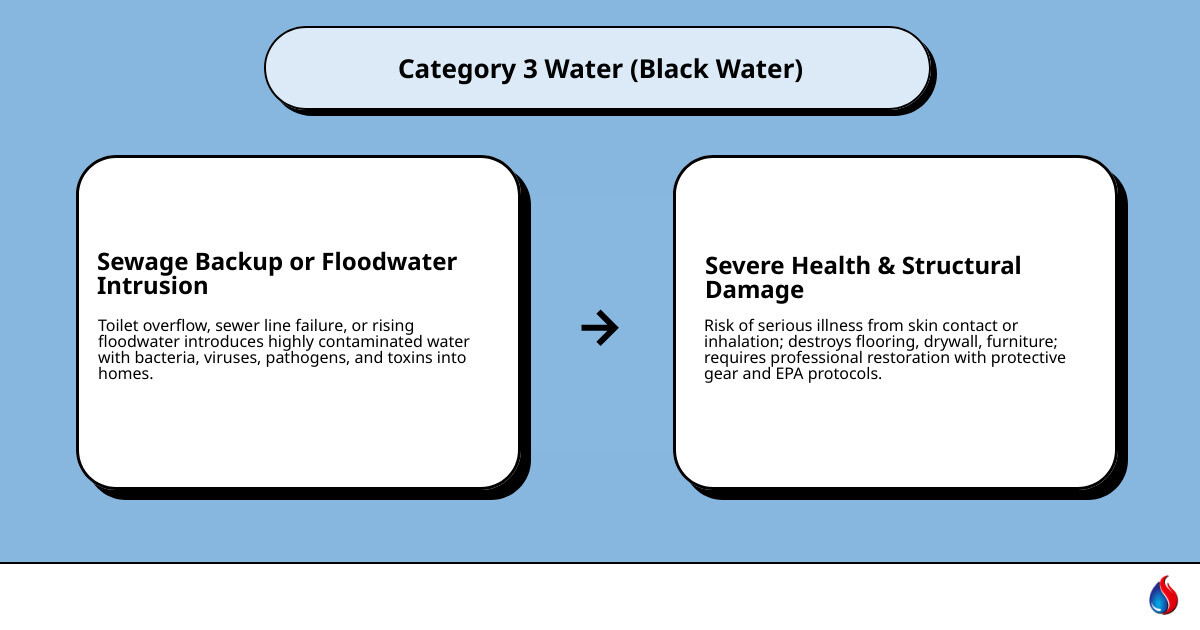
To help you visualize the difference, look at how these categories break down. It’s a scale of “clean to catastrophic.”
| Feature | Category 1 (Clean) | Category 2 (Gray) | Category 3 (Black) |
|---|---|---|---|
| Source | Broken supply line, tub overflow (clean) | Dishwasher/Laundry discharge, toilet (urine only) | Sewage, sea water, river water, ground surface water |
| Contaminants | Minimal | Significant chemical or biological | Pathogenic, toxic, or harmful agents |
| Health Risk | Negligible | Discomfort or sickness if ingested | Serious illness or death upon exposure |
| Porous Materials | Often salvageable if dried fast | May require removal | Almost always discarded |
As noted in this 2026 Guide on How To Handle It, Category 3 water is a threat to life and health. It’s the “red alert” of property damage.
Common Sources of What is Category 3 Water
So, where does this nasty stuff come from? In our experience serving the Dallas and Houston areas, the sources are usually quite predictable, though always unpleasant.
- Sewage Backups: This is the most common residential “black water” event. Whether it’s a city main blockage or tree roots invading your lateral line, when the toilet or floor drain starts gurgling up dark, foul-smelling liquid, you’re looking at Category 3.
- Natural Flooding: If water comes from the ground up—like a rising creek or heavy rain pooling on the street before entering your home—it is automatically Category 3. Why? Because that water has traveled over soil, asphalt, and through gutters, picking up animal waste, pesticides, and heavy metals along the way.
- Seawater and Storm Surges: For our coastal neighbors, storm surges are a massive risk. Seawater isn’t just salty; it’s full of marine microorganisms and often mixed with displaced sewage from overwhelmed municipal systems.
- Toilet Overflows: If the bowl contains feces, it’s Category 3. No exceptions.
- Stagnant Water: This is the “hidden” source. Even a clean pipe burst can become Category 3 if it sits long enough (more on that in a second).
If you aren’t sure what you’re dealing with, a professional Water Damage Assessment is the only way to be certain of the contamination level before you start touching things.
How Water Escalates Between Categories
Here is a fact that surprises many homeowners: water damage is a moving target. It doesn’t stay in the category it started in. We call this “escalation.”
If you have a Category 1 leak (like a burst PVC pipe in the wall) and you don’t dry it out immediately, it will degrade. Within 24 to 48 hours, that clean water mixes with dust, drywall chemicals, and carpet glue. Bacteria begin to feast on the moisture.
Temperature plays a huge role here, too. In the Texas heat, a damp room becomes an incubator. What was “clean” on Monday becomes “gray” (Category 2) by Tuesday and can be “black” (Category 3) by Wednesday due to massive microbial growth. This is why this Tag: Water Damage Restoration exists—to emphasize that speed is your best defense against a biohazard forming in your living room.
The Real Dangers: Health Risks and Structural Impact
When we say Category 3 water is dangerous, we aren’t being dramatic. We are talking about real, documented medical risks. This water is a vehicle for diseases like E. coli, Salmonella, Hepatitis A, Norovirus, and Rotavirus.
Exposure doesn’t just happen by drinking it. You can get sick through:
- Dermal Contact: Absorbing toxins through skin pores or open cuts.
- Inhalation: Breathing in the “aerosolized” pathogens. When you walk through the water or try to scrub it, you kick microbes into the air.
- Ingestion: Accidental hand-to-mouth contact.
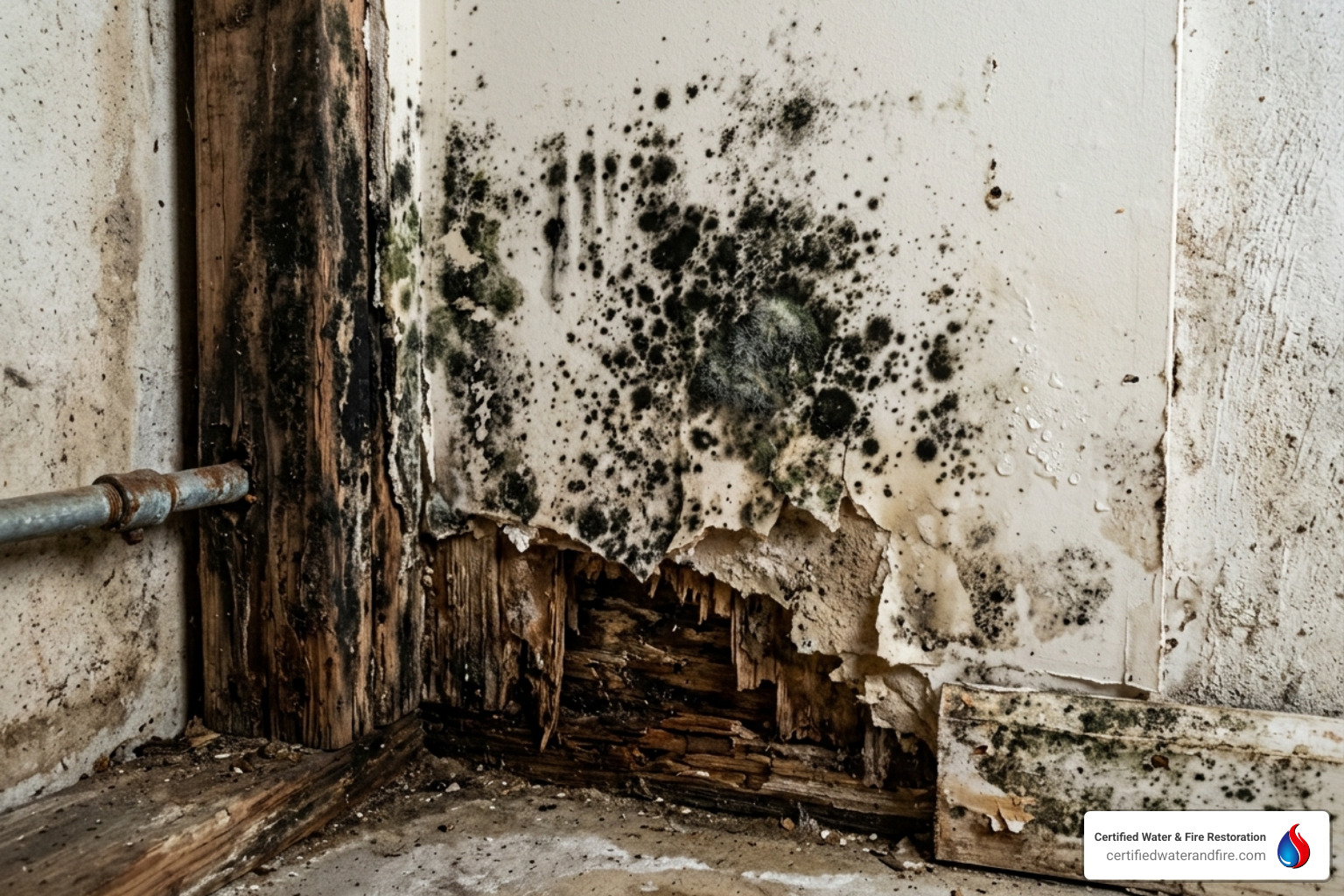
Beyond your health, Category 3 water is a wrecking ball for your home’s structure. Because it carries organic matter, it provides an instant food source for mold. Mold can begin colonizing your home in as little as 24 hours. Once it gets into the studs and the subfloor, you aren’t just looking at a cleaning bill; you’re looking at a major reconstruction project. For a deeper dive into these risks, check out our Ultimate Home Water Damage Guide.
Why You Shouldn’t DIY What is Category 3 Water Cleanup
I get it—you want to save money and “get the water out” now. But DIY-ing a sewage backup is like trying to perform surgery on yourself with a kitchen knife. It’s dangerous and usually ends poorly.
Standard household cleaners (even bleach) aren’t enough to handle the sheer volume of pathogens in black water. Without industrial-strength, EPA-registered disinfectants and proper dwell times, you’re just moving the bacteria around.
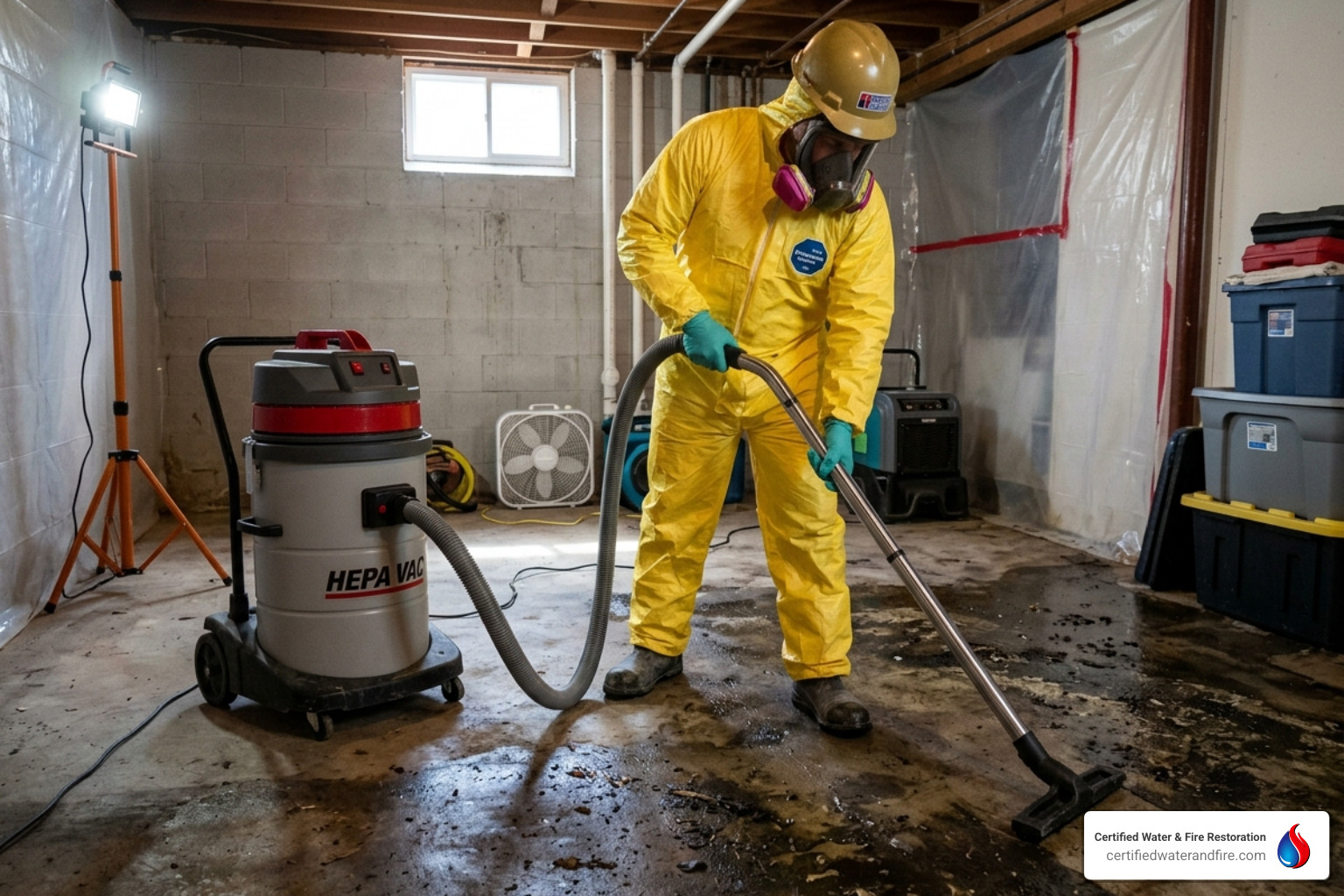
Furthermore, most people don’t own the necessary Personal Protective Equipment (PPE). To do this safely, you need a Tyvek suit, N95 or P100 respirator, goggles, and heavy-duty nitrile gloves. Without these, you are exposing yourself to a 90% chance of illness or infection if you have direct contact with the contaminants.
If you’re in the Bayou City, our Houston Water Damage Restoration team has the equipment to contain the mess so it doesn’t spread to the “clean” parts of your house.
The Professional Restoration Process
When we arrive at a Category 3 loss, we follow a very strict protocol. We don’t just start pumping water; we follow the IICRC S500 standards to ensure the environment is actually safe for human habitation again.
- Containment: We set up physical barriers (plastic sheeting) and use “negative air pressure.” This ensures that air only flows into the dirty room and out through a HEPA filter, preventing nasty spores and smells from drifting into your bedroom or kitchen.
- PPE Deployment: Our technicians suit up. This isn’t just for their safety; it prevents them from tracking contaminants into other areas.
- Extraction and Controlled Demolition: We remove the standing water using specialized vacuums. Then comes the hard part: removing the materials that can’t be saved.
- Disinfection: We apply hospital-grade disinfectants to all “affected” surfaces.
- Drying: We use high-velocity air movers and industrial dehumidifiers to pull moisture out of the air and the remaining structural “skeleton” of the building.
For more technical details on these “Rules of Engagement,” you can read about Category 3 Water Damage Mitigation: Protocols and Safety Standards.
Salvageable vs. Unsalvageable Materials
This is often the hardest part for homeowners to hear: most of your stuff has to go. Category 3 water is highly invasive.
- Porous Materials (The “Goners”): Anything that can soak up water like a sponge must be thrown away. This includes drywall, insulation, carpet, padding, and even some engineered woods. You cannot “clean” sewage out of fiberglass insulation. It’s a health hazard.
- Semi-Porous Materials: Items like solid wood studs or concrete can often be saved, but they require aggressive cleaning and long drying times.
- Non-Porous Materials: Glass, metal, and some hard plastics can usually be fully decontaminated and salvaged.
Our Dallas Water Damage Restoration experts are trained to make these calls quickly so you don’t waste money trying to save things that will eventually just grow mold.
Frequently Asked Questions About Contaminated Water
Does standard homeowners insurance cover Category 3 damage?
This is a tricky one. A standard policy often covers “sudden and accidental” water damage (like a pipe burst), but it might not cover sewage backups or natural flooding unless you have specific endorsements.
- Sewer Backup Endorsement: This is an “add-on” to your policy. If you don’t have it, your insurance might deny a claim for a toilet backup.
- Flood Insurance: This is usually a separate policy through the NFIP or a private insurer. Standard home insurance almost never covers rising groundwater.
We recommend checking your policy now—before the rain starts. We work directly with insurance companies in Texas to help our clients navigate these confusing categories and insurance hurdles.
How quickly does mold grow after exposure?
In the humid environments of Dallas and Houston, mold is incredibly fast. You have a window of about 24 to 48 hours before mold spores begin to colonize damp surfaces. With Category 3 water, the mold has plenty of “food” (organic waste) to help it grow even faster. If you wait three days to call us, you aren’t just dealing with water anymore—you’re dealing with a mold remediation project.
What are the first steps to take after a sewage backup?
If you walk into your bathroom and see “black water,” do the following immediately:
- Evacuate: Keep kids, pets, and seniors away.
- Shut Off Power: If it’s safe to reach the breaker box (and you aren’t standing in water), turn off electricity to the affected area.
- Don’t Flush: Don’t run any more water down the drains; it will only make the backup worse.
- Document: From a safe distance, take photos or video for your insurance claim.
- Call the Pros: Get a certified team on the way.
When Category 3 Water Hits, Fast Action Matters
Understanding what is category 3 water is the first step in protecting your family and your property. It’s more than just a mess; it’s a biological threat that requires specialized tools, training, and a lot of care to resolve.
At Certified Water & Fire Restoration, we live and breathe this stuff (well, hopefully not literally). We offer a rapid 60-minute response in Houston, Dallas, Irving, and Plano because we know that every hour counts when “black water” is sitting in your home. We work directly with your insurance, so there are no upfront costs for you, and we back our work with a 2-year warranty.
Don’t let a Category 3 disaster ruin your home. Whether it’s a midnight sewage backup or a post-storm flood, we are here 24/7 to get things back to normal.
More info about water damage services
