

All About Derecho Storms
Understanding the Derecho Storm Phenomenon
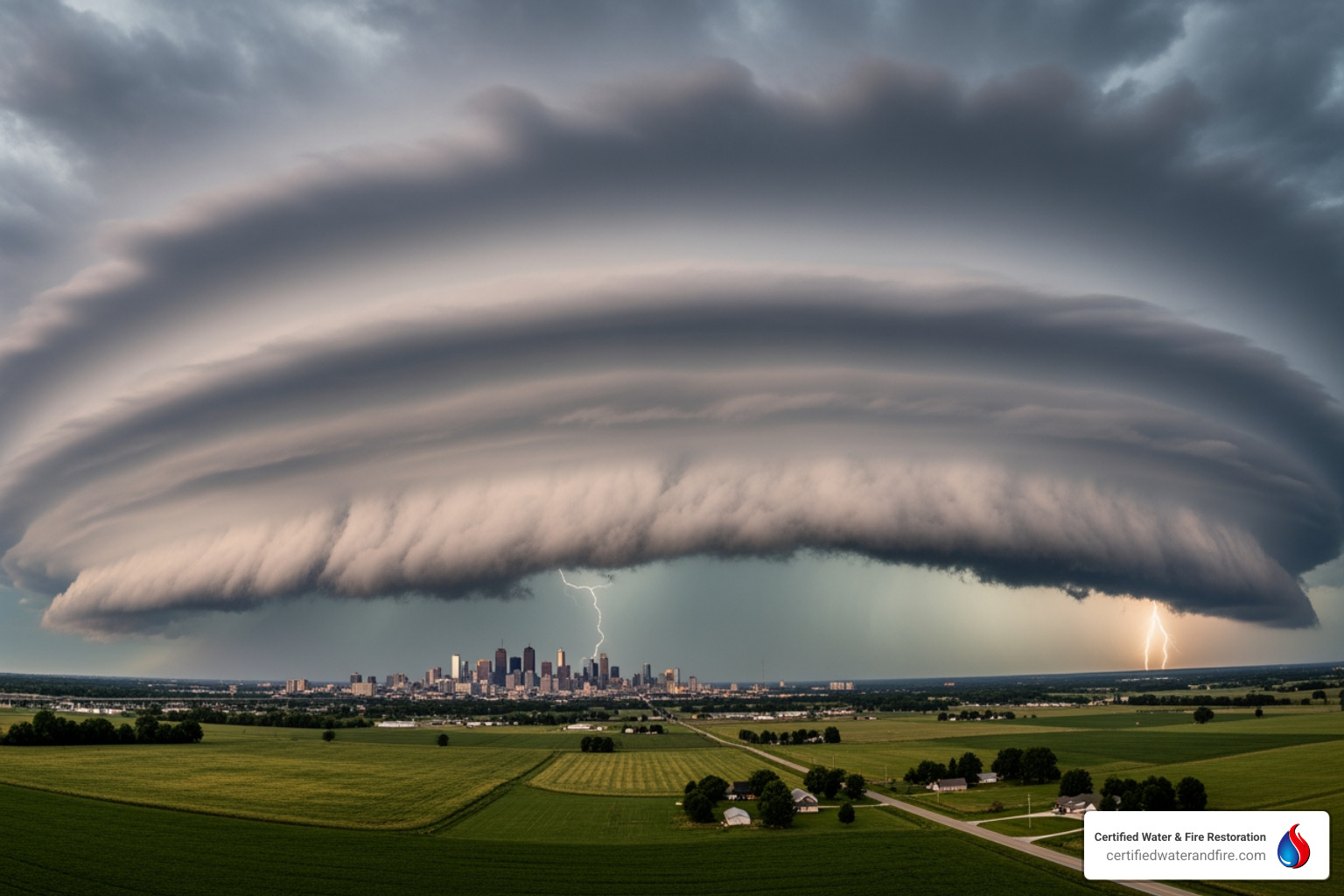
A derecho storm is a widespread, long-lived windstorm that produces destructive straight-line winds for hundreds of miles. Unlike twisting tornadoes, derechos move in a relatively straight path and are often called an “inland hurricane” for their hurricane-force winds and massive damage potential.
Quick Facts About Derecho Storms:
- Wind Speed: At least 58 mph, with gusts recorded as high as 130 mph
- Damage Path: Must extend more than 400 miles (previously 240 miles)
- Duration: Long-lived thunderstorm complexes lasting several hours
- Damage Type: Straight-line wind damage, not rotational like tornadoes
- Frequency: Most common May-August in the U.S. Midwest and Ohio Valley
- Origin: Spanish word meaning “straight” or “direct”
Derechos are particularly destructive because they affect large areas simultaneously, bringing down power lines, flattening crops, and destroying property. The August 2020 Midwest derecho, for example, caused $11 billion in damage and left 1.2 million people without power.
These storms form from organized thunderstorm complexes called mesoscale convective systems (MCS). They are especially dangerous because they often move at 50 mph or faster, giving little time to prepare. The winds travel in one direction, creating a straight damage path unlike a tornado’s chaotic trail.
Key Takeaways
- Derechos are widespread windstorms: They produce damaging straight-line winds over hundreds of miles, not isolated impacts.
- Wind can rival hurricanes: Gusts often exceed 58 mph and can reach 100+ mph, causing severe structural damage.
- Damage follows a clear path: Unlike tornadoes, debris usually falls in one direction, showing straight-line wind force.
- Storms move fast with little warning: Derechos can travel quickly, so preparation and alerts are critical.
- Act quickly after impact: Wind damage can lead to roof openings and water intrusion, increasing repair costs if delayed.
Why Understanding Derechos Matters for Texas Property Owners
While most common in the Midwest, derechos can occur anywhere in the U.S., including Texas. Their straight-line winds can rip off roofs, shatter windows, and down trees, leading to catastrophic damage. For property owners, understanding what a derecho storm is and how to prepare can mean the difference between manageable damage and total loss.
As Ryan Majewski, General Manager of Certified Water & Fire Restoration, I’ve led recovery efforts for numerous properties impacted by severe storms, including derecho storm damage across the Midwest. My experience in property restoration has shown me how critical rapid response and comprehensive restoration are when these powerful windstorms strike.
What is a Derecho? Defining the “Straight-Line” Windstorm
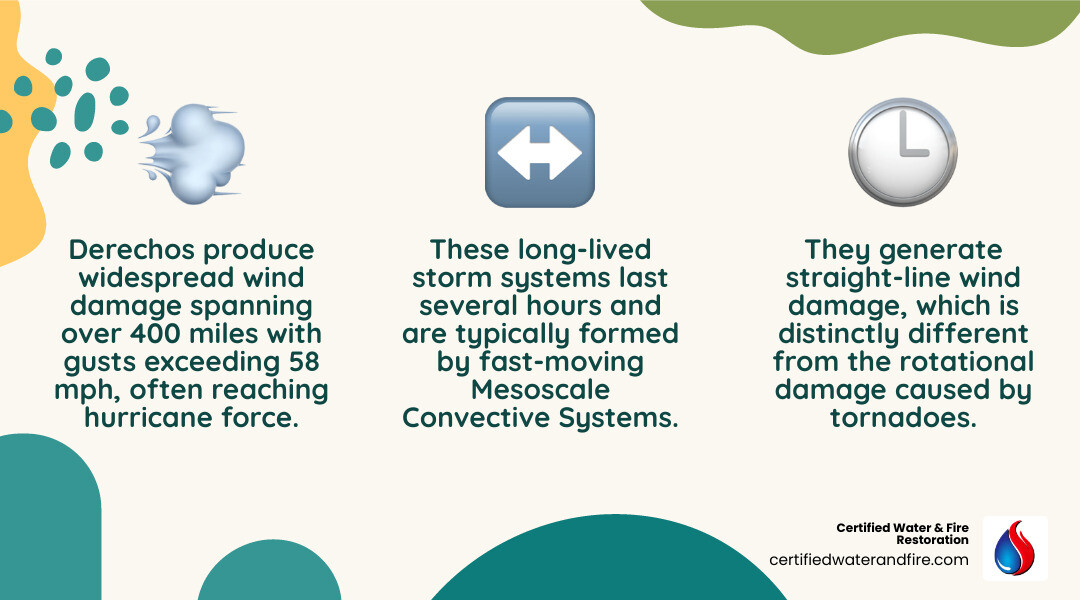
A derecho storm is a widespread, long-lived wind storm driven by a Mesoscale Convective System (MCS)—a large, organized complex of thunderstorms. The name “derecho” comes from the Spanish word for “straight ahead,” describing the straight-line wind damage these storms produce, which contrasts with a tornado’s rotating winds. While they lack a tornado’s dramatic funnel cloud, a derecho’s sheer size and longevity allow it to cause severe, widespread damage over a much larger area.
Let’s take a quick look at how a derecho storm compares to its swirling cousin, the tornado:
| Characteristic | Derecho Storm | Tornado |
|---|---|---|
| Wind Type | Straight-line, outward-bursting winds | Rotational, inward-spiraling winds |
| Path | Long, relatively straight swath (hundreds of miles) | Narrow, chaotic, often erratic path (miles to tens of miles) |
| Shape | Associated with linear or bowed thunderstorm complexes (bow echoes) | Funnel-shaped cloud extending from storm to ground |
| Damage Pattern | Uniform direction of damage, like a giant bulldozer | Chaotic, twisted debris, objects often thrown in different directions |
| Wind Speed | 58 mph to 130 mph+ | 65 mph to 300 mph+ |
| Duration | Several hours, long-lived | Typically minutes, sometimes tens of minutes |
| Warning Time | Often short (hours) | Very short (minutes) |
Defining Characteristics and Official Criteria
To be officially classified as a derecho storm, a weather event must meet specific criteria from the National Weather Service (NWS). The wind damage swath must extend for more than 250 miles (400 km) and include widespread wind gusts of at least 58 mph. The storm must also produce at least three reports of wind gusts of 75 mph or greater. The parent thunderstorm complex, or MCS, must be long-lived and fast-moving, ensuring the storm is a significant and widespread wind event. For more details, you can visit the More information on derechos page from the Storm Prediction Center.
Derecho vs. Tornado: Understanding the Key Differences
While both are destructive, the key difference is wind movement. Derechos produce straight-line winds, pushing everything in one direction like a bulldozer. Tornadoes have violently rotating winds that scatter debris chaotically. A tornado is defined as “a violently rotating column of air extending from the base of a thunderstorm down to the ground.” A derecho’s damage path is hundreds of miles long and tens of miles wide, often appearing as a “bow echo” on radar. A tornado’s path is much narrower and shorter. Both can cause heavy rain and flooding, posing significant threats to Texas homes and businesses.
The Science of a Derecho Storm: Formation, Types, and Climatology
The formation of a derecho storm is a fascinating interplay of atmospheric ingredients: abundant atmospheric instability, strong winds aloft, ample moisture, and a lifting mechanism to initiate convection. These elements combine to create a powerful, long-lasting thunderstorm complex.
How a Derecho Forms
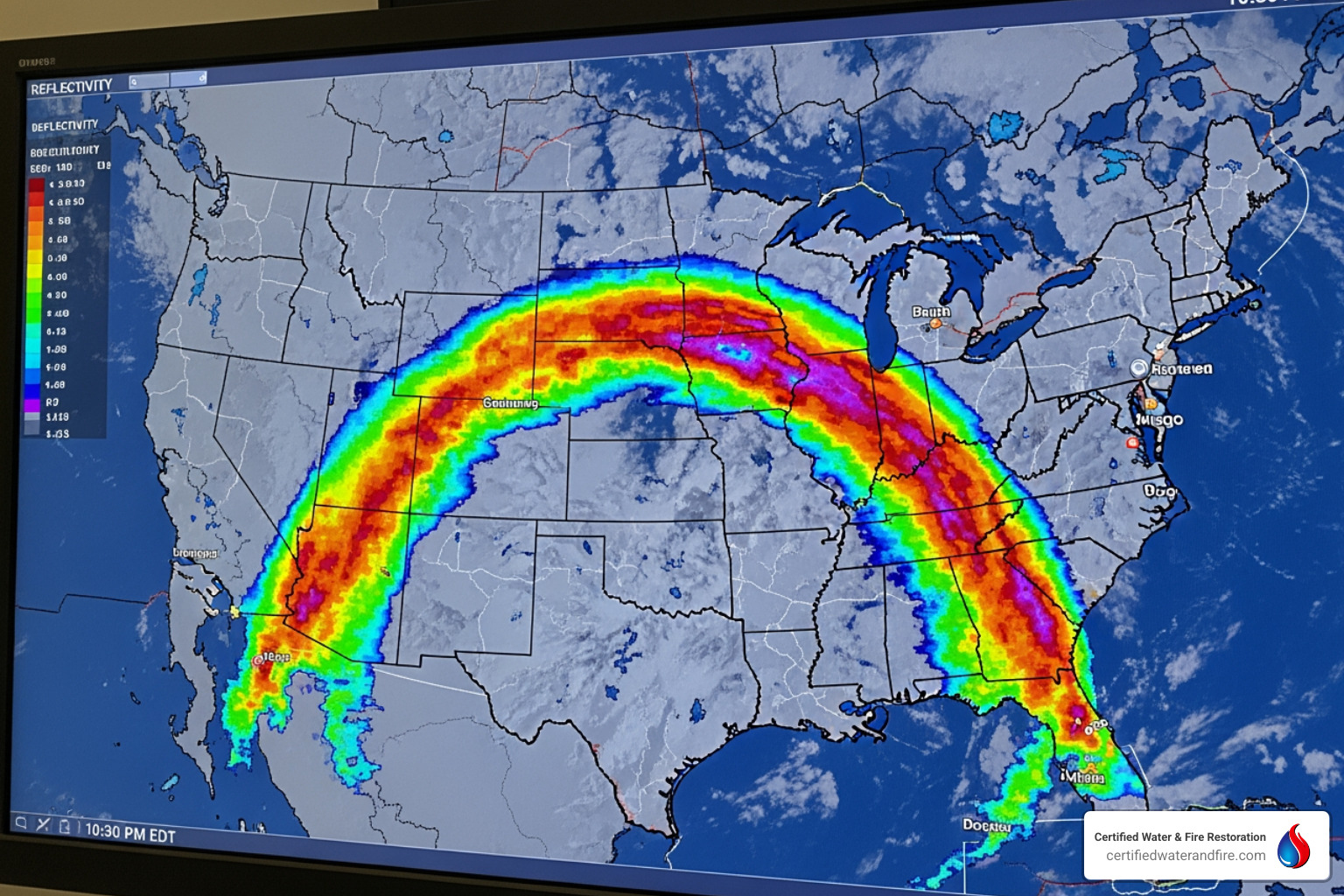
A derecho storm is linked to a radar signature called a bow echo. The process begins with thunderstorms forming in an unstable atmosphere. Rain-cooled air sinks, creating powerful downbursts that spread out as a gust front. This gust front lifts warm, moist air, fueling new storms. In strong, unidirectional winds, this process accelerates, causing the storm line to “bow out.” A “rear-inflow jet” of fast-moving air descends, enhancing the damaging straight-line winds. This self-sustaining cycle allows the storm to travel for hundreds of miles as a derecho.
Types of Derechos: Serial, Progressive, and Hybrid
Meteorologists classify derechos into several types. Serial derechos consist of multiple bow echoes within a large squall line, often occurring in spring and fall. Progressive derechos are more common in summer, forming a single bow-shaped line of storms that travels for hundreds of miles through hot, moist air. Hybrid derechos share characteristics of both, while low-dewpoint derechos can form in cooler seasons with less moisture. Understanding these types helps meteorologists forecast these complex storms.
Geographic and Seasonal Occurrence of a Derecho Storm
While a derecho storm can occur anywhere with the right conditions, they are most common in the U.S. along two axes: one in the “Corn Belt” and another from the Southern Plains into the mid-Mississippi Valley. This second axis includes Texas, where warm Gulf moisture and strong upper-level winds create favorable conditions for derecho development in areas like Dallas-Fort Worth and Houston. Seasonally, most derechos (70%) are a warm-season phenomenon, occurring between May and August. The remaining 30% occur in cooler months, often from East Texas into the southeastern states. For a visual guide, the SPC provides a Derecho climatology map.
The Destructive Power of Derechos: Damage, Risks, and Notable Events
The power of a derecho storm is often compared to that of an inland hurricane, and for good reason. These storms bring hurricane-force winds, heavy rains, and sometimes flash floods, leading to widespread destruction. The sheer scale of impact, combined with the rapid onset, makes them incredibly dangerous for people and property.
What Kind of Damage Can a Derecho Cause?
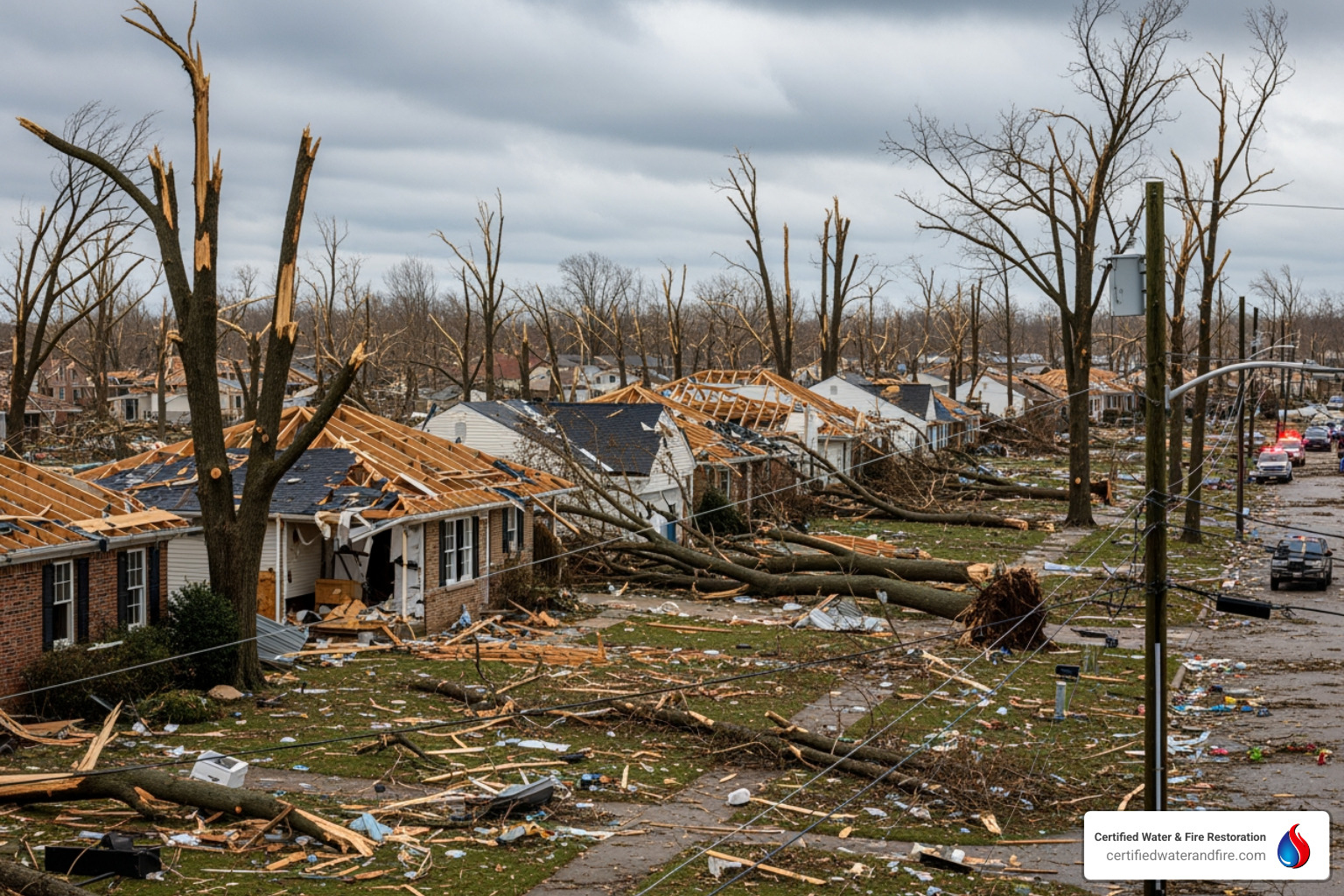
When a derecho storm sweeps through, it leaves a path of devastation that can resemble the aftermath of a tornado, but often over a much broader area. Here in Texas, we’re no strangers to severe weather, and understanding the specific types of damage a derecho can inflict is crucial for homeowners and businesses alike.
- Widespread Tree Damage: Straight-line winds snap and uproot countless trees, destroying landscapes and posing significant risks to people and property.
- Roof and Siding Damage: Intense winds can rip off shingles, roofing material, and siding, exposing the property to rain and water damage. We offer guides on handling wind damage to siding and storm damage siding repair.
- Power Grid Failure: Falling trees and debris often down power lines, leading to massive, long-lasting outages, especially in dense urban areas like Houston and Dallas.
- Agricultural Losses: A derecho can flatten entire fields of crops in minutes, causing billions of dollars in economic losses.
- Transportation Disruption: Downed trees and debris block roads, hindering travel and emergency response. High-profile vehicles are at risk of being overturned.
- Risk to Life: The primary risks are from falling trees, flying debris, and structural collapse. People outdoors or in mobile homes are especially vulnerable.
It’s clear that the destructive potential of a derecho storm is immense, requiring robust preparation and a swift response for recovery. We also have resources on Hail Damaged Siding and how to Protect Your Property From Storm, Wind and Flood Damage which might be useful during storm season.
A History of Destructive Derecho Storms
While derechos might not be as widely known as hurricanes or tornadoes, their historical impacts highlight their severe destructive potential. Here in Texas, we’ve experienced the force of these “straight-line” windstorms.
One recent and highly impactful event was the 2024 Houston derecho. This storm brought significant straight-line wind damage to the Houston metropolitan area, causing widespread power outages, toppling trees, and damaging numerous homes and businesses. Such events underscore that our Texas communities are not immune to the devastating effects of a derecho storm.
Globally, other notable derecho storm events serve as stark reminders of their power:
- August 2020 Midwest Derecho: This monumental storm swept across the Midwest, causing an estimated $11 billion in damage. With winds up to 126 mph, it left 1.2 million people without power and is considered one of the most destructive “land-based hurricanes” in U.S. history.
- June 2012 North American Derecho: This event affected millions from the Midwest to the Atlantic coast, cutting power to over 3.7 million customers with widespread hurricane-force winds.
- May 2022 Canada Derecho: This storm hit Canada’s most populated region with winds up to 118 mph, causing 10 fatalities and $875 million in insured property damage.
These examples, including our own 2024 Houston derecho, demonstrate that the impact of a derecho storm is far-reaching, affecting lives, infrastructure, and economies on a massive scale.
Forecasting, Warnings, and Safety
Forecasting a derecho storm presents unique challenges for meteorologists. While they can often predict the general conditions favorable for severe weather outbreaks a few days in advance, pinpointing the exact location and timing of a derecho can be difficult. This is due to their rapid movement and the complex atmospheric dynamics involved in their formation. Often, meteorologists can identify a derecho-type event on radar only a few hours before it strikes, providing limited lead time for communities.
The Role of the NWS and Storm Prediction Center
The National Weather Service (NWS) and the Storm Prediction Center (SPC) are critical in monitoring and warning about derechos. Their dedicated teams of meteorologists work tirelessly to:
- Issue Watches and Warnings: The SPC issues convective outlooks that highlight areas at risk of severe thunderstorms, including conditions conducive to derechos. The NWS local forecast offices then issue specific severe thunderstorm watches and warnings as storms develop and intensify.
- Monitor Severe Weather: They continuously monitor atmospheric conditions, radar data, and satellite imagery for signs of derecho development.
- Public Education: Both organizations play a vital role in educating the public about severe weather phenomena like derechos, helping communities understand the risks and how to stay safe.
For the latest insights into severe weather forecasting and current conditions, we always recommend checking the Severe Weather resources provided by the SPC.
How to Prepare for an Approaching Derecho Storm
Given the limited warning time for a derecho storm, preparedness is paramount, especially for us here in Texas where severe weather is a regular occurrence. Taking proactive steps can significantly reduce damage and keep your family safe. Our Severe Weather Preparation guide offers comprehensive advice.
Here’s what we recommend to prepare:
- Create a Safety Plan: Develop a family communication plan. Ensure everyone knows where to go, how to contact each other, and what to do in case of a storm. This is a fundamental step for any severe weather event.
- Secure Outdoor Objects: High winds can turn anything loose into a dangerous projectile. Secure or bring inside outdoor furniture, trash cans, grills, and any other items that could be blown away. Trim dead or weak tree branches that could fall on your home or power lines. Our guide on Hurricane Season Prep for Houston Homeowners also offers relevant tips for high winds.
- Have an Emergency Kit: Prepare a kit with essential supplies, including water, non-perishable food, a battery-powered or hand-crank radio, flashlights, extra batteries, a first-aid kit, and any necessary medications. Don’t forget chargers for your cell phones.
- Monitor Weather Alerts: Stay informed by following local news, weather apps, and official NWS alerts. Consider listening to a NOAA Weather Radio for continuous updates.
- Identify a Safe Shelter Room: Locate an interior room on the lowest floor of your home, away from windows, that can serve as a safe shelter during the storm. Basements or storm cellars are ideal if you have them.
For additional resources on preparing for high wind events, consult the NWS Tips for preparing for high winds.
Staying Safe During and After the Storm
When a derecho storm is bearing down, immediate action is crucial.
During the Storm:
- Seek Shelter in an Interior Room: If you are inside, move immediately to your pre-designated safe room, a basement, or an interior hallway on the lowest floor.
- Stay Away from Windows: Windows can shatter, sending dangerous shards flying. Put as many walls as possible between you and the outside.
- Get Under Sturdy Furniture: If possible, get under a sturdy table or desk for added protection from falling debris.
- Avoid Travel: If you are outside, find the nearest sturdy building and take shelter. Stay away from windows, trees, and water. If in a vehicle, pull over safely, away from trees or power lines, and stay low.
- Get Out of Boats: Boaters risk injury or drowning from storm winds and high waves that can overturn boats. Get out of the water and seek sturdy shelter immediately.
After the Storm:
- Post-Storm Hazards: The danger doesn’t end when the winds subside. Be extremely cautious of downed power lines, which may still be live. Report them immediately to your utility company. Weakened trees and branches can fall unexpectedly.
- Listen to Authorities: Continue to listen to local news or your NOAA Weather Radio for updates and instructions from emergency officials.
- Assess Damage Safely: Do not enter damaged buildings until they have been declared safe. Be wary of broken glass, exposed nails, and other hazards during cleanup. If you experience water damage, our guide on What to Do When Your Pipes Burst: A Step-by-Step Guide for Texas Homeowners provides helpful steps. Also, if you’re using generators due to power outages, be sure to review our safety guide on Are Generator Fumes Poisonous? Essential Safety Guide for Texas Homeowners.
Frequently Asked Questions about Derecho Storms
We often get questions about these intense weather events. Here are some of the most common ones:
Can a derecho be as strong as a hurricane?
Yes, the straight-line winds in a strong derecho storm can be equivalent to those in a Category 1 or 2 hurricane. Derechos have been recorded with gusts as high as 130 mph. While hurricanes derive their energy from warm ocean waters and have a rotating structure, derechos are born from severe thunderstorms and produce widespread straight-line winds. The damage they cause can be just as severe as a hurricane’s, especially to inland areas not typically prepared for such wind speeds.
How is a derecho different from a regular thunderstorm?
A derecho storm is far more than just a regular thunderstorm. While both involve thunder and lightning, a derecho is a specific, long-lived, and widespread type of severe thunderstorm complex (Mesoscale Convective System or MCS) that produces a continuous path of wind damage for hundreds of miles. A regular thunderstorm is typically more localized, shorter-lived, and its winds, while sometimes strong, usually don’t meet the widespread and sustained criteria of a derecho. The organized nature and longevity of the MCS is what sets a derecho apart.
Are derechos becoming more common?
The question of whether derechos are becoming more common is complex. While public awareness of derechos has certainly increased in recent years due to high-profile events, research is ongoing to determine if there is a definitive trend in their frequency or intensity. Some studies suggest a possible link between changing climate patterns and the conditions that favor derecho development, particularly in terms of atmospheric instability and moisture. However, more long-term data and research are needed to draw conclusive statements about trends in derecho occurrence. What is certain is that their destructive potential remains a significant concern for communities like ours in Texas.
Recovering After the Storm
After a derecho storm has passed, the immediate aftermath can be overwhelming. Widespread power outages, downed trees, and significant property damage are common. For property owners in Houston, Dallas, Irving, or Plano, Texas, the path to recovery can seem daunting, but taking the right steps can make a world of difference.
- Post-Storm Assessment: Once it’s safe to do so, carefully assess the damage to your property. Take photos or videos of all affected areas. This documentation will be crucial for your insurance claims.
- Safety During Cleanup: Be extremely cautious during cleanup. Avoid downed power lines, and be aware of weakened structures, loose debris, and sharp objects. If your home has significant structural damage or water intrusion, it’s best to wait for professionals.
- Professional Restoration: For extensive damage, especially involving water, wind, or structural issues, professional restoration is essential. Our team at Certified Water & Fire Restoration specializes in handling the aftermath of severe storms. We understand the unique challenges a derecho storm presents, from extensive wind damage to potential flooding from heavy rains.
At Certified Water & Fire Restoration, we’re here to help you steer the recovery process. Our team offers 24/7 emergency property restoration services for water, fire, mold, and smoke damage, including comprehensive Storm Damage Restoration. We pride ourselves on a rapid 60-minute response time, understanding that quick action is vital to mitigate further damage. We also work directly with insurance companies, meaning no upfront costs for you, and we stand behind our work with a 2-year warranty.
Whether it’s Commercial Storm Damage Restoration or residential, our goal is to return your property to its pre-loss condition, “Like it never even happened.” For any storm-related damage, don’t hesitate to reach out. Our Houston Storm Damage Restoration team and other Texas locations are ready to assist. Learn more about our specialized storm damage repair services and how we can help you recover.
Learn about our storm damage restoration services
