

What Is the Restoration Estimate Process in Texas?
What Is the Restoration Estimate Process (And Why It Matters)
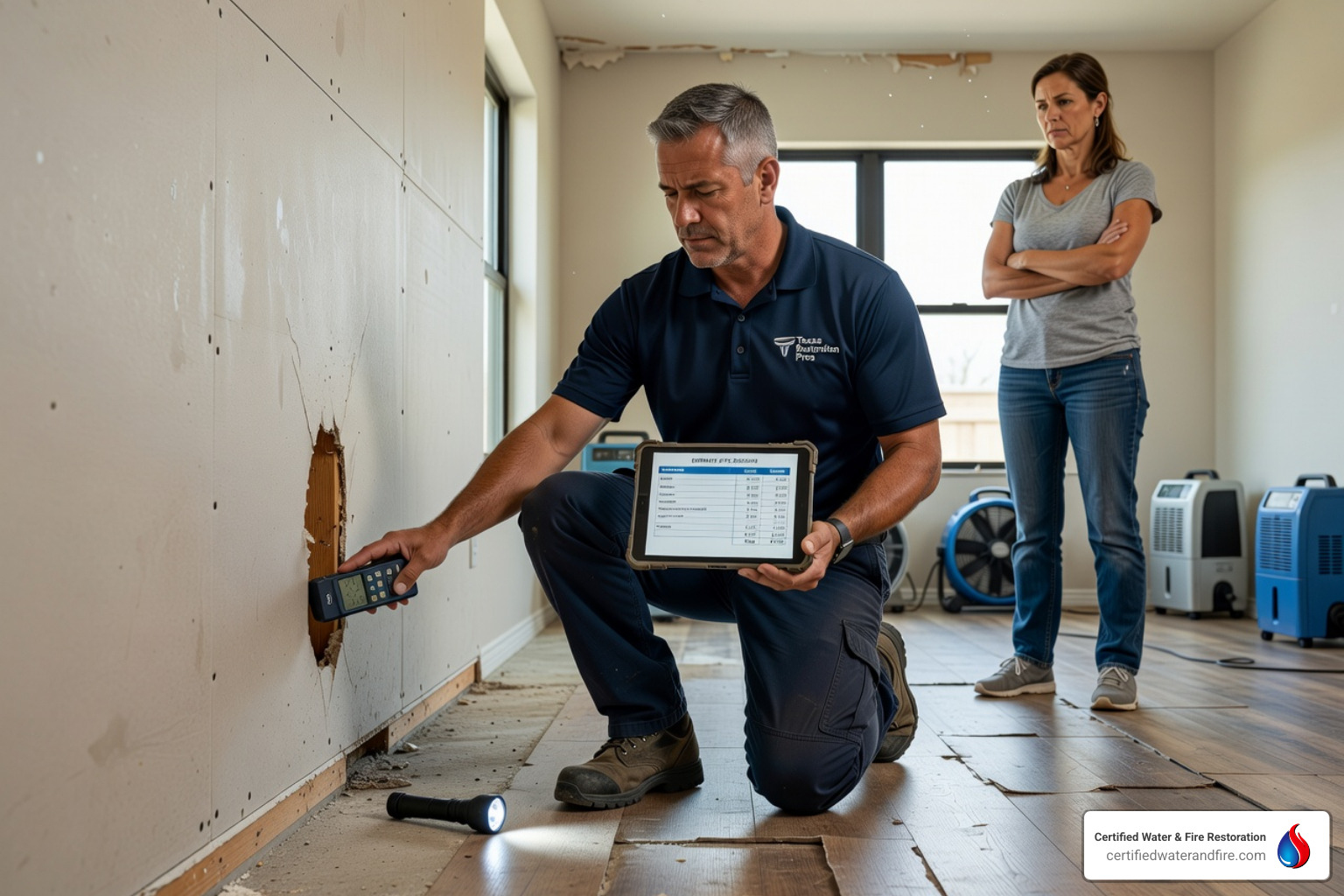
The restoration estimate process is how a contractor figures out what your property actually needs after damage hits and what it should cost to fix. Simple idea, but the details matter a lot.
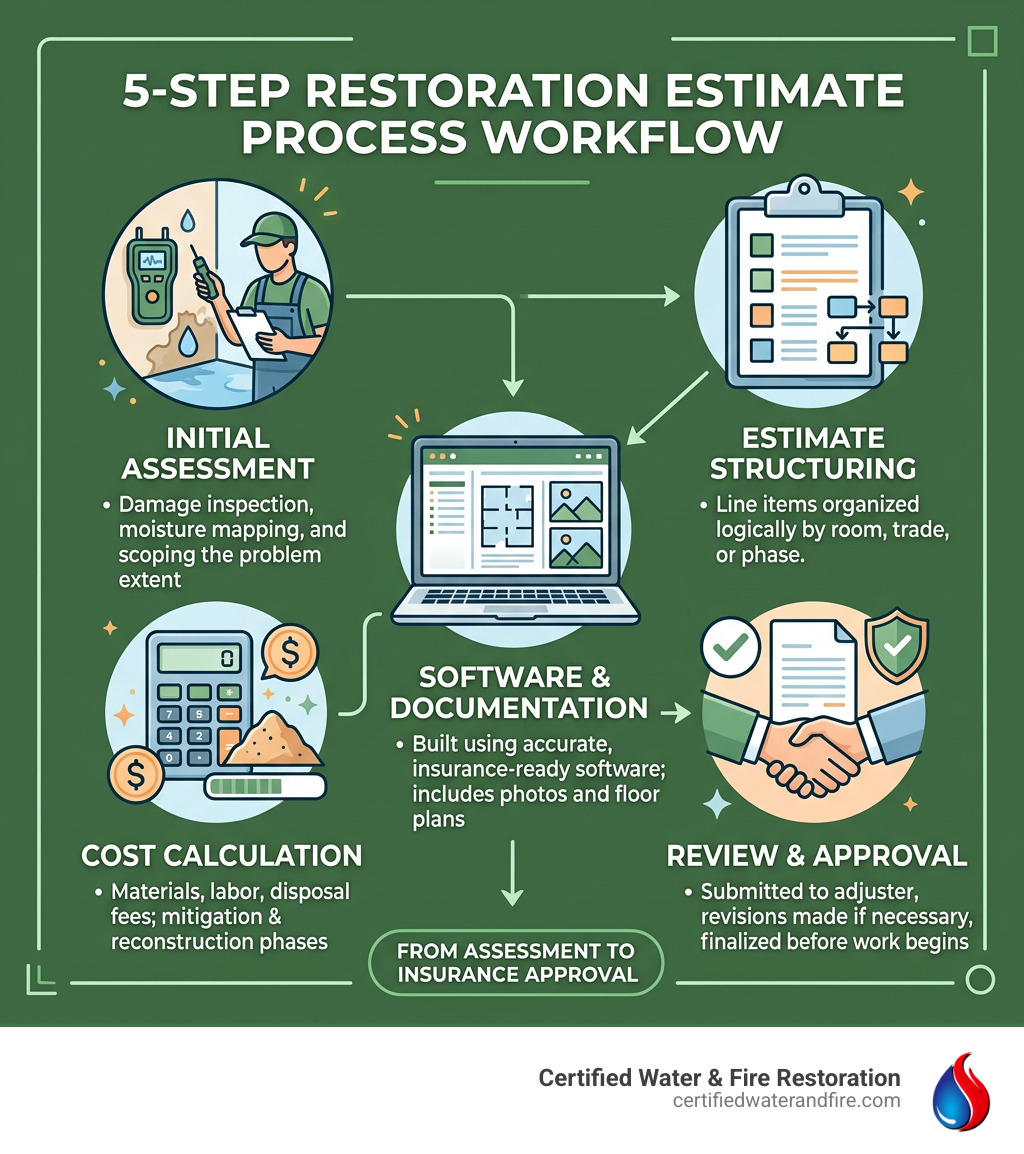
The 5 steps at a glance:
- Initial assessment – A technician inspects the damage, checks for hidden moisture or hazards, and figures out how far the problem really goes
- Estimate structuring – Line items are organized in a way that makes sense, whether by room, trade, or phase of work
- Software and documentation – Tools like Xactimate help build accurate, insurance-ready estimates with photos and floor plans
- Cost calculation – Labor, materials, disposal, and a little room for surprises are added up across mitigation and reconstruction
- Review and approval – The estimate goes to your insurance adjuster, gets revised if needed, and is finalized before repairs begin
Water damage. Fire damage. Mold. Whatever happened, most homeowners want the same thing: fix it and move on. Totally understandable. But before the drying equipment shows up or the rebuild starts, somebody has to pin down what was damaged, what it takes to repair it, and how that gets documented.
That estimate is more than a number. It’s the game plan. It also helps prove the work is necessary, which matters a lot when insurance is involved. A missed item or vague note might not seem like a big deal at first, but it can slow down approval, reduce payment, or leave everyone arguing later.
Key Takeaways
- The restoration estimate process creates the repair roadmap. It defines what was damaged, what work is required, and how much the restoration should cost, which helps insurance companies approve the claim and move the project forward.
- Accurate scoping is the most critical step. Inspectors identify damage type, hidden moisture, and safety hazards so the estimate reflects the full scope of the loss rather than only visible damage.
- Clear documentation improves insurance approval. Well-structured estimates with organized line items, photos, notes, and supporting data make it easier for adjusters to understand and approve the work.
- Modern restoration estimates rely on specialized tools. Software such as Xactimate, mobile scoping apps, moisture detection equipment, and material analysis tools helps produce consistent, insurance-ready estimates.
- A strong estimate separates mitigation from reconstruction. Breaking costs into emergency damage control and full rebuilding phases helps prevent disputes, reduces claim delays, and ensures the property is fully restored.
I’m Ryan Majewski, General Manager of Certified Water & Fire Restoration. Ive spent more than a decade managing restoration jobs from emergency response through final rebuild, and I can tell you this part of the process is where a lot of claims either stay on track or start going sideways. In this guide, Ill walk through how the restoration estimate process really works, without making it more complicated than it needs to be.
Step 1: Initial Assessment and Scoping
The first thing we do when we get to a home in Dallas or Houston is stop things from getting worse. That part is urgent. Once the water is off or the fire is out, though, the real restoration estimate process starts. And no, its not just someone glancing around and throwing out a rough number. We do a real Water Damage Assessment because the obvious damage is usually only part of the story.
Identifying the Damage Type
Not all water damage is the same. That matters more than most people realize. We usually break it into three categories:
- Category 1 (Clean): From a broken supply line.
- Category 2 (Gray): From a dishwasher or washing machine (contains some contaminants).
- Category 3 (Black): Sewage or rising floodwater.
That one detail can shift the whole estimate. Category 3, for example, usually means more demolition, more protective gear, more cleanup, and more caution in general.
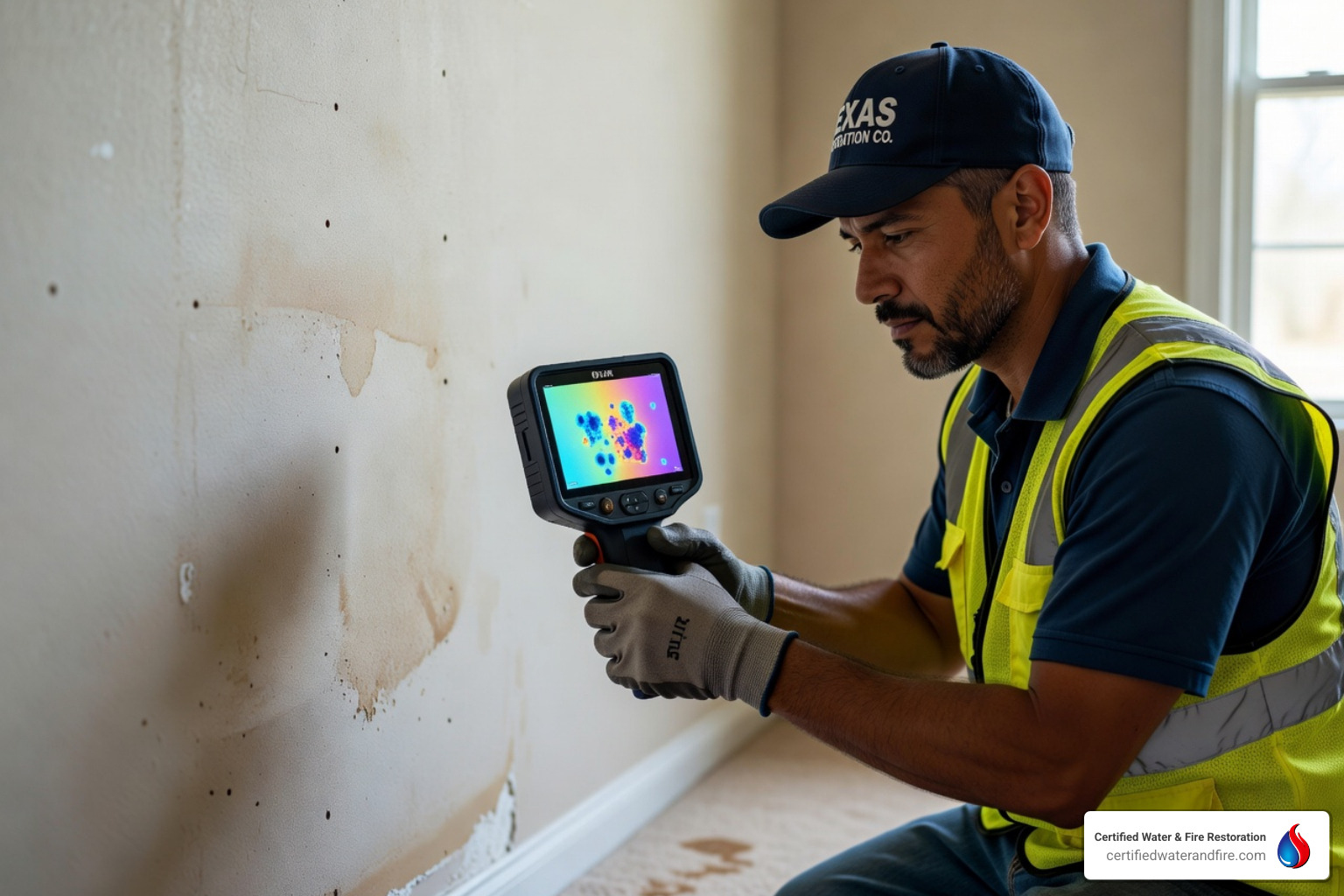
Water has a way of getting where it shouldnt. Behind baseboards, under hardwood, inside insulation, tucked into wall cavities. We use infrared cameras and moisture meters to build a moisture map so were not guessing. If someone misses wet insulation inside a wall, you may not notice right away, but it can absolutely turn into mold later. We also have to think about the dangers of floodwater, because once contamination gets into drywall or flooring, the cleanup gets more involved fast.
Safety and Environmental Hazards
Older Texas homes can add another layer to the job. If the house was built before 1978, lead paint is a concern. Popcorn ceilings, old tile, certain adhesives those can raise asbestos questions too. So before tearing into anything, we may need testing. Following EPA Lead-Safe rules isnt optional, and honestly, it shouldnt be. It protects your family and makes sure the estimate includes the right containment, handling, and disposal.
Step 2: Structuring the Restoration Estimate Process to Tell a Story
A solid estimate shouldnt read like a pile of random notes. It needs to make sense when someone else opens it – especially an insurance adjuster. They want to understand what happened, what got damaged, and why each step of the repair is there. If the estimate feels messy or disconnected, thats usually when line items start getting questioned.
Top-Down vs. Order of Operations
We generally use two main ways to structure the restoration estimate process:
| Approach | How it Works | Best For |
|---|---|---|
| Top-Down | Organized by room (Ceiling Walls Floor) | Detailed reconstruction and finishing |
| Order of Operations | Organized by phase (Demo Mitigation Rebuild) | Large-scale losses with multiple trades |
Neither format is magically better every time. It depends on the job. A smaller loss may read more clearly by room. A larger one with multiple trades often makes more sense by phase.
Grouping and Coding
Every task – removing wet carpet, placing drying equipment, applying antimicrobial, or detaching fixtures – uses a specific trade code. Grouping related line items by room and surface keeps the estimate easy to follow. For example, ceiling-related work in the living room should appear together instead of being scattered throughout the file. We also use F9 note templates, which are short explanations that give adjusters needed context. A line item like “Detach Light Fixture” can seem unclear by itself. Add a note explaining it is required for ceiling drying and safety, and the estimate tells a much clearer story.
Visual Evidence
Photos do a lot of heavy lifting in restoration. More than people think. We document each trade with pre-demo, during, and post-mitigation photos. If theres no photo showing the soaked carpet pad, for instance, that replacement may get challenged. Clean formatting and good visuals make the scope easier to follow and usually make the What Does a Restoration Company Do? conversation with insurance a whole lot smoother.
Step 3: Leveraging Software and Technology
The restoration estimate process isnt done on a legal pad anymore. These days, good estimating leans heavily on software, and thats actually a good thing. It cuts down on guesswork and helps keep pricing in line with what insurers expect to see.
The Power of Xactimate
Xactimate is the main tool in this world, covering roughly 80% of insurance claim estimates. It uses local pricing that gets updated monthly for markets like Houston and Dallas. So when we build an estimate, were not just picking numbers that feel right. Were using the same pricing system many adjusters already rely on.
Mobile Scoping and Digital Scans
We also use tools like magicplan Pro Estimator or Encircle for field reports. That means we can sketch rooms on a tablet while standing in them, which is a lot faster than trying to recreate everything later from memory. Sometimes we use DocuSketch to build a 3D digital twin of the home. Sounds fancy, and it is, but the practical benefit is simple: better measurements, fewer mistakes, and more accurate material counts.
Material Analysis with ITEL
Matching materials can get weirdly difficult. Flooring gets discontinued all the time. Siding fades. Carpet styles disappear. We use ITEL to test small samples and identify the closest current match. That helps avoid patchwork-looking repairs and supports estimates based on true like kind and quality, not just whatever is easiest to find.
Step 4: Calculating Costs and Finalizing the Phases
This is the part where everything gets translated into actual numbers. Usually, we separate the project into two buckets: mitigation and reconstruction. They overlap a little in real life, sure, but for estimating, it helps to keep them distinct. Understanding Restoration vs Remediation vs Reconstruction: Is There a Difference? can make the budget side a lot less confusing.
Mitigation Costs
Mitigation is the emergency side of the job – stopping damage, drying things out, making the space safe. Costs here often include:
- Labor Minimums: Basic setup costs like travel, prep, and equipment decontamination, even on small jobs.
- Equipment Rental: Air movers and dehumidifiers are usually billed by the day.
- Disposal Fees: Wet drywall, carpet, insulation, and debris still have to be hauled off somewhere.
These charges can surprise homeowners, especially when the visible damage looks limited. But the behind-the-scenes work is often what keeps the situation from getting worse.
Reconstruction Costs
Once the property is dry, we shift into figuring out How Much Does It Cost to Repair a Water Damaged House? long term. That includes drywall, flooring, trim, paint, cabinetry – whatever needs to be put back. We usually include a contingency fund of around 10-15% for hidden issues. And yes, hidden issues are common. Walls have a way of revealing bad news only after they’re opened up.
Avoiding Claim Denials
One of the most frustrating parts of the restoration estimate process is when a claim gets delayed or denied over missing paperwork. Thats why we submit drying logs and equipment pull sheets along with the estimate. Those records show the equipment actually ran and the property reached its drying goal. Without that documentation, insurers may push back, and it can turn into one of the 10 Mistakes That Cause Insurance Claim Denials that ends up costing the homeowner more.
Frequently Asked Questions
Why is the restoration estimate process different for mold?
Mold is its own thing. A water damage estimate is mostly about drying and replacing damaged materials. Mold Removal Cost Houston usually includes containment barriers, HEPA air scrubbers, protective gear, and clearance testing by an independent lab before rebuilding can start. Its a more controlled process, and a more expensive one too.
How long does the restoration estimate process usually take?
For a standard pipe burst, we can often get a draft estimate together within 24 to 48 hours after the initial walkthrough. Bigger fire losses or widespread flooding usually take longer. Theres just more to document, more trades involved, more back-and-forth. It also takes real training to do this well. A new estimator can spend about 8 weeks learning the ropes before theyre truly comfortable navigating insurance requirements.
What certifications should a restoration estimator have?
You probably dont want a random handyman writing an insurance estimate. Look for:
- IICRC Certification: The industry standard for restoration training.
- EPA Lead-Safe: Required for homes built before 1978.
- OSHA: Shows the crew follows proper safety practices. These arent just nice badges to flash around. They help show the estimator understands the technical side of damage assessment and knows how to document work in a way insurers take seriously.
What This Means for Texas Property Owners
The restoration estimate process can feel like paperwork overload when youre already dealing with property damage. Thats fair. But its also the roadmap for getting your home back in shape and making sure the work is properly documented from the start.
At Certified Water & Fire Restoration, we help homeowners across Houston and the Dallas-Fort Worth metroplex, including Irving and Plano move through this process without all the confusion. We offer a 60-minute response time, work directly with insurance, and dont require upfront costs. That last part matters when something goes wrong at 2 AM and youre already stressed enough.
We also back our work with a 2-year warranty, because getting the job done quickly is one thing. Getting it done right is another.
If your property has been damaged and you need an estimate that actually explains the full scope of the loss, dont wait around. Acting fast can limit damage and make the claim smoother. You can explore our full range of Services and see how we can help, whether you need a Houston restoration company or a Dallas damage restoration team.